
Episode 870: Advanced Trauma Life Support (ATLS)

Episode 870: Advanced Trauma Life Support (ATLS)

Contributor: Meghan Hurley MD

Educational Pearls:

What is ATLS?

  • Advanced Trauma Life Support (ATLS) is a systematic and comprehensive approach to the evaluation and management of trauma patients

  • It was developed by the American College of Surgeons (ACS)

  • The key components include the Primary Survey ("ABCDE"), the Secondary Survey, Definitive Care, and Special Considerations

What are the issues with ATLS?

  • ATLS relies on many algorithms and rules-of-thumb, which might be helpful for individuals with basic skills and training but might actually present obstacles for those with higher levels of training. Dr. Hurley cites several examples.

Example 1: ABC approach to trauma patients

  • ABC stands for Airway, Breathing, and Circulation but focusing on the airway first is not always the best decision.

  • Immediate attention may need to be applied to massive hemorrhage.

  • Intubating a patient that is hemodynamically unstable may cause cardiac arrest.

  • A more helpful phrase might be "Resuscitate before you intubate."

Example 2: C-spine precautions

  • Cervical collars may impede the likelihood of first-pass success when intubating. The risk of complications from a failed airway may often outweigh the risk of causing a spinal cord injury.

Example 3:Cutting clothes off.

  • The E of ABCDE stands for exposure which means fully undressing the patient to look for missing injuries. This often involves cutting their clothes off.

  • This practice might be too broadly applied and leave low-risk trauma patients without any clothes to wear when discharged home.

Example 4: Digital rectal exam

  • A rectal exam can be a useful tool in the evaluation of patients with abdominal or pelvic injuries. It can help screen for rectal bleeding, pelvic fractures, and neurological function

  • However, the rectal exam is not a sensitive test. A retrospective study from the Indian Journal of Surgery found that a rectal exam missed 100% of urethra injuries, 92% of spinal cord injuries, 93% of small bowel injuries, 100% of colon injuries, and 67% of rectal injuries in trauma patients.

Example 6: Pushing on pelvis for pelvic injuries

  • Pushing on the pelvis to check for instability can cause further damage to an unstable pelvis. Imaging the pelvis is far more important than pressing on it if a pelvic fracture is suspected.

Example 7: FAST exam

  • A FAST exam, which stands for "Focused Assessment with Sonography for Trauma," is a rapid ultrasound examination used to assess trauma patients for signs of internal bleeding or organ damage in the abdomen and chest.

  • These can be very useful as an initial test to tell a trauma surgeon where to start looking for internal bleeding in an unstable blunt traumatic injury

  • If a patient is stable and likely going to get a CT scan whether the FAST is positive or negative then the test is unnecessary

References

  1. ATLS Subcommittee; American College of Surgeons' Committee on Trauma; International ATLS working group. Advanced trauma life support (ATLS®): the ninth edition. J Trauma Acute Care Surg. 2013 May;74(5):1363-6. doi: 10.1097/TA.0b013e31828b82f5. PMID: 23609291.

  2. Bloom BA, Gibbons RC. Focused Assessment With Sonography for Trauma. 2023 Jul 24. In: StatPearls [Internet]. Treasure Island (FL): StatPearls Publishing; 2023 Jan–. PMID: 29261902.

  3. Brown R. Oxygenate and Resuscitate Before You Intubate. Common pitfalls to avoid when managing the crashing airway. EMS World. 2016 Jan;45(1):48-50, 52, 54-5. PMID: 26852546.

  4. Chrimes N, Marshall SD. Attempt XYZ: airway management at the opposite end of the alphabet. Anaesthesia. 2018 Dec;73(12):1464-1468. doi: 10.1111/anae.14361. Epub 2018 Jul 11. PMID: 29998563.

  5. Docimo S Jr, Diggs L, Crankshaw L, Lee Y, Vinces F. No Evidence Supporting the Routine Use of Digital Rectal Examinations in Trauma Patients. Indian J Surg. 2015 Aug;77(4):265-9. doi: 10.1007/s12262-015-1283-y. Epub 2015 May 19. PMID: 26702232; PMCID: PMC4688269.

  6. Groeneveld A, McKenzie ML, Williams D. Logrolling: establishing consistent practice. Orthop Nurs. 2001 Mar-Apr;20(2):45-9. doi: 10.1097/00006416-200103000-00011. PMID: 12024634.

  7. Morgenstern, J. The FAST exam: overused and overrated?, First10EM, August 30, 2021.

  8. Rodrigues IFDC. To log-roll or not to log-roll - That is the question! A review of the use of the log-roll for patients with pelvic fractures. Int J Orthop Trauma Nurs. 2017 Nov;27:36-40. doi: 10.1016/j.ijotn.2017.05.001. Epub 2017 May 10. PMID: 28797555.

  9. Sapsford W. Should the 'C' in 'ABCDE' be altered to reflect the trend towards hypotensive resuscitation? Scand J Surg. 2008;97(1):4-11; discussion 12-3. doi: 10.1177/145749690809700102. PMID: 18450202.

  10. Sundstrøm T, Asbjørnsen H, Habiba S, Sunde GA, Wester K. Prehospital use of cervical collars in trauma patients: a critical review. J Neurotrauma. 2014 Mar 15;31(6):531-40. doi: 10.1089/neu.2013.3094. Epub 2013 Nov 6. PMID: 23962031; PMCID: PMC3949434.

Summarized by Jeffrey Olson MS2 | Edited by Meg Joyce & Jorge Chalit, OMSII

Episoder(1145)

Podcast 774: Maggots

Podcast 774: Maggots

Contributor: Chris Holmes, MD Educational Pearls: Maggots were discovered as a therapy to help wound healing in WWI, but this fell out of favor after the discovery of penicillin One study from Israel...

19 Apr 20225min
Podcast 773: Atrial Fibrillation Medications

Podcast 773: Atrial Fibrillation Medications

Contributor: Aaron Lessen, MD Educational Pearls: Atrial fibrillation is an irregular heart rhythm that sometimes requires rate control in setting of rapid ventricular response (RVR) Calcium channel ...

18 Apr 20223min

Podcast 772: Firearms in Suicidal Ideation

Podcast 772: Firearms in Suicidal Ideation

Contributor: Aaron Lessen, MD Educational Pearls: Firearms are a dangerous potential method of committing suicide Death occurs in about 5-15% of suicide attempts overall, but death in suicide attempt...

12 Apr 20224min

Podcast 771: Intubation in Cardiac Arrest

Podcast 771: Intubation in Cardiac Arrest

Contributor: Don Stader, MD Educational Pearls: In a secondary analysis of the PART trial, the mortality effect of timing of airway management for patients in cardiac arrest was examined Study looked...

11 Apr 20223min
Podcast 770: Xylazine

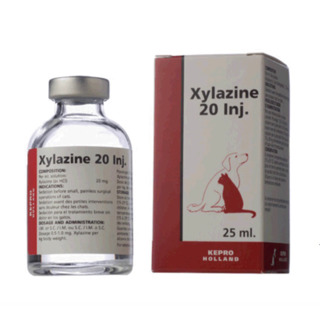
Podcast 770: Xylazine

Contributor: Don Stader, MD Educational Pearls: Xylazine, referred to as tranq dope colloquially, is an FDA approved animal tranquilizer that is circulating in the illicit drug markets of the northea...

5 Apr 20223min
Podcast 769: Pressors After Cardiac Arrest

Podcast 769: Pressors After Cardiac Arrest

Contributor: Aaron Lessen, MD Educational Pearls: Hypotension after cardiac arrest often requires a vasopressor to improve blood pressure Recent observational study from France examined outcomes of p...

4 Apr 20223min
Mental Health Monthly #11: De-escalation: Changing Confrontation to Collaboration

Mental Health Monthly #11: De-escalation: Changing Confrontation to Collaboration

Contributor: Dr. Kimberly Nordstrom De-escalation usually takes less time than physical and chemical restraints, which leads to decreased injury to staff members, better patient trust and increased p...

30 Mar 202216min
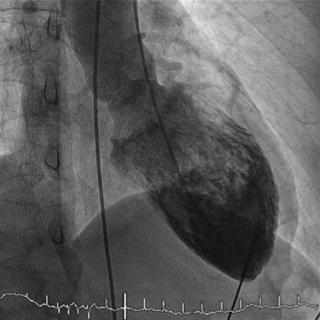
Podcast 768: Takotsubo Cardiomyopathy

Podcast 768: Takotsubo Cardiomyopathy

Contributor: Peter Bakes, MD Educational Pearls: 3% of cases of acute coronary syndrome are due to Takotsubo Takotsubo cardiomyopathy or "broken heart syndrome" can occur with severe physiologic or ...

29 Mar 20224min

Populært innen Vitenskap

fastlegen
tingenes-tilstand
rekommandert
jss
rss-nysgjerrige-norge
vett-og-vitenskap-med-gaute-einevoll
rss-rekommandert
sinnsyn
forskningno
villmarksliv
nordnorsk-historie
fjellsportpodden
smart-forklart
rss-paradigmepodden
aldring-og-helse-podden
diagnose
pod-britannia
rss-overskuddsliv
abid-nadia-skyld-og-skam
tomprat-med-gunnar-tjomlid