
Mental Health Monthly #17: Mania

Mental Health Monthly #17: Mania

Contributors:

Andrew White MD - Outpatient Psychiatrist; Fellowship Trained in Addiction Psychiatry; Denver Health

Travis Barlock MD - Emergency Medicine Physician; Swedish Medical Center

Summary

In this episode of Mental Health Monthly, Dr. Travis Barlock hosts Dr. Andrew White to discuss the elements of mania that may be encountered in the emergency department. The discussion includes a helpful mnemonic to assess mania, work-up and treatment in the ED, underlying causes of mania, mental health holds, inpatient treatment, and the role of sleep in mania.

Educational Pearls

  • Initial assessment of suspected mania can be done via DIGFAST:

    • Distractibility - Individual that is unable to carry a linear, goal-directed conversation

    • Impulsivity - Executive functioning is impaired and patients are unable to control their behaviors

    • Grandiosity - Elevated mood and sense of self to delusions of grandeur

    • Flight of ideas - Usually described as racing thoughts

    • Agitation - Increase in psychomotor activity; start several projects of which they have little previous knowledge

    • Sleep decrease - Typically, manic episodes start with insomnia and can devolve into multiday sleeplessness

    • Talkativeness - More talkative than usual with pressured speech and a tangential thought process

  • Interviewing patients requires an understanding of mood-based mania vs. psychosis-based mania

    • An individual with mood-based mania will more likely be restless, whereas a patient with psychosis-based mania will be more relaxed from a psychomotor standpoint

  • Treatment of manic patients in the ED includes the use of antipsychotics to manage acute symptomatology

    • Management can be informed and directed by the patient's history i.e. known medications that have worked for the patient

  • ED management of manic patients involves a work-up for a broad differential including agitated delirium, substance-induced mania, metabolic disorders, and autoimmune diseases.

  • Some individuals experience manic episodes from marijuana and other illicit substances

  • Antidepressants used in bipolar patients for suspected depression may induce mania

    • Important to avoid using antidepressants as first-line therapy

  • Mental health holds can be beneficial in patients with grave disabilities from mania

    • Oftentimes, undertreatment of manic episodes leads to re-hospitalization

  • Inpatient treatment:

    • Environment is important - ensure that patients get solo rooms if possible to minimize stimulation

    • Antipsychotics, including risperidone and olanzapine, with or without a benzodiazepine, are useful for short-term agitation

    • Long-term treatment involves coupled pharmacological treatments with non-pharmacological treatments

  • Sleep

    • Fractured sleep is one of the earliest warning signs that someone has an imminent manic episode

    • Poor sleep can be an inciting factor for mania, which then turns into a cycle that further propagates a patient's manic episode

Summarized and edited by Jorge Chalit, OMSII | Studio production by Jeffrey Olson, MS2

Episoder(1144)

CA Bridge Program and Health Disparities in the Opioid Epidemic

CA Bridge Program and Health Disparities in the Opioid Epidemic

Happy Thanksgiving EMM listeners, Mason here wanting to extend a special thank you to all of you for tuning in to our show. Today we are featuring a special episode on health disparities in the opioid...

23 Nov 202251min

Podcast 832: STD Checks

Podcast 832: STD Checks

Educational Pearls: Most common sexually transmitted disease (STD) in North America: Human Papillomavirus (HPV) From the emergency department patients should be connected to follow-up care and educ...

22 Nov 20225min

Podcast 831: O2 Targets

Podcast 831: O2 Targets

Contributor: Aaron Lessen,MD Educational Pearls: Recent study looked at mechanically ventilated patients in ED and ICU to determine if O2 saturation level impacted patient outcomes 2541 patients ra...

21 Nov 20223min
Podcast 830: Peripheral IV Flow Rates

Podcast 830: Peripheral IV Flow Rates

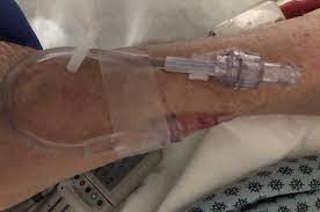
Contributor: Travis Barlock, MD Educational Pearls: Gauge and length of catheter are determinants of flow rate Smaller gauges produce higher flow rate Longer catheters reduce flow rate Common IV...

15 Nov 20223min

Podcast 829: Monkeypox

Podcast 829: Monkeypox

Contributor: Aaron Lessen, MD Educational Pearls: Monkeypox transmission is still occurring in the United States Transmitted by contact to exposed lesion MSM are a high-risk group for monkeypox inf...

14 Nov 20224min

Podcast 828: TXA Dosing Update

Podcast 828: TXA Dosing Update

Contributor: Nick Hatch, MD Educational Pearls: In the setting of traumatic injury, tranexamic acid (TXA) is given to stabilize clots which minimizes bleeding and decreases risk of hemorrhagic shock ...

8 Nov 20224min

Podcast 827: Allergies in Peds

Podcast 827: Allergies in Peds

Contributor: Aaron Lessen, MD Educational Pearls: Recent study evaluated if early exposure to an allergen impacted the rate of allergy development later in childhood Children were exposed to peanut, ...

7 Nov 20222min
Podcast 826: STEMI Equivalents

Podcast 826: STEMI Equivalents

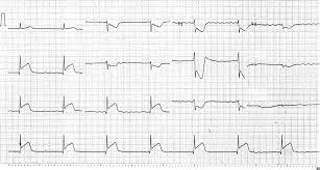
Contributor: Travis Barlock, MD Educational Pearls: The presence of a STEMI has traditionally been used to determine if a patient with acute chest pain requires urgent cath lab management STEMI indi...

1 Nov 20224min

Populært innen Vitenskap

fastlegen
tingenes-tilstand
smart-forklart
jss
sinnsyn
rekommandert
rss-rekommandert
villmarksliv
tomprat-med-gunnar-tjomlid
forskningno
rss-paradigmepodden
fjellsportpodden
aldring-og-helse-podden
tidlose-historier
diagnose
pod-britannia
vett-og-vitenskap-med-gaute-einevoll
nordnorsk-historie
nevropodden
dekodet-2


















