Mental Health Monthly #17: Mania

Mental Health Monthly #17: Mania

Contributors:

Andrew White MD - Outpatient Psychiatrist; Fellowship Trained in Addiction Psychiatry; Denver Health

Travis Barlock MD - Emergency Medicine Physician; Swedish Medical Center

Summary

In this episode of Mental Health Monthly, Dr. Travis Barlock hosts Dr. Andrew White to discuss the elements of mania that may be encountered in the emergency department. The discussion includes a helpful mnemonic to assess mania, work-up and treatment in the ED, underlying causes of mania, mental health holds, inpatient treatment, and the role of sleep in mania.

Educational Pearls

  • Initial assessment of suspected mania can be done via DIGFAST:

    • Distractibility - Individual that is unable to carry a linear, goal-directed conversation

    • Impulsivity - Executive functioning is impaired and patients are unable to control their behaviors

    • Grandiosity - Elevated mood and sense of self to delusions of grandeur

    • Flight of ideas - Usually described as racing thoughts

    • Agitation - Increase in psychomotor activity; start several projects of which they have little previous knowledge

    • Sleep decrease - Typically, manic episodes start with insomnia and can devolve into multiday sleeplessness

    • Talkativeness - More talkative than usual with pressured speech and a tangential thought process

  • Interviewing patients requires an understanding of mood-based mania vs. psychosis-based mania

    • An individual with mood-based mania will more likely be restless, whereas a patient with psychosis-based mania will be more relaxed from a psychomotor standpoint

  • Treatment of manic patients in the ED includes the use of antipsychotics to manage acute symptomatology

    • Management can be informed and directed by the patient's history i.e. known medications that have worked for the patient

  • ED management of manic patients involves a work-up for a broad differential including agitated delirium, substance-induced mania, metabolic disorders, and autoimmune diseases.

  • Some individuals experience manic episodes from marijuana and other illicit substances

  • Antidepressants used in bipolar patients for suspected depression may induce mania

    • Important to avoid using antidepressants as first-line therapy

  • Mental health holds can be beneficial in patients with grave disabilities from mania

    • Oftentimes, undertreatment of manic episodes leads to re-hospitalization

  • Inpatient treatment:

    • Environment is important - ensure that patients get solo rooms if possible to minimize stimulation

    • Antipsychotics, including risperidone and olanzapine, with or without a benzodiazepine, are useful for short-term agitation

    • Long-term treatment involves coupled pharmacological treatments with non-pharmacological treatments

  • Sleep

    • Fractured sleep is one of the earliest warning signs that someone has an imminent manic episode

    • Poor sleep can be an inciting factor for mania, which then turns into a cycle that further propagates a patient's manic episode

Summarized and edited by Jorge Chalit, OMSII | Studio production by Jeffrey Olson, MS2

Episoder(1145)

Podcast 760: Why Fentanyl is the Worst

Podcast 760: Why Fentanyl is the Worst

Contributor: Don Stader, MD Educational Pearls: Fentanyl's common administration route through pills has lowered the psychological barrier of using opioid compared to injecting and smoking heroin Fen...

1 Mar 20228min
Podcast 759: Hyperkalemia and Myth of Kayexalate

Podcast 759: Hyperkalemia and Myth of Kayexalate

Contributor: Nick Tsipis, MD Educational Pearls: Acute hyperkalemia is characterized as serum K of 5.4 or higher in non-hemolyzed samples Hyperkalemia is commonly associated with end stage renal dise...

28 Feb 20225min
Mental Health Monthly #10: The Elderly Psychotic Patient

Mental Health Monthly #10: The Elderly Psychotic Patient

Dr. Kim Nordstrom, a practicing emergency psychiatrist and associate professor with the University of Colorado, discusses various work-up models alongside valuable bedside tools for elderly patients w...

23 Feb 202211min

Podcast 758: Vaccine Safety During Pregnancy

Podcast 758: Vaccine Safety During Pregnancy

Contributor: Nick Tsipis, MD Educational Pearls: Observational study in Israel evaluated cohort of vaccinated pregnant women receiving the initial Pfizer-BioNTech COVID-19 mRNA vaccine Looked at 24,...

22 Feb 20223min
Podcast 757: History of Fevers and Thermometers

Podcast 757: History of Fevers and Thermometers

Contributor: Chris Holmes, MD Educational Pearls: Dr. Carl Reinhold August Wunderlich, of the mid-1800s, was the first physician to suggest temperature was related to disease processes and his measur...

21 Feb 20226min
Podcast 756: Violence Towards ED Staff

Podcast 756: Violence Towards ED Staff

Contributor: Jared Scott, MD Educational Pearls: ACEP survey was done in 2018 looking at violence towards staff in the ED with only 10% of those solicited responding Survey found 47% of respondents w...

15 Feb 20224min
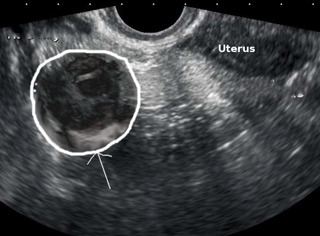
Podcast 755: Tubo-Ovarian Abscess

Podcast 755: Tubo-Ovarian Abscess

Contributor: Peter Bakes, MD Educational Pearls: Tubo-ovarian abscess is a rare complication of pelvic inflammatory disease Usually presents with chief complaint of abdominal pain and is often diagno...

14 Feb 20223min
Podcast 754: Balanced Fluids vs. Normal Saline, The Battle Continues

Podcast 754: Balanced Fluids vs. Normal Saline, The Battle Continues

Contributor: Aaron Lessen, MD Educational Pearls: Normal saline is thought to interfere with renal function and cause an acidosis and balanced fluids (like lactated ringers) are a better option The S...

8 Feb 20223min

Populært innen Vitenskap

fastlegen
smart-forklart
jss
tingenes-tilstand
villmarksliv
rekommandert
vett-og-vitenskap-med-gaute-einevoll
sinnsyn
forskningno
rss-rekommandert
fjellsportpodden
rss-paradigmepodden
tomprat-med-gunnar-tjomlid
aldring-og-helse-podden
pod-britannia
rss-nysgjerrige-norge
nordnorsk-historie
diagnose
tidlose-historier
rss-overskuddsliv