
Podcast 872: Preseptal and Orbital Cellulitis

Podcast 872: Preseptal and Orbital Cellulitis

Contributor: Meghan Hurley MD

Educational Pearls:

What is Cellulitis?

  • A common and potentially serious bacterial skin infection.

  • Caused by various types of bacteria, with Streptococcus and Staphylococcus species being the most common.

What is Preseptal Cellulitis and why is it more serious than facial cellulitis?

  • Preseptal Cellulitis, also known as Periorbital Cellulitis, is a bacterial infection of the soft tissues in the eyelid and the surrounding area.

  • This requires prompt and aggressive treatment to avoid progression into Orbital Cellulitis.

How is Preseptal Cellulitis treated?

  • Oral antibiotics for five to seven days.

  • In the setting of trauma (scratching bug bites) Clindamycin or TMP-SMX (for MRSA coverage) and Amoxicillin-clavulanic acid or Cefpodoxime or Cefdinir.

  • If there is no trauma, monotherapy with amoxicillin-clavulanic acid is appropriate.

  • Check immunization status against H.influenzae and adjust appropriately.

What is Orbital Cellulitis, how is it diagnosed, and why is it more serious than Preseptal Cellulitis?

  • Orbital cellulitis involves the tissues behind the eyeball and within the eye socket itself.

  • Key features include:

    • Eye pain.

    • Proptosis (Bulging of the eye out of its normal position).

    • Impaired eye movement.

    • Blurred or double vision.

  • This can lead to three very serious complications:

    • Orbital Compartment Syndrome. This can push eye forward, stretch optic nerve, and threaten vision.

    • Meningitis given that the meninges of the brain are continuous with optic nerve.

    • Endophthalmitis, which is inflammation of the inner coats of the eye. This can also threaten vision.

  • If suspected, get a CT of the orbits and/or an MRI to look for an abscess behind the eyes.

How is Orbital Cellulitis treated?

  • IV antibiotics. Cover for meningitis with Ceftriaxone and Vancomycin.

  • Add Metronidazole until intracranial involvement has been ruled out.

  • Drain the abscess surgically. Usually this is performed by an ophthalmologist or an otolaryngologist.

  • Admit to the hospital.

References

  1. Bae C, Bourget D. Periorbital Cellulitis. 2023 Jul 17. In: StatPearls [Internet]. Treasure Island (FL): StatPearls Publishing; 2023 Jan–. PMID: 29261970.

  2. Chaudhry IA, Shamsi FA, Elzaridi E, Al-Rashed W, Al-Amri A, Al-Anezi F, Arat YO, Holck DE. Outcome of treated orbital cellulitis in a tertiary eye care center in the middle East. Ophthalmology. 2007 Feb;114(2):345-54. doi: 10.1016/j.ophtha.2006.07.059. PMID: 17270683.

  3. Seltz LB, Smith J, Durairaj VD, Enzenauer R, Todd J. Microbiology and antibiotic management of orbital cellulitis. Pediatrics. 2011 Mar;127(3):e566-72. doi: 10.1542/peds.2010-2117. Epub 2011 Feb 14. PMID: 21321025.

  4. Wong SJ, Levi J. Management of pediatric orbital cellulitis: A systematic review. Int J Pediatr Otorhinolaryngol. 2018 Jul;110:123-129. doi: 10.1016/j.ijporl.2018.05.006. Epub 2018 May 8. PMID: 29859573.

Summarized by Jeffrey Olson MS2 | Edited by Meg Joyce & Jorge Chalit, OMSII

Episoder(1147)

On the Streets #3: COVID-19

On the Streets #3: COVID-19

In this special edition of our On the Streets podcast, we discuss COVID-19 as well as what first responders and emergency providers need to know to keep themselves and their patients safe during this ...

19 Mar 202020min
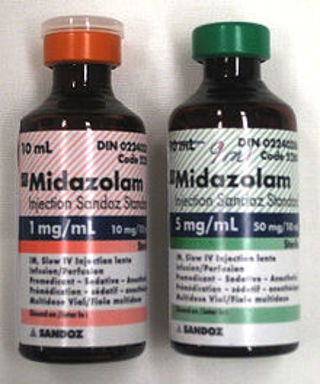
Podcast 550: Good ol' Versed

Podcast 550: Good ol' Versed

Contributor: Sam Killian, MD Educational Pearls: Agitation can be due to a number of causes, but regardless of the cause, sedation often plays a key role in patient and provider safety. But what is t...

17 Mar 20204min

Podcast 549:  Just Use Epineprhine

Podcast 549: Just Use Epineprhine

Contributor: Sam Killian, MD Educational Pearls: Classic dogma teaching that epinephrine should not be used in the fingers, nose, penis, and toes when performing local anesthesia due to concerns for ...

16 Mar 20203min

On the Streets #2: Neurological Deficits

On the Streets #2: Neurological Deficits

Part 1 of 2: Dr. Adam Graham dishes out the essentials of identifying concerning neurological deficits on the scene, predicting what they mean and how to best care for patients with neurological defic...

11 Mar 202020min

Podcast 548:  Adrenal Crisis

Podcast 548: Adrenal Crisis

Contributor: Nick Tsipis, MD Educational Pearls: Congenital adrenal hyperplasia (CAH) is a group of enzyme deficiencies in the adrenals leading to a deficiency of hormones normally synthesized by the...

10 Mar 20205min

Podcast 547: Capsaicin Cream to the Rescue

Podcast 547: Capsaicin Cream to the Rescue

Author: Aaron Lessen, MD Educational Pearls: A recent retrospective study looked capsaicin cream in treating cannabinoid hyperemesis syndrome in regards to length of stay, cost analysis, use of rescu...

9 Mar 20201min

Podcast 546: Complete Heart Block

Podcast 546: Complete Heart Block

Author: Jared Scott, MD Educational Pearls: Differentiating symptomatic bradycardia from asymptomatic may be essential in determining workup and treatment Airway, breath, circulation always hold true...

3 Mar 20203min

Podcast 545: So You Quit Smoking… Now What?

Podcast 545: So You Quit Smoking… Now What?

Author: Aaron Lessen, MD Educational Pearls: New data shows within 5 years of smoking cessation, the risk of cardiovascular disease becomes half of those who continue to smoke After 10-15 years of c...

2 Mar 20201min

Populært innen Vitenskap

fastlegen
tingenes-tilstand
rekommandert
jss
liberal-halvtime
rss-rekommandert
sinnsyn
forskningno
villmarksliv
rss-paradigmepodden
fjellsportpodden
dekodet-2
pod-britannia
rss-overskuddsliv
tidlose-historier
hva-er-greia-med
tomprat-med-gunnar-tjomlid
katastrofe-i-hjernen
rss-lundqvist-podden
rss-nysgjerrige-norge