
Episode 900: Ketamine Dosing

Episode 900: Ketamine Dosing

Contributor: Travis Barlock MD

Educational Pearls:

Ketamine is an NMDA receptor antagonist with a wide variety of uses in the emergency department. To dose ketamine remember the numbers 0.3, 1, and 3.

Pain dose

  • For acute pain relief administer 0.3 mg/kg of ketamine IV over 10-20 minutes (max of 30 mg).

  • Note: There is evidence that a lower dose of 0.1-0.15 mg/kg can be just as effective.

Dissociative dose

  • To use ketamine as an induction agent for intubation or for procedural sedation administer 1 mg/kg IV over 1-2 minutes.

IM for acute agitation

  • If a patient is out of control and a danger to themselves or others, administer 3 mg/kg intramuscularly (max 500 mg).

  • If you are giving IM ketamine it has to be in the concentrated 100 mg/ml vial.

Additional pearls

  • Pushing ketamine too quickly can cause laryngospasm.

  • Between .3 and 1 mg/kg is known as the recreational dose. You want to avoid this range because this is where ketamine starts to pick up its dissociative effects and can cause unpleasant and intense hallucinations. This is colloquially known as being in the "k-hole".

References

  1. Gao, M., Rejaei, D., & Liu, H. (2016). Ketamine use in current clinical practice. Acta pharmacologica Sinica, 37(7), 865–872. https://doi.org/10.1038/aps.2016.5

  2. Lin, J., Figuerado, Y., Montgomery, A., Lee, J., Cannis, M., Norton, V. C., Calvo, R., & Sikand, H. (2021). Efficacy of ketamine for initial control of acute agitation in the emergency department: A randomized study. The American journal of emergency medicine, 44, 306–311. https://doi.org/10.1016/j.ajem.2020.04.013

  3. Stirling, J., & McCoy, L. (2010). Quantifying the psychological effects of ketamine: from euphoria to the k-Hole. Substance use & misuse, 45(14), 2428–2443. https://doi.org/10.3109/10826081003793912

Summarized by Jeffrey Olson MS2 | Edited by Jorge Chalit, OMS II

Episoder(1146)

Podcast 515: Non-Accidental Trauma

Podcast 515: Non-Accidental Trauma

Contributor: Jared Scott, MD Educational Pearls: Non-accidental trauma (NAT) to children is commonly missed by medical providers Try to remember TEN-4-FACES as a useful aide for concerning patterns t...

1 Nov 20194min
Podcast 514: Pain Control While on Naltrexone

Podcast 514: Pain Control While on Naltrexone

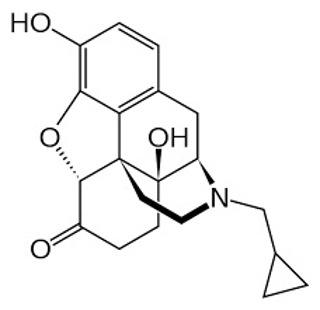
Author: Don Stader, MD Educational Pearls: Suboxone, methadone, and naltrexone are commonly used as treatments for opiate use disorder.  Naltrexone is a full mu-opiate receptor antagonist, making acu...

30 Okt 20192min

Podcast 513: Plague

Podcast 513: Plague

Author: John Winkler, MD Educational Pearls: The plague (black death) is caused by the Yersinia Pestis bacteria. This bacteria is spread by fleas and carried by rats. It is very contagious and only n...

27 Okt 20192min

Podcast 512: Abstinence is Bad, mmmkay?

Podcast 512: Abstinence is Bad, mmmkay?

Author: Don Stader, MD Educational Pearls: Abstinence from substances such as tobacco or alcohol are effective strategies to achieve long term sobriety However, abstinence is not an effective strateg...

22 Okt 20194min

Podcast 511: Ebola Treatment

Podcast 511: Ebola Treatment

Author: Rachel Beham, PharmD Educational Pearls: There are currently many Ebola vaccines that are being studied, and one (recombinant VZV-Ebola vaccine) is currently being used in Africa. This vaccin...

17 Okt 20194min

Podcast # 510: Ebola

Podcast # 510: Ebola

Author: John Winkler, MD Educational Pearls: There is a new outbreak of Ebola in The Congo. This is likely due to civil war and rebel attacks on healthcare workers in the area. Ebola is now spreadin...

16 Okt 20193min

Podcast 509: Circadian Rhythm and Shift Work, From Z to Z

Podcast 509: Circadian Rhythm and Shift Work, From Z to Z

Contributor: Jared Scott, MD Educational Pearls: Sleep deprivation and disturbed sleep cycles increases the risk of many acute and chronic medical issues such as motor vehicle accidents, diabetes, ca...

12 Okt 201915min

Podcast 508: Are you with child?

Podcast 508: Are you with child?

Contributor: Chris Holmes, MD Educational Pearls: In ancient Egypt, pregnant women would urinate over barley and wheat seeds to help determine the sex of thier fetus, as well as if they were pregnant...

10 Okt 20194min

Populært innen Vitenskap

fastlegen
tingenes-tilstand
rekommandert
jss
rss-rekommandert
rss-nysgjerrige-norge
villmarksliv
forskningno
sinnsyn
rss-paradigmepodden
fjellsportpodden
vett-og-vitenskap-med-gaute-einevoll
nordnorsk-historie
smart-forklart
rss-overskuddsliv
diagnose
abid-nadia-skyld-og-skam
abels-tarn
tomprat-med-gunnar-tjomlid
aldring-og-helse-podden