Episode 900: Ketamine Dosing

Episode 900: Ketamine Dosing

Contributor: Travis Barlock MD

Educational Pearls:

Ketamine is an NMDA receptor antagonist with a wide variety of uses in the emergency department. To dose ketamine remember the numbers 0.3, 1, and 3.

Pain dose

  • For acute pain relief administer 0.3 mg/kg of ketamine IV over 10-20 minutes (max of 30 mg).

  • Note: There is evidence that a lower dose of 0.1-0.15 mg/kg can be just as effective.

Dissociative dose

  • To use ketamine as an induction agent for intubation or for procedural sedation administer 1 mg/kg IV over 1-2 minutes.

IM for acute agitation

  • If a patient is out of control and a danger to themselves or others, administer 3 mg/kg intramuscularly (max 500 mg).

  • If you are giving IM ketamine it has to be in the concentrated 100 mg/ml vial.

Additional pearls

  • Pushing ketamine too quickly can cause laryngospasm.

  • Between .3 and 1 mg/kg is known as the recreational dose. You want to avoid this range because this is where ketamine starts to pick up its dissociative effects and can cause unpleasant and intense hallucinations. This is colloquially known as being in the "k-hole".

References

  1. Gao, M., Rejaei, D., & Liu, H. (2016). Ketamine use in current clinical practice. Acta pharmacologica Sinica, 37(7), 865–872. https://doi.org/10.1038/aps.2016.5

  2. Lin, J., Figuerado, Y., Montgomery, A., Lee, J., Cannis, M., Norton, V. C., Calvo, R., & Sikand, H. (2021). Efficacy of ketamine for initial control of acute agitation in the emergency department: A randomized study. The American journal of emergency medicine, 44, 306–311. https://doi.org/10.1016/j.ajem.2020.04.013

  3. Stirling, J., & McCoy, L. (2010). Quantifying the psychological effects of ketamine: from euphoria to the k-Hole. Substance use & misuse, 45(14), 2428–2443. https://doi.org/10.3109/10826081003793912

Summarized by Jeffrey Olson MS2 | Edited by Jorge Chalit, OMS II

Episoder(1145)

Podcast # 350: Pressors and Ischemia

Podcast # 350: Pressors and Ischemia

Author: Nick Hatch, MD. Educational Pearls: A common concern using vasopressors is the risk of digital and mesenteric ischemia. The absolute risk of digital ischemia and/or mesenteric ischemia is...

9 Jul 20183min
Podcast # 349: Fat Emboli

Podcast # 349: Fat Emboli

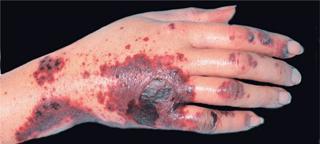
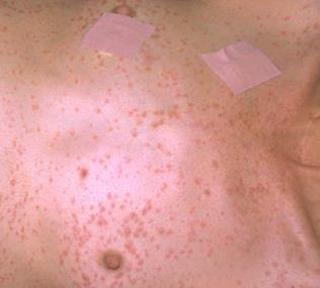
Author: Sue Chilton, MD Educational Pearls: Triad of fat emboli syndrome is a petechial rash, AMS, and respiratory distress. Petechiae usually start in the axilla. 90% of patients with long bon...

4 Jul 20183min
Podcast # 348: Steakhouse Syndrome

Podcast # 348: Steakhouse Syndrome

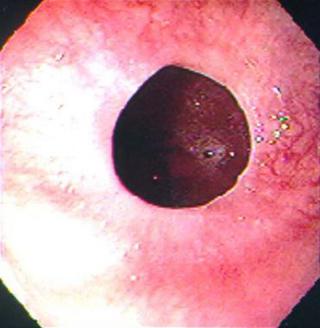
Author: Don Stader, MD Educational Pearls: Steakhouse syndrome is an impacted esophageal food bolus. Occurs because they have an esophageal stricture (schatzki ring, scarring, esophagitis). Cla...

2 Jul 20183min

Podcast # 347: Fasting and Procedural Sedation

Podcast # 347: Fasting and Procedural Sedation

Author: Sam Killian, MD Educational Pearls: Recent study examining fasting and adverse events during procedural sedation found no association between fasting duration and any type of adverse event....

29 Jun 20183min
Podcast # 346: Pediatric DKA

Podcast # 346: Pediatric DKA

Author: Chris Holmes, MD Educational Pearls: There is a risk of cerebral edema in pediatrics with DKA if over resuscitated. Recent study comparing normal saline vs. ½ normal saline showed no diff...

27 Jun 20184min
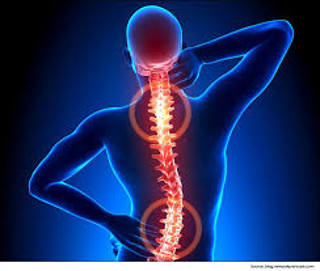
Podcast # 345: Epidural Abscess

Podcast # 345: Epidural Abscess

Author: Sue Chilton, MD Educational Pearls: IV drug use and spinal procedures are major risk factors. Classic triad of back pain, focal neurological deficit and fever. However, presence of fever ...

25 Jun 20184min
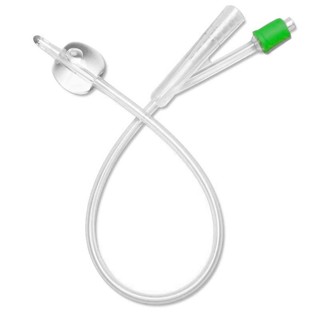
Podcast # 344: Foley troubleshooting

Podcast # 344: Foley troubleshooting

Author: Aaron Lessen, MD. Educational Pearls: When foley is stuck, balloon may not have deflated. Make sure balloon is not in the urethra, which can block drainage. Cut off the port as it may b...

22 Jun 20183min
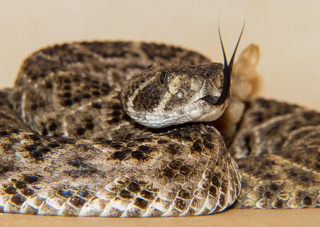
Podcast # 343: Snake Bites

Podcast # 343: Snake Bites

Educational Pearls: Snake bites commonly occur between April and October. Rattlesnake bites are the most common. Venom contains proteins/enzymes that cause local inflammation, coagulopathy, and...

20 Jun 20186min

Populært innen Vitenskap

fastlegen
tingenes-tilstand
rekommandert
jss
rss-nysgjerrige-norge
vett-og-vitenskap-med-gaute-einevoll
rss-rekommandert
sinnsyn
forskningno
villmarksliv
nordnorsk-historie
fjellsportpodden
smart-forklart
rss-paradigmepodden
aldring-og-helse-podden
diagnose
pod-britannia
rss-overskuddsliv
abid-nadia-skyld-og-skam
tomprat-med-gunnar-tjomlid