
Episode 906: Case Study of Hypernatremia

Episode 906: Case Study of Hypernatremia

Contributor: Aaron Lessen MD

Educational Pearls:

The case:

  • A gentleman came in from a nursing home with symptoms concerning for sepsis. He was hypotensive, hypoxic, febrile, and mentally altered.

  • His past medical history included previous strokes which had left him with deficits for which he required a feeding tube.

  • Initial workup included some point of care labs which revealed a sodium of 165 mEq/L (normal range 135-145)

Hypernatremia

  • What causes it?

    • Dehydration, from insufficient fluid intake. This might happen in individuals who cannot drink water independently, such as infants, elderly, or disabled people, as was the case for this patient.

    • Other causes of dehydration/hypernatremia include excessive sweating; diabetes insipidus; diuretic use; kidney dysfunction; and severe burns which can lead to fluid loss through the damaged skin.

  • How do you correct it?

    • Need to correct slowly, not more than 10 to 12 meq/L in 24 hours

    • Can do normal saline (0.9%) or half saline (0.45%) and D5, at 150-200 mL per hour.

    • Check the sodium frequently (every 2-3 hours)

    • Will likely need ICU-level monitoring

  • What happens if you correct it too quickly?

    • Cerebral edema

    • Seizures

Bonus fact: Correction of hyponatremia too quickly causes osmotic demyelination syndrome (ODS).

References

  1. Chauhan, K., Pattharanitima, P., Patel, N., Duffy, A., Saha, A., Chaudhary, K., Debnath, N., Van Vleck, T., Chan, L., Nadkarni, G. N., & Coca, S. G. (2019). Rate of Correction of Hypernatremia and Health Outcomes in Critically Ill Patients. Clinical journal of the American Society of Nephrology : CJASN, 14(5), 656–663. https://doi.org/10.2215/CJN.10640918

  2. Lindner, G., & Funk, G. C. (2013). Hypernatremia in critically ill patients. Journal of critical care, 28(2), 216.e11–216.e2.16E20. https://doi.org/10.1016/j.jcrc.2012.05.001

  3. Muhsin, S. A., & Mount, D. B. (2016). Diagnosis and treatment of hypernatremia. Best practice & research. Clinical endocrinology & metabolism, 30(2), 189–203. https://doi.org/10.1016/j.beem.2016.02.014

Summarized by Jeffrey Olson MS2 | Edited by Meg Joyce & Jorge Chalit, OMSIII

Episoder(1145)

Podcast 709: Clown Therapy

Podcast 709: Clown Therapy

Contributor: Jared Scott, MD Educational Pearls: Using LET, procedural sedation, and distraction techniques are often needed to successfully perform painful procedures in pediatrics patients The tech...

30 Aug 20214min

Podcast 708: Diagnostic Paracentesis

Podcast 708: Diagnostic Paracentesis

Contributor: Peter Bakes, MD Educational Pearls: Paracentesis is a procedure where fluid is removed from the peritoneal cavity by needle Indications for paracentesis include: large volume paracentesi...

24 Aug 20215min
Podcast 707: Sigmoid Volvulus

Podcast 707: Sigmoid Volvulus

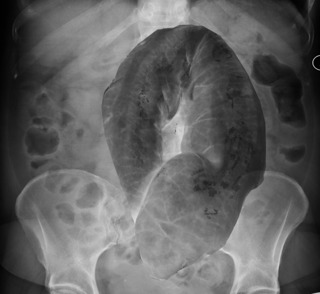
Contributor: Aaron Lessen, MD Educational Pearls: Sigmoid volvulus occurs when the sigmoid colon twists 180 to 360 degrees 10% of intestinal obstructions in the US; 50-70% of intestinal obstructions ...

23 Aug 20213min

Podcast 706: Pepper Spray Decon

Podcast 706: Pepper Spray Decon

Contributor: Ramnik Dhaliwal, MD JD Educational Pearls: Pepper spray is a highly irritating compound with active ingredient of capsaicin Techniques to help decontaminate and alleviate symptoms of an ...

18 Aug 20213min

Podcast 705: Pyloric Stenosis

Podcast 705: Pyloric Stenosis

Contributor: Neil Cella, MD Educational Pearls: Pylorus becomes hypertrophied and does not allow food or liquid to pass through to the duodenum tOccurs between the ages of 3 weeks to 3 months Classic...

17 Aug 20214min
Podcast 704: Treatment of Pneumothorax

Podcast 704: Treatment of Pneumothorax

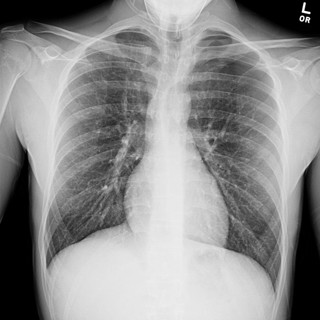
Contributor: Adam Barkin, MD Educational Pearls: Multi-center open-label non-inferiority trial looked at treatment of pneumothorax with a small-bore chest tube versus conservative management with exc...

16 Aug 20215min

Mental Health Monthly #8: Trauma-Informed Care

Mental Health Monthly #8: Trauma-Informed Care

Contributor: Randi Libbon, MD The Core features of trauma-informed care include: Patient empowerment, choice and collaboration. This means educating patients and allowing patients to make choices abo...

11 Aug 20219min

Podcast 703: Fever in Infants

Podcast 703: Fever in Infants

Contributor: Neil Cella, MD  Educational Pearls: 10% of patients 100.4) have an serious bacterial infection Most of these are UTIs, but also consider pneumonia and meningitis Requires CXR, LP, lab...

10 Aug 20215min

Populært innen Vitenskap

fastlegen
tingenes-tilstand
rekommandert
jss
rss-nysgjerrige-norge
vett-og-vitenskap-med-gaute-einevoll
rss-rekommandert
sinnsyn
forskningno
villmarksliv
nordnorsk-historie
fjellsportpodden
smart-forklart
rss-paradigmepodden
aldring-og-helse-podden
diagnose
pod-britannia
rss-overskuddsliv
abid-nadia-skyld-og-skam
tomprat-med-gunnar-tjomlid