Episode 906: Case Study of Hypernatremia

Episode 906: Case Study of Hypernatremia

Contributor: Aaron Lessen MD

Educational Pearls:

The case:

  • A gentleman came in from a nursing home with symptoms concerning for sepsis. He was hypotensive, hypoxic, febrile, and mentally altered.

  • His past medical history included previous strokes which had left him with deficits for which he required a feeding tube.

  • Initial workup included some point of care labs which revealed a sodium of 165 mEq/L (normal range 135-145)

Hypernatremia

  • What causes it?

    • Dehydration, from insufficient fluid intake. This might happen in individuals who cannot drink water independently, such as infants, elderly, or disabled people, as was the case for this patient.

    • Other causes of dehydration/hypernatremia include excessive sweating; diabetes insipidus; diuretic use; kidney dysfunction; and severe burns which can lead to fluid loss through the damaged skin.

  • How do you correct it?

    • Need to correct slowly, not more than 10 to 12 meq/L in 24 hours

    • Can do normal saline (0.9%) or half saline (0.45%) and D5, at 150-200 mL per hour.

    • Check the sodium frequently (every 2-3 hours)

    • Will likely need ICU-level monitoring

  • What happens if you correct it too quickly?

    • Cerebral edema

    • Seizures

Bonus fact: Correction of hyponatremia too quickly causes osmotic demyelination syndrome (ODS).

References

  1. Chauhan, K., Pattharanitima, P., Patel, N., Duffy, A., Saha, A., Chaudhary, K., Debnath, N., Van Vleck, T., Chan, L., Nadkarni, G. N., & Coca, S. G. (2019). Rate of Correction of Hypernatremia and Health Outcomes in Critically Ill Patients. Clinical journal of the American Society of Nephrology : CJASN, 14(5), 656–663. https://doi.org/10.2215/CJN.10640918

  2. Lindner, G., & Funk, G. C. (2013). Hypernatremia in critically ill patients. Journal of critical care, 28(2), 216.e11–216.e2.16E20. https://doi.org/10.1016/j.jcrc.2012.05.001

  3. Muhsin, S. A., & Mount, D. B. (2016). Diagnosis and treatment of hypernatremia. Best practice & research. Clinical endocrinology & metabolism, 30(2), 189–203. https://doi.org/10.1016/j.beem.2016.02.014

Summarized by Jeffrey Olson MS2 | Edited by Meg Joyce & Jorge Chalit, OMSIII

Episoder(1147)

Podcast 635: Wide Complex Tachycardias

Podcast 635: Wide Complex Tachycardias

Contributor: Peter Bakes, MD Educational Pearls: Two main differentials for wide complex tachycardia (WCT) include ventricular tachycardia (most common) and supraventricular tachycardia with aberranc...

26 Jan 20215min
Podcast 634: D10 for Hypoglycemia

Podcast 634: D10 for Hypoglycemia

Contributor: Dylan Luyten, MD Educational Pearls: D10 may be a better alternative to D50 in correcting hypoglycemia Risks of D50: Can cause extravasation injury Risk of rebound hypoglycemia D10 ...

25 Jan 20214min
Podcast 633: Pathologic Femur Fractures

Podcast 633: Pathologic Femur Fractures

Contributor: Jared Scott, MD Educational Pearls: Pathologic bone fractures occur due to weakened bones from chronic disease and with less force when compared to non-pathologic fractures Can be due to...

19 Jan 20215min
Podcast 632: Neonatal Jaundice

Podcast 632: Neonatal Jaundice

Contributor: Jared Scott, MD Educational Pearls: Bilirubin is natural breakdown product of red blood cells but can be neurotoxic if levels become too high Fetal red blood cells are fragile and break ...

18 Jan 20216min
Pharmacy Phriday #7: Bactrim Adverse Events

Pharmacy Phriday #7: Bactrim Adverse Events

Contributor: Cheyenne Bean, PharmD Educational Pearls: Bactrim (TMP-SMX) is a sulfa antibiotic used for a number of infections but can have untoward effects. Hypoglycemia can be induced by the sulfa ...

15 Jan 20214min
Podcast 631: UK COVID-19 Mutation

Podcast 631: UK COVID-19 Mutation

Contributor: Gretchen Hinson, MD Educational Pearls: Viruses mutate frequently and a new variant of COVID has been found in the United Kingdom. Mutations typically occur due to transcription errors d...

13 Jan 20215min
Podcast 630: Evolution of an STEMI

Podcast 630: Evolution of an STEMI

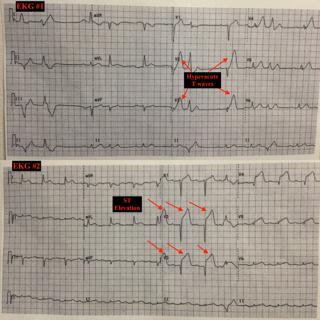
Contributor: Peter Bakes, MD Educational Pearls: Hyperacute T waves can occur immediately and typical last less than an hour Hyperacute T waves are typically broader than peaked T-waves, which are ...

12 Jan 20215min
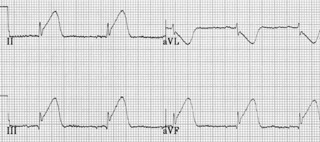
Podcast 629: Inferior STEMI

Podcast 629: Inferior STEMI

Contributor: Jared Scott, MD Educational Pearls: EKGs look at different angles, or vectors, of the heart's electrical conduction as it travels through the heart. Knowing how to read these vectors is ...

11 Jan 20214min

Populært innen Vitenskap

fastlegen
tingenes-tilstand
rekommandert
jss
liberal-halvtime
rss-rekommandert
villmarksliv
sinnsyn
rss-paradigmepodden
pod-britannia
forskningno
fjellsportpodden
dekodet-2
rss-overskuddsliv
rss-lundqvist-podden
tomprat-med-gunnar-tjomlid
hva-er-greia-med
rss-nysgjerrige-norge
utenrikshospitalet
tidlose-historier