
Podcast 912: Narcan (Naloxone)

Podcast 912: Narcan (Naloxone)

Contributor: Taylor Lynch, MD

Educational Pearls:

Opioid Epidemic- quick facts

  • Drug overdoses, primarily driven by opioids, have become the leading cause of accidental death in the U.S. for individuals aged 18-45.

  • In 2021, opioids were involved in nearly 75% of all drug overdose deaths

  • The rise of synthetic opioids like fentanyl, which is much more potent than heroin or prescription opioids, has played a major role in the increase in overdose deaths

What is Narcan AKA Naloxone?

  • Competitive opioid antagonist. It sits on the receptor but doesn't activate it.

When do we give Narcan?

  • Respiratory rate less than 8-10 breaths per minute

Should you check the pupils?

  • An opioid overdose classically presents with pinpoint pupils BUT…

  • Hypercapnia from bradypnea can normalize the pupils

  • Taking other drugs at the same time like cocaine or meth can counteract the pupillary effects

  • Basilar stroke could also cause small pupils, so don't anchor on an opioid overdose

How does Narcan affect the body?

  • Relatively safe even if the patient is not experiencing an opioid overdose. So when in doubt, give the Narcan.

  • What if the patient is opioid naive and overdosing?

    • Use a large dose given that this patient is unlikely to withdraw

    • 0.4-2 mg every 3-5 minutes

  • What if the patient is a chronic opioid user

    • Use a smaller dose such as 0.04-0.4 mg to avoid precipitated withdrawal

How fast does Narcan work?

  • Given intravenously (IV), onset is 1-2 min

  • Given intranasal (IN), onset is 3-4 min

  • Given intramuscularly (IM), onset is ~6 min

  • Duration of action is 60 mins, with a range of 20-90 minutes

How does that compare to the duration of action of common opioids?

  • Heroine lasts 60 min

  • Fentanyl lasts 30-60 min, depending on route

  • Carfentanyl lasts ~5 hrs

  • Methadone lasts 12-24 hrs

  • So we really need to be conscious about redosing

How do you monitor someone treated with Narcan?

  • Pay close attention to the end-tidal CO2 to ensure that are ventilating appropriately

  • Be cautious with giving O2 as it might mask hypoventilation

  • Watch the respiratory rate

  • Give Narcan as needed

  • Observe for at least 2-4 hours after the last Narcan dose

  • Larger the dose, longer the observation period

Who gets a drip?

  • If they have gotten ~3 doses, time to start the drip

  • Start at 2/3rds last effective wake-up dose

Complications

  • Flash pulm edema

    • 0.2-3.6% complication rate

    • Might be from the catecholamine surge from abrupt wake-up

    • Might also be from large inspiratory effort against a partially closed glottis which creates too much negative pressure

    • Treat with BIPAP if awake and intubation if not awake

Should you give Narcan in cardiac arrest?

  • Short answer no. During ACLS you take over breathing for the patient and that is pretty much the only way that Narcan can help

  • Just focus on high quality CPR

References

Summarized by Jeffrey Olson MS2 | Edited by Meg Joyce & Jorge Chalit, OMSII

Episoder(1145)

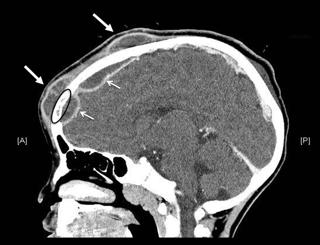
Podcast #242: Pott's Puffy Tumor

Podcast #242: Pott's Puffy Tumor

Author: Suzanne Chilton, M.D. Educational Pearls Pott's puffy tumor is a subperiosteal abscess of the frontal bone that arises from hematologic spread or direct infection via the frontal sinuses. The...

23 Aug 20173min
Podcast #241: GERD vs. MI

Podcast #241: GERD vs. MI

Author: Dave Rosenberg, M.D. Educational Pearls MI and GERD can present similarly. For example, 47% with angina report increased belching with an anginal attack, and 20% of people with an MI describe...

21 Aug 20173min
Podcast #240: Honey and Burns

Podcast #240: Honey and Burns

Podcast #240: Honey and Burns Author: Nick Hatch, M.D. Educational Pearls Honey can be used to treat burns because it has antibacterial properties. In one study, honey outperformed silver sulfadiazin...

19 Aug 20172min
Podcast #239: Tetanus in the ED

Podcast #239: Tetanus in the ED

Author: Rachel Beham, PharmD, Advanced Clinical Pharmacist - Emergency Medicine Educational Pearls Tetanus Ig is indicated in those who have no or unknown tetanus vaccination history who present with...

17 Aug 20173min
Podcast #238: Ultrasound in Cardiac Arrest

Podcast #238: Ultrasound in Cardiac Arrest

Author: Aaron Lessen M.D. Educational Pearls Ultrasound is helpful in the setting of cardiac arrest for finding a cause like cardiac tamponade or PE, but also for predicting outcomes for non-shockab...

15 Aug 20171min

Deep Dive #5: The Evolution of Sepsis Treatment

Deep Dive #5: The Evolution of Sepsis Treatment

Author: Susan Brion, M.D. Dr. Brion enlightens us on the ever-evolving standard of sepsis management.

11 Aug 201722min

Podcast #237: Phimosis vs. Paraphimosis

Podcast #237: Phimosis vs. Paraphimosis

Author: Sam Killian, M.D. Educational Pearls Phimosis refers to the inability to retract the distal foreskin over the glans penis in uncircumcised males. Paraphimosis is the entrapment of the foreski...

9 Aug 20174min
Podcast #236: Peripheral IJ Access

Podcast #236: Peripheral IJ Access

Author: Nick Hatch, M.D. Educational Pearls When peripheral or central IV access is difficult, sometimes providers will try to use a peripheral IV setup at an IJ site using US guidance. Case studies ...

7 Aug 20174min

Populært innen Vitenskap

fastlegen
tingenes-tilstand
rekommandert
jss
smart-forklart
vett-og-vitenskap-med-gaute-einevoll
rss-rekommandert
forskningno
sinnsyn
villmarksliv
fjellsportpodden
rss-nysgjerrige-norge
rss-paradigmepodden
pod-britannia
aldring-og-helse-podden
nordnorsk-historie
diagnose
tidlose-historier
tomprat-med-gunnar-tjomlid
rss-overskuddsliv

















