Podcast 912: Narcan (Naloxone)

Podcast 912: Narcan (Naloxone)

Contributor: Taylor Lynch, MD

Educational Pearls:

Opioid Epidemic- quick facts

  • Drug overdoses, primarily driven by opioids, have become the leading cause of accidental death in the U.S. for individuals aged 18-45.

  • In 2021, opioids were involved in nearly 75% of all drug overdose deaths

  • The rise of synthetic opioids like fentanyl, which is much more potent than heroin or prescription opioids, has played a major role in the increase in overdose deaths

What is Narcan AKA Naloxone?

  • Competitive opioid antagonist. It sits on the receptor but doesn't activate it.

When do we give Narcan?

  • Respiratory rate less than 8-10 breaths per minute

Should you check the pupils?

  • An opioid overdose classically presents with pinpoint pupils BUT…

  • Hypercapnia from bradypnea can normalize the pupils

  • Taking other drugs at the same time like cocaine or meth can counteract the pupillary effects

  • Basilar stroke could also cause small pupils, so don't anchor on an opioid overdose

How does Narcan affect the body?

  • Relatively safe even if the patient is not experiencing an opioid overdose. So when in doubt, give the Narcan.

  • What if the patient is opioid naive and overdosing?

    • Use a large dose given that this patient is unlikely to withdraw

    • 0.4-2 mg every 3-5 minutes

  • What if the patient is a chronic opioid user

    • Use a smaller dose such as 0.04-0.4 mg to avoid precipitated withdrawal

How fast does Narcan work?

  • Given intravenously (IV), onset is 1-2 min

  • Given intranasal (IN), onset is 3-4 min

  • Given intramuscularly (IM), onset is ~6 min

  • Duration of action is 60 mins, with a range of 20-90 minutes

How does that compare to the duration of action of common opioids?

  • Heroine lasts 60 min

  • Fentanyl lasts 30-60 min, depending on route

  • Carfentanyl lasts ~5 hrs

  • Methadone lasts 12-24 hrs

  • So we really need to be conscious about redosing

How do you monitor someone treated with Narcan?

  • Pay close attention to the end-tidal CO2 to ensure that are ventilating appropriately

  • Be cautious with giving O2 as it might mask hypoventilation

  • Watch the respiratory rate

  • Give Narcan as needed

  • Observe for at least 2-4 hours after the last Narcan dose

  • Larger the dose, longer the observation period

Who gets a drip?

  • If they have gotten ~3 doses, time to start the drip

  • Start at 2/3rds last effective wake-up dose

Complications

  • Flash pulm edema

    • 0.2-3.6% complication rate

    • Might be from the catecholamine surge from abrupt wake-up

    • Might also be from large inspiratory effort against a partially closed glottis which creates too much negative pressure

    • Treat with BIPAP if awake and intubation if not awake

Should you give Narcan in cardiac arrest?

  • Short answer no. During ACLS you take over breathing for the patient and that is pretty much the only way that Narcan can help

  • Just focus on high quality CPR

References

Summarized by Jeffrey Olson MS2 | Edited by Meg Joyce & Jorge Chalit, OMSII

Episoder(1144)

Podcast 787: TAVR and Stroke

Podcast 787: TAVR and Stroke

Contributor: Nick Hatch, MD Educational Pearls: Transcatheter aortic valve replacement (TAVR) is an increasingly common endovascular procedure to treat aortic stenosis TAVR is an alternative to the o...

6 Jun 20224min
Podcast 786: Smiling Death

Podcast 786: Smiling Death

Contributor: Nick Hatch, MD Educational Pearls: "Smiling Death" describes the prehospital phenomenon of a person who is happy to be extricated from an extended period of crush injury, but dies sudden...

31 Mai 20226min
Podcast 785: Pepper Spray

Podcast 785: Pepper Spray

Contributor: Jared Scott, MD Educational Pearls: Pepper spray is a chemical irritant derived from oleoresin capsicum (OC), an extract from pepper plants. It can be used by police for riot or crowd co...

30 Mai 20226min
Podcast 784: Wastewater Surveillance for COVID

Podcast 784: Wastewater Surveillance for COVID

Contributor: Jared Scott, MD Educational Pearls: About 50% of those infected with SARS-CoV-2 will shed the virus in their feces Wastewater surveillance can be used to track COVID burden, which may ...

24 Mai 20225min
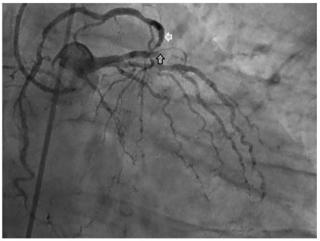
Podcast 783: LAD Occlusion & Troponin

Podcast 783: LAD Occlusion & Troponin

Contributor: Jared Scott, MD Educational Pearls: A study randomized 34 healthy patient to have their left anterior descending artery (LAD) occluded by balloon for 0, 15, 30, or 90 seconds Subsequen...

23 Mai 20225min
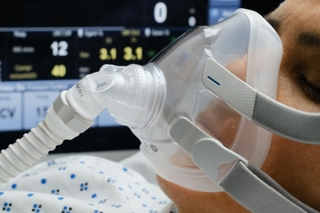
Podcast 782: Ventilator Management

Podcast 782: Ventilator Management

Contributor: Aaron Lessen, MD Educational Pearls: Tidal volume is the amount of breath a patient receives in a single ventilation Traditional tidal volume (TV) setting was 10 ml/kg but studies showe...

17 Mai 20223min

Podcast 781: Foxglove, Dropsy, and Salvador Dali

Podcast 781: Foxglove, Dropsy, and Salvador Dali

Contributor: Chris Holmes, MD Educational Pearls: Foxglove plant contains the cardiac glycoside digoxin Foxglove leaf potions were once used to treat Dropsy; a historic term for symptoms of heart f...

16 Mai 20224min
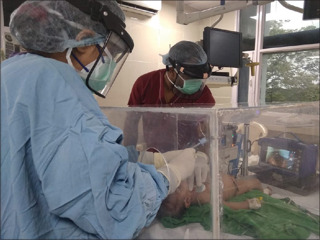
Podcast 780: Pediatric Sedation Post-Intubation

Podcast 780: Pediatric Sedation Post-Intubation

Contributor: Aaron Lessen, MD Educational Pearls: Recent study looking at a pediatric emergency department to determine what percentage of patients after intubation received sedation within 10 minute...

10 Mai 20223min

Populært innen Vitenskap

fastlegen
tingenes-tilstand
smart-forklart
jss
sinnsyn
rekommandert
rss-rekommandert
villmarksliv
tomprat-med-gunnar-tjomlid
forskningno
rss-paradigmepodden
fjellsportpodden
aldring-og-helse-podden
tidlose-historier
diagnose
pod-britannia
vett-og-vitenskap-med-gaute-einevoll
nordnorsk-historie
nevropodden
dekodet-2