
Podcast 912: Narcan (Naloxone)

Podcast 912: Narcan (Naloxone)

Contributor: Taylor Lynch, MD

Educational Pearls:

Opioid Epidemic- quick facts

  • Drug overdoses, primarily driven by opioids, have become the leading cause of accidental death in the U.S. for individuals aged 18-45.

  • In 2021, opioids were involved in nearly 75% of all drug overdose deaths

  • The rise of synthetic opioids like fentanyl, which is much more potent than heroin or prescription opioids, has played a major role in the increase in overdose deaths

What is Narcan AKA Naloxone?

  • Competitive opioid antagonist. It sits on the receptor but doesn't activate it.

When do we give Narcan?

  • Respiratory rate less than 8-10 breaths per minute

Should you check the pupils?

  • An opioid overdose classically presents with pinpoint pupils BUT…

  • Hypercapnia from bradypnea can normalize the pupils

  • Taking other drugs at the same time like cocaine or meth can counteract the pupillary effects

  • Basilar stroke could also cause small pupils, so don't anchor on an opioid overdose

How does Narcan affect the body?

  • Relatively safe even if the patient is not experiencing an opioid overdose. So when in doubt, give the Narcan.

  • What if the patient is opioid naive and overdosing?

    • Use a large dose given that this patient is unlikely to withdraw

    • 0.4-2 mg every 3-5 minutes

  • What if the patient is a chronic opioid user

    • Use a smaller dose such as 0.04-0.4 mg to avoid precipitated withdrawal

How fast does Narcan work?

  • Given intravenously (IV), onset is 1-2 min

  • Given intranasal (IN), onset is 3-4 min

  • Given intramuscularly (IM), onset is ~6 min

  • Duration of action is 60 mins, with a range of 20-90 minutes

How does that compare to the duration of action of common opioids?

  • Heroine lasts 60 min

  • Fentanyl lasts 30-60 min, depending on route

  • Carfentanyl lasts ~5 hrs

  • Methadone lasts 12-24 hrs

  • So we really need to be conscious about redosing

How do you monitor someone treated with Narcan?

  • Pay close attention to the end-tidal CO2 to ensure that are ventilating appropriately

  • Be cautious with giving O2 as it might mask hypoventilation

  • Watch the respiratory rate

  • Give Narcan as needed

  • Observe for at least 2-4 hours after the last Narcan dose

  • Larger the dose, longer the observation period

Who gets a drip?

  • If they have gotten ~3 doses, time to start the drip

  • Start at 2/3rds last effective wake-up dose

Complications

  • Flash pulm edema

    • 0.2-3.6% complication rate

    • Might be from the catecholamine surge from abrupt wake-up

    • Might also be from large inspiratory effort against a partially closed glottis which creates too much negative pressure

    • Treat with BIPAP if awake and intubation if not awake

Should you give Narcan in cardiac arrest?

  • Short answer no. During ACLS you take over breathing for the patient and that is pretty much the only way that Narcan can help

  • Just focus on high quality CPR

References

Summarized by Jeffrey Olson MS2 | Edited by Meg Joyce & Jorge Chalit, OMSII

Episoder(1145)

Podcast 709: Clown Therapy

Podcast 709: Clown Therapy

Contributor: Jared Scott, MD Educational Pearls: Using LET, procedural sedation, and distraction techniques are often needed to successfully perform painful procedures in pediatrics patients The tech...

30 Aug 20214min

Podcast 708: Diagnostic Paracentesis

Podcast 708: Diagnostic Paracentesis

Contributor: Peter Bakes, MD Educational Pearls: Paracentesis is a procedure where fluid is removed from the peritoneal cavity by needle Indications for paracentesis include: large volume paracentesi...

24 Aug 20215min
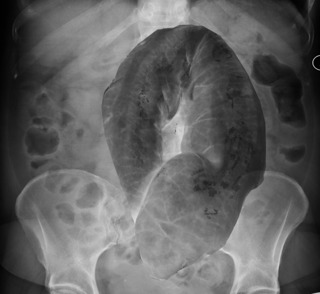
Podcast 707: Sigmoid Volvulus

Podcast 707: Sigmoid Volvulus

Contributor: Aaron Lessen, MD Educational Pearls: Sigmoid volvulus occurs when the sigmoid colon twists 180 to 360 degrees 10% of intestinal obstructions in the US; 50-70% of intestinal obstructions ...

23 Aug 20213min
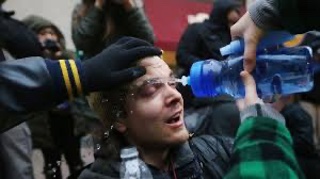
Podcast 706: Pepper Spray Decon

Podcast 706: Pepper Spray Decon

Contributor: Ramnik Dhaliwal, MD JD Educational Pearls: Pepper spray is a highly irritating compound with active ingredient of capsaicin Techniques to help decontaminate and alleviate symptoms of an ...

18 Aug 20213min

Podcast 705: Pyloric Stenosis

Podcast 705: Pyloric Stenosis

Contributor: Neil Cella, MD Educational Pearls: Pylorus becomes hypertrophied and does not allow food or liquid to pass through to the duodenum tOccurs between the ages of 3 weeks to 3 months Classic...

17 Aug 20214min
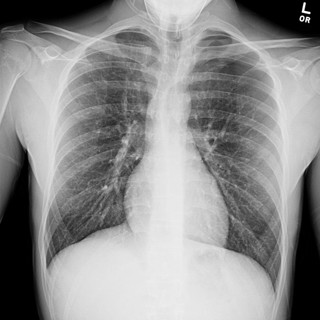
Podcast 704: Treatment of Pneumothorax

Podcast 704: Treatment of Pneumothorax

Contributor: Adam Barkin, MD Educational Pearls: Multi-center open-label non-inferiority trial looked at treatment of pneumothorax with a small-bore chest tube versus conservative management with exc...

16 Aug 20215min

Mental Health Monthly #8: Trauma-Informed Care

Mental Health Monthly #8: Trauma-Informed Care

Contributor: Randi Libbon, MD The Core features of trauma-informed care include: Patient empowerment, choice and collaboration. This means educating patients and allowing patients to make choices abo...

11 Aug 20219min
Podcast 703: Fever in Infants

Podcast 703: Fever in Infants

Contributor: Neil Cella, MD  Educational Pearls: 10% of patients 100.4) have an serious bacterial infection Most of these are UTIs, but also consider pneumonia and meningitis Requires CXR, LP, lab...

10 Aug 20215min

Populært innen Vitenskap

fastlegen
smart-forklart
jss
tingenes-tilstand
villmarksliv
rekommandert
vett-og-vitenskap-med-gaute-einevoll
sinnsyn
forskningno
rss-rekommandert
fjellsportpodden
rss-paradigmepodden
tomprat-med-gunnar-tjomlid
aldring-og-helse-podden
pod-britannia
rss-nysgjerrige-norge
nordnorsk-historie
diagnose
tidlose-historier
rss-overskuddsliv