
Episode 916: Central Cord Syndrome

Episode 916: Central Cord Syndrome

Contributor: Taylor Lynch, MD

Educational Pearls:

What is Central Cord Syndrome (CCS)?

  • Incomplete spinal cord injury caused by trauma that compresses the center of the cord

  • More common in hyperextension injuries like falling and hitting the chin

  • Usually happens only in individuals with preexisting neck and spinal cord conditions like cervical spondylosis (age-related wear and tear of the cervical spine)

Anatomy of spinal cord

  • Motor tracts

    • The signals the brain sends for the muscles to move travel in the corticospinal tracts of the spinal cord

    • The tracts that control the upper limbs are more central than the ones that control the lower limbs

    • The tracts that control the hands are more central than the ones that control the upper arm/shoulder

  • Fine touch, vibration, and proprioception (body position) tracts

    • These sensations travel in separate tracts in the spinal cord than the sensation of pain and temperature

    • Their pathway is called the dorsal column-medial lemniscus (DCML) pathway

    • This information travels in the most posterior aspect of the spinal cord

  • Pain, crude touch, pressure, and temperature tracts

    • These sensations travel in the spinothalamic tract, which is more centrally located

    • These signals also cross one side of the body to the other within the spinal cord near the level that they enter

How does this anatomy affect the presentation of CCS?

  • Patients typically experience more pronounced weakness or paralysis in their upper extremities as compared to their lower extremities with their hands being weaker than more proximal muscle groups

  • Sensation of pain, crude touch, pressure, and temperature are much morelikely to be diminished while the sensation of fine touch, vibration, and proprioception are spared

What happens with reflexes?

  • Deep tendon reflexes become exaggerated in CCS

  • This is because the disruption in the corticospinal tract removes inhibitory control over reflex arcs

What happens to bladder control?

  • The neural signals that coordinate bladder emptying are disrupted, therefore patients can present with urinary retention and/or urge incontinence

What is a Babinski's Sign?

  • When the sole of the foot is stimulated a normal response in adults is for the toes to flex downward (plantar flexion)

  • If there is an upper motor neuron injury like in CCS, the toes will flex upwards (dorsiflexion)

How is CCS diagnosed?

  • CCS is mostly a clinical diagnosis

  • These patient also need an MRI to see the extent of the damage which will show increased signal intensity within the central part of the spinal cord on T2-weighted images

How is CCS treated?

  • Strict c-spine precautions

  • Neurogenic shock precautions. Maintain a mean arterial pressure (MAP) of 85-90 to ensure profusion of the spinal cord

  • Levophed (norepinephrine bitartrate) and/or phenylephrine can be used to support their blood pressure to support spinal perfusion

  • Consider intubation for injuries above C5 (C3, 4, and 5 keep the diaphragm alive)

  • Consult neurosurgery for possible decompression surgery

  • Physical Therapy

References

  1. Avila, M. J., & Hurlbert, R. J. (2021). Central Cord Syndrome Redefined. Neurosurgery clinics of North America, 32(3), 353–363. https://doi.org/10.1016/j.nec.2021.03.007

  2. Brooks N. P. (2017). Central Cord Syndrome. Neurosurgery clinics of North America, 28(1), 41–47. https://doi.org/10.1016/j.nec.2016.08.002

  3. Engel-Haber, E., Snider, B., & Kirshblum, S. (2023). Central cord syndrome definitions, variations and limitations. Spinal cord, 61(11), 579–586. https://doi.org/10.1038/s41393-023-00894-2

Summarized by Jeffrey Olson, MS3 | Edited by Jorge Chalit, OMS3

Donate: https://emergencymedicalminute.org/donate/

Episoder(1144)

Podcast 825: ALS vs PD Transport

Podcast 825: ALS vs PD Transport

Contributor: Aaron Lessen, MD Educational Pearls: In urban settings, it is becoming more common for police to transport critical patients from scene to hospital A 2022 multicenter observational study...

31 Okt 20222min

Podcast 824: Catheter-Related Blood Infections

Podcast 824: Catheter-Related Blood Infections

Contributor: Travis Barlock, MD Educational Pearls: Catheter related blood infections were thought to be caused by skin flora seeding the catheter. Thus, significant effort is applied to sterility an...

25 Okt 20223min

Podcast 823: Immediate Resuscitative Thoracotomy

Podcast 823: Immediate Resuscitative Thoracotomy

Contributor: Jared Scott, MD Educational Pearls: Immediate resuscitative thoracotomy can be performed in the ED to gain rapid access to the thoracic cavity in cases of traumatic cardiac arrest Wester...

24 Okt 20227min
Podcast 822: Meralgia Paresthetica

Podcast 822: Meralgia Paresthetica

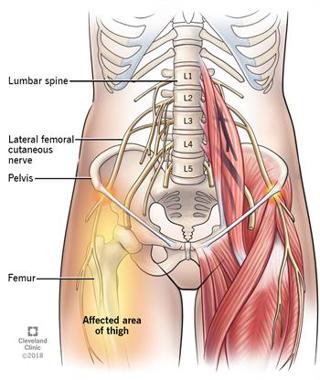
Contributor: Aaron Lessen, MD Educational Pearls: Lateral Cutaneous Femoral Nerve Entrapment Syndrome, also known as Meralgia Paresthetica, results from entrapment of the lateral cutaneous femoral ne...

18 Okt 20223min
Podcast 821: EKGs in Syncope

Podcast 821: EKGs in Syncope

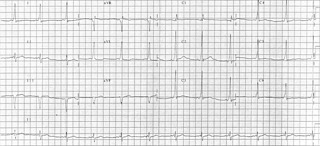
Contributor: Travis Barlock, MD Educational Pearls: An EKG should be obtained quickly after a syncopal event to identify possible life-threatening causes such as ischemia and arrhythmia WOBBLER is a...

17 Okt 20224min

Podcast 820: Who Qualifies for Take-Home Naloxone

Podcast 820: Who Qualifies for Take-Home Naloxone

Contributor: Don Stader, MD Educational Pearls: Home naloxone is traditionally given to those at high risk for opioid overdose such as those in the ED due to an opioid overdose, opioid intoxication, ...

11 Okt 20224min

Podcast 819: Indiscriminate Lactate Testing

Podcast 819: Indiscriminate Lactate Testing

Contributor: Jared Scott, MD Educational Pearls: Elevated lactate levels can be a useful indicator of critical illness in patients who meet SIRS criteria Lactate can also be elevated due to ot...

10 Okt 20225min
Podcast 818: Local Anesthetics and LAST

Podcast 818: Local Anesthetics and LAST

Contributor: Don Stader, MD Educational Pearls: There are two major groups of local anesthetics: Amide and Esther To recall what group an anesthetic belongs to, use this memory trick: Amide has...

4 Okt 20226min

Populært innen Vitenskap

fastlegen
tingenes-tilstand
rekommandert
tomprat-med-gunnar-tjomlid
rss-rekommandert
forskningno
jss
sinnsyn
villmarksliv
smart-forklart
rss-paradigmepodden
fjellsportpodden
diagnose
tidlose-historier
nevropodden
aldring-og-helse-podden
dekodet-2
vett-og-vitenskap-med-gaute-einevoll
grunnstoffene
rss-nysgjerrige-norge