
Episode 916: Central Cord Syndrome

Episode 916: Central Cord Syndrome

Contributor: Taylor Lynch, MD

Educational Pearls:

What is Central Cord Syndrome (CCS)?

  • Incomplete spinal cord injury caused by trauma that compresses the center of the cord

  • More common in hyperextension injuries like falling and hitting the chin

  • Usually happens only in individuals with preexisting neck and spinal cord conditions like cervical spondylosis (age-related wear and tear of the cervical spine)

Anatomy of spinal cord

  • Motor tracts

    • The signals the brain sends for the muscles to move travel in the corticospinal tracts of the spinal cord

    • The tracts that control the upper limbs are more central than the ones that control the lower limbs

    • The tracts that control the hands are more central than the ones that control the upper arm/shoulder

  • Fine touch, vibration, and proprioception (body position) tracts

    • These sensations travel in separate tracts in the spinal cord than the sensation of pain and temperature

    • Their pathway is called the dorsal column-medial lemniscus (DCML) pathway

    • This information travels in the most posterior aspect of the spinal cord

  • Pain, crude touch, pressure, and temperature tracts

    • These sensations travel in the spinothalamic tract, which is more centrally located

    • These signals also cross one side of the body to the other within the spinal cord near the level that they enter

How does this anatomy affect the presentation of CCS?

  • Patients typically experience more pronounced weakness or paralysis in their upper extremities as compared to their lower extremities with their hands being weaker than more proximal muscle groups

  • Sensation of pain, crude touch, pressure, and temperature are much morelikely to be diminished while the sensation of fine touch, vibration, and proprioception are spared

What happens with reflexes?

  • Deep tendon reflexes become exaggerated in CCS

  • This is because the disruption in the corticospinal tract removes inhibitory control over reflex arcs

What happens to bladder control?

  • The neural signals that coordinate bladder emptying are disrupted, therefore patients can present with urinary retention and/or urge incontinence

What is a Babinski's Sign?

  • When the sole of the foot is stimulated a normal response in adults is for the toes to flex downward (plantar flexion)

  • If there is an upper motor neuron injury like in CCS, the toes will flex upwards (dorsiflexion)

How is CCS diagnosed?

  • CCS is mostly a clinical diagnosis

  • These patient also need an MRI to see the extent of the damage which will show increased signal intensity within the central part of the spinal cord on T2-weighted images

How is CCS treated?

  • Strict c-spine precautions

  • Neurogenic shock precautions. Maintain a mean arterial pressure (MAP) of 85-90 to ensure profusion of the spinal cord

  • Levophed (norepinephrine bitartrate) and/or phenylephrine can be used to support their blood pressure to support spinal perfusion

  • Consider intubation for injuries above C5 (C3, 4, and 5 keep the diaphragm alive)

  • Consult neurosurgery for possible decompression surgery

  • Physical Therapy

References

  1. Avila, M. J., & Hurlbert, R. J. (2021). Central Cord Syndrome Redefined. Neurosurgery clinics of North America, 32(3), 353–363. https://doi.org/10.1016/j.nec.2021.03.007

  2. Brooks N. P. (2017). Central Cord Syndrome. Neurosurgery clinics of North America, 28(1), 41–47. https://doi.org/10.1016/j.nec.2016.08.002

  3. Engel-Haber, E., Snider, B., & Kirshblum, S. (2023). Central cord syndrome definitions, variations and limitations. Spinal cord, 61(11), 579–586. https://doi.org/10.1038/s41393-023-00894-2

Summarized by Jeffrey Olson, MS3 | Edited by Jorge Chalit, OMS3

Donate: https://emergencymedicalminute.org/donate/

Episoder(1145)

Pharmacy Phriday #6: Tik Tok Benadryl Challenge and Diphenhydramine Toxicity

Pharmacy Phriday #6: Tik Tok Benadryl Challenge and Diphenhydramine Toxicity

Contributor: Ruben Marrero-Vasquez, PharmD Educational Pearls: ACEP and FDA have both issued warnings about the viral Tik Tok Benadryl (diphenhydramine) challenge where individuals voluntarily overdo...

1 Jan 20216min
Mental Health Monthly #6: Suicide Assessment

Mental Health Monthly #6: Suicide Assessment

EMM is excited to welcome back the hosts of Millennial Mental Health Channel podcast to explain the key points of a robust suicide assessment in the ED. Dr. Justin Romano is a third year psychiatry re...

30 Des 202016min
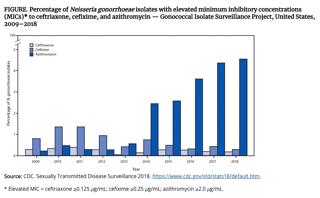
Podcast 626: Updated Gonorrhea Treatment

Podcast 626: Updated Gonorrhea Treatment

Educational Pearls: The CDC has made new formal recommendations for treating Gonorrhea due to increasing resistance to Rocephin and Azithromycin. New recommendations: Confirmed gonorrhea: Ceftriaxo...

29 Des 20204min

Podcast 625: High Altitude Cerebral Edema (HACE)

Podcast 625: High Altitude Cerebral Edema (HACE)

Contributor: Tom Seibert, MD Educational Pearls: High altitude cerebral edema (HACE) is the end stage of acute mountain sickness and is diagnosed when patients develop neurologic dysfunction, ataxia,...

28 Des 20202min

Podcast 624: Timing and Tips on Sepsis

Podcast 624: Timing and Tips on Sepsis

Contributor: Don Stader, MD Educational Pearls: Time can be an important factor in outcomes regarding sepsis including mortality Emphasis has grown on early administration of antibiotics and IV fluid...

22 Des 20203min
Podcast 623: Acute Mountain Sickness

Podcast 623: Acute Mountain Sickness

Contributor: Tom Seibert, MD Educational Pearls: Acute Mountain sickness (AMS) can cause headache along with fatigue, nausea, vomiting, insomnia Typically occurs above 6500 feet (not 65,000) in eleva...

21 Des 20204min

Podcast 622: High Altitude Pulmonary Edema (HAPE)

Podcast 622: High Altitude Pulmonary Edema (HAPE)

Contributor: Thomas Seibert, MD Educational Pearls: High Altitude Pulmonary Edema (HAPE) typically occurs 2-4 days after arriving at elevation Symptoms include: Fatigue Dyspnea Cough Treatment in...

15 Des 20204min

Podcast 621: Pediatric Psychosis

Podcast 621: Pediatric Psychosis

Contributor: Aaron Lessen, MD Educational Pearls: Schizophrenia typically doesn't present until age 13 and has a prodrome Prodrome includes months of gradual changes in behavior, starting with negati...

14 Des 20203min

Populært innen Vitenskap

fastlegen
tingenes-tilstand
rekommandert
jss
smart-forklart
vett-og-vitenskap-med-gaute-einevoll
rss-rekommandert
forskningno
sinnsyn
villmarksliv
fjellsportpodden
rss-nysgjerrige-norge
rss-paradigmepodden
pod-britannia
aldring-og-helse-podden
nordnorsk-historie
diagnose
tidlose-historier
tomprat-med-gunnar-tjomlid
rss-overskuddsliv