Episode 916: Central Cord Syndrome

Episode 916: Central Cord Syndrome

Contributor: Taylor Lynch, MD

Educational Pearls:

What is Central Cord Syndrome (CCS)?

  • Incomplete spinal cord injury caused by trauma that compresses the center of the cord

  • More common in hyperextension injuries like falling and hitting the chin

  • Usually happens only in individuals with preexisting neck and spinal cord conditions like cervical spondylosis (age-related wear and tear of the cervical spine)

Anatomy of spinal cord

  • Motor tracts

    • The signals the brain sends for the muscles to move travel in the corticospinal tracts of the spinal cord

    • The tracts that control the upper limbs are more central than the ones that control the lower limbs

    • The tracts that control the hands are more central than the ones that control the upper arm/shoulder

  • Fine touch, vibration, and proprioception (body position) tracts

    • These sensations travel in separate tracts in the spinal cord than the sensation of pain and temperature

    • Their pathway is called the dorsal column-medial lemniscus (DCML) pathway

    • This information travels in the most posterior aspect of the spinal cord

  • Pain, crude touch, pressure, and temperature tracts

    • These sensations travel in the spinothalamic tract, which is more centrally located

    • These signals also cross one side of the body to the other within the spinal cord near the level that they enter

How does this anatomy affect the presentation of CCS?

  • Patients typically experience more pronounced weakness or paralysis in their upper extremities as compared to their lower extremities with their hands being weaker than more proximal muscle groups

  • Sensation of pain, crude touch, pressure, and temperature are much morelikely to be diminished while the sensation of fine touch, vibration, and proprioception are spared

What happens with reflexes?

  • Deep tendon reflexes become exaggerated in CCS

  • This is because the disruption in the corticospinal tract removes inhibitory control over reflex arcs

What happens to bladder control?

  • The neural signals that coordinate bladder emptying are disrupted, therefore patients can present with urinary retention and/or urge incontinence

What is a Babinski's Sign?

  • When the sole of the foot is stimulated a normal response in adults is for the toes to flex downward (plantar flexion)

  • If there is an upper motor neuron injury like in CCS, the toes will flex upwards (dorsiflexion)

How is CCS diagnosed?

  • CCS is mostly a clinical diagnosis

  • These patient also need an MRI to see the extent of the damage which will show increased signal intensity within the central part of the spinal cord on T2-weighted images

How is CCS treated?

  • Strict c-spine precautions

  • Neurogenic shock precautions. Maintain a mean arterial pressure (MAP) of 85-90 to ensure profusion of the spinal cord

  • Levophed (norepinephrine bitartrate) and/or phenylephrine can be used to support their blood pressure to support spinal perfusion

  • Consider intubation for injuries above C5 (C3, 4, and 5 keep the diaphragm alive)

  • Consult neurosurgery for possible decompression surgery

  • Physical Therapy

References

  1. Avila, M. J., & Hurlbert, R. J. (2021). Central Cord Syndrome Redefined. Neurosurgery clinics of North America, 32(3), 353–363. https://doi.org/10.1016/j.nec.2021.03.007

  2. Brooks N. P. (2017). Central Cord Syndrome. Neurosurgery clinics of North America, 28(1), 41–47. https://doi.org/10.1016/j.nec.2016.08.002

  3. Engel-Haber, E., Snider, B., & Kirshblum, S. (2023). Central cord syndrome definitions, variations and limitations. Spinal cord, 61(11), 579–586. https://doi.org/10.1038/s41393-023-00894-2

Summarized by Jeffrey Olson, MS3 | Edited by Jorge Chalit, OMS3

Donate: https://emergencymedicalminute.org/donate/

Episoder(1145)

Podcast # 390: Haloperidol for Pain

Podcast # 390: Haloperidol for Pain

Author: Gretchen Hinson, MD Educational Pearls: Reasonable approach of haloperidol 10 mg IM (or 5 mg IV) for pain relief in opioid-dependent patients; can repeat once Chronic opioid use results in ...

10 Okt 20185min
Podcast #389: BRUE

Podcast #389: BRUE

Educational Pearls: BRUE (Brief Resolved Unexplained Event) replaces what was previously called ALTE BRUE describes an event in a child less than one year of age with one or more of the following...

8 Okt 20184min
Podcast #388: Antibiotics for Appendicitis

Podcast #388: Antibiotics for Appendicitis

Author: Aaron Lessen, MD Educational Pearls: 5-year follow up study on antibiotic treatment for uncomplicated appendicitis showed 39.1% recurrence rate requiring appendectomy by 5 years Nearly 6...

5 Okt 20182min
Podcast #387: Fluoroquinolones are Perfectly Safe?

Podcast #387: Fluoroquinolones are Perfectly Safe?

Author: Don Stader, MD Educational Pearls: Fluoroquinolones can cause connective tissue disruption leading not only to tendon rupture but also aortic dissection Retrospective study from Taiwan s...

3 Okt 20183min

Podcast #386: Respecting Transgender Patients

Podcast #386: Respecting Transgender Patients

Author: Kasey Champion, MD Educational Pearls: Transgender populations are frequent victims of discrimination in healthcare Ask transgender patients what their preferred pronoun is It is somet...

1 Okt 20183min
Podcast #385: Probiotics

Podcast #385: Probiotics

Author: John Winkler, MD Educational Pearls: Probiotics are bacteria that are ingested to promote gut health but recent research casts doubt on their effectiveness. Recent study suggests that most...

28 Sep 20182min
Podcast #384: Don't stab a PTA?

Podcast #384: Don't stab a PTA?

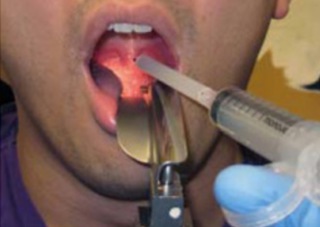
Author: Don Stader, MD Educational Pearls: Recent study suggests we may not need to drain uncomplicated peritonsillar abscesses Patients who received medical therapy alone had no difference in c...

26 Sep 20183min
Podcast #383: Prehospital Tubes

Podcast #383: Prehospital Tubes

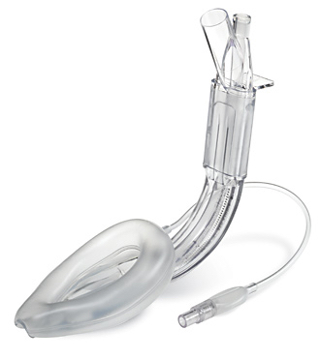
Author: Sam Killian, MD Educational Pearls: Two high quality randomized control trials published in 2018 demonstrated no difference in mortality or neurologic outcomes when using a supraglottic ai...

24 Sep 20184min

Populært innen Vitenskap

fastlegen
tingenes-tilstand
rekommandert
jss
rss-nysgjerrige-norge
vett-og-vitenskap-med-gaute-einevoll
rss-rekommandert
sinnsyn
forskningno
villmarksliv
nordnorsk-historie
fjellsportpodden
smart-forklart
rss-paradigmepodden
aldring-og-helse-podden
diagnose
pod-britannia
rss-overskuddsliv
abid-nadia-skyld-og-skam
tomprat-med-gunnar-tjomlid