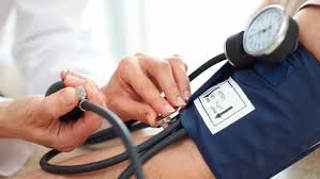
Episode 918: Automated Blood Pressure Cuffs

Episode 918: Automated Blood Pressure Cuffs

Contributor: Aaron Lessen, MD

Educational Pearls:

How does an automated blood pressure cuff work?

  • Automated blood pressure cuffs work differently than taking a manual blood pressure.

  • While taking a manual blood pressure, one typically listens for Korotkoff sounds (turbulent flow) while slowly deflating the cuff.

  • An automatic blood pressure cuff only senses the pressure in the cuff itself and specifically pays attention to oscillations in the pressure caused by when the pressure of the cuff is between the systolic (heart squeezing) and diastolic (heart relaxed) pressures.

  • These oscillations are at a maximum when the pressure in the cuff matches the mean arterial pressure (MAP) and therefore the machines are most accurate at reporting the MAP.

  • The machines then use the MAP and other information about the oscillations to estimate the systolic and diastolic pressures, which are less accurate.

What should you do if you need more accurate systolic and diastolic blood pressures?

  • Take a manual blood pressure.

  • Get an arterial-line (a-line), which provides continuous data for the blood pressure at the end of a catheter.

What happens if the cuff is too big or too small for the patient?

  • If the cuff is too small it will overestimate the pressure.

  • If the cuff is too large it will underestimate the pressure.

What should you do if the cuff cycles a bunch of times before reporting a blood pressure?

  • It probably isn't very accurate so consider another method.

Bonus fact!

  • The MAP is not directly in the middle of the systolic and diastolic pressures but is weighted towards the diastolic pressure. The MAP can be calculated by adding two-thirds of the diastolic pressure to one third of the systolic pressure. For example if the BP is 120/90 the MAP is 100 mmHg.

References

  1. Benmira, A., Perez-Martin, A., Schuster, I., Aichoun, I., Coudray, S., Bereksi-Reguig, F., & Dauzat, M. (2016). From Korotkoff and Marey to automatic non-invasive oscillometric blood pressure measurement: does easiness come with reliability?. Expert review of medical devices, 13(2), 179–189. https://doi.org/10.1586/17434440.2016.1128821

  2. Liu, J., Li, Y., Li, J., Zheng, D., & Liu, C. (2022). Sources of automatic office blood pressure measurement error: a systematic review. Physiological measurement, 43(9), 10.1088/1361-6579/ac890e. https://doi.org/10.1088/1361-6579/ac890e

  3. Vilaplana J. M. (2006). Blood pressure measurement. Journal of renal care, 32(4), 210–213. https://doi.org/10.1111/j.1755-6686.2006.tb00025.x

Summarized by Jeffrey Olson, MS3 | Edited by Meg Joyce, MS1 & Jorge Chalit, OMS3

Donate: https://emergencymedicalminute.org/donate/

Episoder(1145)

Podcast #262: Pertussis

Podcast #262: Pertussis

Author: Julian Orenstein, M.D. Educational Pearls Colorado has a high population of unvaccinated children, and is at increased risk for pertussis outbreaks. The causative organism is Bordetella pertu...

23 Okt 20174min

Deep Dive #7: Domestic Violence

Deep Dive #7: Domestic Violence

Authors: Katie Sprinkel, MD Emergency Medicine Physician SANE Medical Director, Medical Center of Aurora Amy Ferrin, Senior Deputy District Attorney County Court Supervisor Office of the District A...

16 Okt 201737min
Podcast #261: Icatibant

Podcast #261: Icatibant

Author: Aaron Lessen, M.D. Educational Pearls Icatibant was introduced to treat ACE-inhibitor induced angioendema. This type of angioedema is refractory to epinephrine and antihistamines, and is like...

13 Okt 20172min
Podcast #260: Preoxygenation

Podcast #260: Preoxygenation

Author: David Rosenberg, M.D. Educational Pearls Preoxygenation is done before rapid sequence intubation, and should be done even if SaO2 is at 100%. Preoxygenation is done to fill the lungs with oxy...

11 Okt 20172min
Podcast #259: Transient Ischemic Attacks

Podcast #259: Transient Ischemic Attacks

Podcast #259: TIA Author: Peter Bakes, M.D. Educational Pearls A TIA is defined as focal neurological deficit that resolves within 24 hours and has negative imaging. The etiology is a transient throm...

9 Okt 20177min
Podcast #258: REBOA

Podcast #258: REBOA

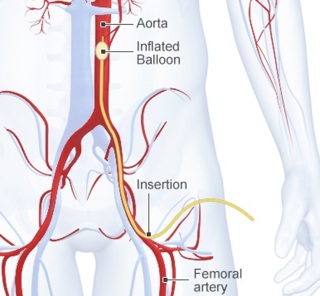
Author: Dylan Luyten, M.D. Educational Pearls Resuscitative Endovascular Balloon Occlusion of the Aorta (REBOA). Exsanguination is a major cause of mortality in trauma One temporizing technique to bu...

6 Okt 20173min

Podcast #257: Strangulation

Podcast #257: Strangulation

Educational Pearls Strangulation is common in cases of domestic violence and sexual assault, and it is associated with higher mortality People who have been strangled have a higher rate of stroke due...

4 Okt 20174min
Podcast #256: Fentanyl Ingestion

Podcast #256: Fentanyl Ingestion

Authors: Don Stader, M.D & Rachael Duncan, PharmD BCPS BCCCP Educational Pearls Fentanyl patches may be abused in many ways, including changing the patches more frequently, chewing them, extracting t...

2 Okt 20175min

Populært innen Vitenskap

fastlegen
tingenes-tilstand
rekommandert
jss
rss-nysgjerrige-norge
rss-rekommandert
vett-og-vitenskap-med-gaute-einevoll
sinnsyn
forskningno
villmarksliv
nordnorsk-historie
fjellsportpodden
rss-paradigmepodden
smart-forklart
rss-overskuddsliv
aldring-og-helse-podden
diagnose
pod-britannia
tomprat-med-gunnar-tjomlid
tidlose-historier