Episode 918: Automated Blood Pressure Cuffs

Episode 918: Automated Blood Pressure Cuffs

Contributor: Aaron Lessen, MD

Educational Pearls:

How does an automated blood pressure cuff work?

  • Automated blood pressure cuffs work differently than taking a manual blood pressure.

  • While taking a manual blood pressure, one typically listens for Korotkoff sounds (turbulent flow) while slowly deflating the cuff.

  • An automatic blood pressure cuff only senses the pressure in the cuff itself and specifically pays attention to oscillations in the pressure caused by when the pressure of the cuff is between the systolic (heart squeezing) and diastolic (heart relaxed) pressures.

  • These oscillations are at a maximum when the pressure in the cuff matches the mean arterial pressure (MAP) and therefore the machines are most accurate at reporting the MAP.

  • The machines then use the MAP and other information about the oscillations to estimate the systolic and diastolic pressures, which are less accurate.

What should you do if you need more accurate systolic and diastolic blood pressures?

  • Take a manual blood pressure.

  • Get an arterial-line (a-line), which provides continuous data for the blood pressure at the end of a catheter.

What happens if the cuff is too big or too small for the patient?

  • If the cuff is too small it will overestimate the pressure.

  • If the cuff is too large it will underestimate the pressure.

What should you do if the cuff cycles a bunch of times before reporting a blood pressure?

  • It probably isn't very accurate so consider another method.

Bonus fact!

  • The MAP is not directly in the middle of the systolic and diastolic pressures but is weighted towards the diastolic pressure. The MAP can be calculated by adding two-thirds of the diastolic pressure to one third of the systolic pressure. For example if the BP is 120/90 the MAP is 100 mmHg.

References

  1. Benmira, A., Perez-Martin, A., Schuster, I., Aichoun, I., Coudray, S., Bereksi-Reguig, F., & Dauzat, M. (2016). From Korotkoff and Marey to automatic non-invasive oscillometric blood pressure measurement: does easiness come with reliability?. Expert review of medical devices, 13(2), 179–189. https://doi.org/10.1586/17434440.2016.1128821

  2. Liu, J., Li, Y., Li, J., Zheng, D., & Liu, C. (2022). Sources of automatic office blood pressure measurement error: a systematic review. Physiological measurement, 43(9), 10.1088/1361-6579/ac890e. https://doi.org/10.1088/1361-6579/ac890e

  3. Vilaplana J. M. (2006). Blood pressure measurement. Journal of renal care, 32(4), 210–213. https://doi.org/10.1111/j.1755-6686.2006.tb00025.x

Summarized by Jeffrey Olson, MS3 | Edited by Meg Joyce, MS1 & Jorge Chalit, OMS3

Donate: https://emergencymedicalminute.org/donate/

Episoder(1145)

Podcast 575:  Light on the Sedation

Podcast 575: Light on the Sedation

Contributor: Aaron Lessen, MD Educational Pearls: Studies have shown that patients who are under deeper sedation in the ICU have worse outcomes. Recent study compared lighter vs heavier sedation of p...

6 Jul 20202min

Epidemic Meets Pandemic #4: The Patient Perspective

Epidemic Meets Pandemic #4: The Patient Perspective

This limited series will investigate how the nation's opioid epidemic has been impacted by the COVID-19 pandemic. Over the course of this series, we will hear from a harm reductionist, an addiction me...

6 Jul 202047min

Epidemic Meets Pandemic #3: The Law Enforcement Perspective

Epidemic Meets Pandemic #3: The Law Enforcement Perspective

This limited series will investigate how the nation's opioid epidemic has been impacted by the COVID-19 pandemic. Over the course of this series, we will hear from a harm reductionist, an addiction me...

1 Jul 20201h 2min

Epidemic Meets Pandemic #2: The Addiction Medicine Perspective

Epidemic Meets Pandemic #2: The Addiction Medicine Perspective

This limited series will investigate how the nation's opioid epidemic has been impacted by the COVID-19 pandemic. Over the course of this series, we will hear from a harm reductionist, an addiction me...

30 Jun 202029min

Epidemic Meets Pandemic #1: The Harm Reductionist Perspective

Epidemic Meets Pandemic #1: The Harm Reductionist Perspective

This limited series will investigate how the nation's opioid epidemic has been impacted by the COVID-19 pandemic. Over the course of this series, we will hear from a harm reductionist, an addiction me...

29 Jun 202041min
UnfilterED Clips: A Toxicologist's Perspective on COVID-19, Biological Warfare and the Need for Disaster Preparedness

UnfilterED Clips: A Toxicologist's Perspective on COVID-19, Biological Warfare and the Need for Disaster Preparedness

Taken from 'UnfilterED #8: Dr. Christopher Hoyte'. "This current sars-coV-2 / COVID-19 situation should really be a wake-up call for not just a pandemic, but for a biological attack...One of the thing...

27 Jun 202011min

UnfilterED #8: Dr. Christopher Hoyte

UnfilterED #8: Dr. Christopher Hoyte

Dr. Chris Hoyte is an ED physician, toxicologist and researcher based in Denver, CO. He was featured in Bring Em' All: Chaos. Care. Stories from Medicine's Front Line, a book celebrating emergency phy...

24 Jun 202047min
Podcast 574:  Cyanide Toxicity

Podcast 574: Cyanide Toxicity

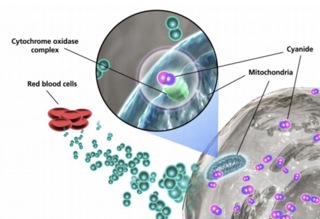
Contributor: Nick Tsipis, MD Educational Pearls: Significant cyanide exposure most commonly occurs from fire/smoke exposure particularly when plastics are involved Cyanide binds to cytochrome oxidase...

23 Jun 20205min

Populært innen Vitenskap

fastlegen
tingenes-tilstand
rekommandert
jss
vett-og-vitenskap-med-gaute-einevoll
rss-nysgjerrige-norge
rss-rekommandert
sinnsyn
smart-forklart
nordnorsk-historie
villmarksliv
rss-paradigmepodden
forskningno
pod-britannia
fjellsportpodden
aldring-og-helse-podden
diagnose
rss-overskuddsliv
tomprat-med-gunnar-tjomlid
tidlose-historier