Episode 918: Automated Blood Pressure Cuffs

Episode 918: Automated Blood Pressure Cuffs

Contributor: Aaron Lessen, MD

Educational Pearls:

How does an automated blood pressure cuff work?

  • Automated blood pressure cuffs work differently than taking a manual blood pressure.

  • While taking a manual blood pressure, one typically listens for Korotkoff sounds (turbulent flow) while slowly deflating the cuff.

  • An automatic blood pressure cuff only senses the pressure in the cuff itself and specifically pays attention to oscillations in the pressure caused by when the pressure of the cuff is between the systolic (heart squeezing) and diastolic (heart relaxed) pressures.

  • These oscillations are at a maximum when the pressure in the cuff matches the mean arterial pressure (MAP) and therefore the machines are most accurate at reporting the MAP.

  • The machines then use the MAP and other information about the oscillations to estimate the systolic and diastolic pressures, which are less accurate.

What should you do if you need more accurate systolic and diastolic blood pressures?

  • Take a manual blood pressure.

  • Get an arterial-line (a-line), which provides continuous data for the blood pressure at the end of a catheter.

What happens if the cuff is too big or too small for the patient?

  • If the cuff is too small it will overestimate the pressure.

  • If the cuff is too large it will underestimate the pressure.

What should you do if the cuff cycles a bunch of times before reporting a blood pressure?

  • It probably isn't very accurate so consider another method.

Bonus fact!

  • The MAP is not directly in the middle of the systolic and diastolic pressures but is weighted towards the diastolic pressure. The MAP can be calculated by adding two-thirds of the diastolic pressure to one third of the systolic pressure. For example if the BP is 120/90 the MAP is 100 mmHg.

References

  1. Benmira, A., Perez-Martin, A., Schuster, I., Aichoun, I., Coudray, S., Bereksi-Reguig, F., & Dauzat, M. (2016). From Korotkoff and Marey to automatic non-invasive oscillometric blood pressure measurement: does easiness come with reliability?. Expert review of medical devices, 13(2), 179–189. https://doi.org/10.1586/17434440.2016.1128821

  2. Liu, J., Li, Y., Li, J., Zheng, D., & Liu, C. (2022). Sources of automatic office blood pressure measurement error: a systematic review. Physiological measurement, 43(9), 10.1088/1361-6579/ac890e. https://doi.org/10.1088/1361-6579/ac890e

  3. Vilaplana J. M. (2006). Blood pressure measurement. Journal of renal care, 32(4), 210–213. https://doi.org/10.1111/j.1755-6686.2006.tb00025.x

Summarized by Jeffrey Olson, MS3 | Edited by Meg Joyce, MS1 & Jorge Chalit, OMS3

Donate: https://emergencymedicalminute.org/donate/

Episoder(1145)

Podcast #374:  Iliac Artery Endofibrosis

Podcast #374: Iliac Artery Endofibrosis

Author:  Sue Chilton, MD Educational Pearls:   An unusual cause of leg pain that can mimic sciatica/claudication Predominantly occurring in high endurance athletes, particularly cyclists and runner...

4 Sep 20183min
Podcast # 373: Legionnaires Disease

Podcast # 373: Legionnaires Disease

Author: Gretchen Hinson, MD Educational Pearls: Legionnaires disease refers to a severe pneumonia caused by Legionella pneumophilia and occurs typically at the extremes of age Associated gastroi...

1 Sep 20183min
Podcast # 372:  The Latest on Epinephrine in Cardiac Arrest

Podcast # 372: The Latest on Epinephrine in Cardiac Arrest

Author: Don Stader, MD Educational Pearls: 8014 patients with out-of-hospital cardiac arrest randomized to epinephrine vs placebo 30-day survival was not dramatically better between groups (3.2%...

30 Aug 20183min
Podcast # 371: EKG changes of Hyperkalemia

Podcast # 371: EKG changes of Hyperkalemia

Author: Jared Scott, MD Educational Pearls: EKG changes do not necessarily correlate to degree of hyperkalemia Traditional progression through peaked T-waves, flattened p-waves, QRS widening, an...

28 Aug 20183min
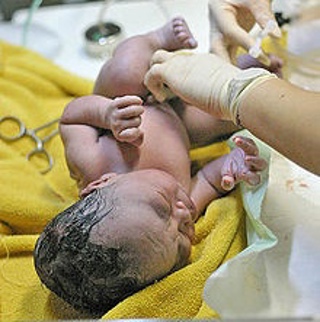
Podcast # 370:  Rapid Fire Neonatal Resuscitation

Podcast # 370: Rapid Fire Neonatal Resuscitation

Author:  Erik Verzemnieks, MD Educational Pearls:   In the panic of a precipitous ED delivery, remember: Warm. Dry. Stim.  It will solve most of your problems in most scenarios Start compressions i...

24 Aug 20181min

Podcast # 369:  Five powerful toxins - the definitive list?

Podcast # 369: Five powerful toxins - the definitive list?

Author: Michael Hunt, MD Educational Pearls: Here is a list of some very toxic natural substances:     #5: Tetrodotoxin: Found in pufferfish and other aquatic species #4: Ricin: made from castor beans...

22 Aug 20183min
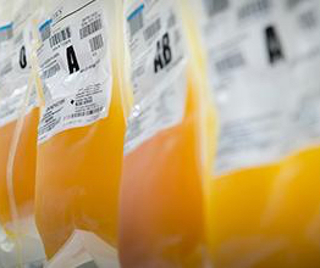
Podcast # 368: Prehospital Plasma

Podcast # 368: Prehospital Plasma

Author: Aaron Lessen, MD Educational Pearls: Non-blinded randomized study assessing 30-day mortality benefit from plasma-first resuscitation in patients at risk hemorrhagic shock Study involved a...

20 Aug 20182min
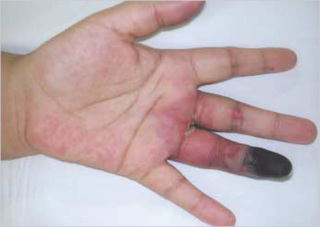
Podcast # 367: Digital Necrosis after Epinephrine Drip

Podcast # 367: Digital Necrosis after Epinephrine Drip

Podcast # 367: Digital Necrosis after Epinephrine Drip Author: Jared Scott, MD. Educational Pearls: Make sure to monitor for limb ischemia in all patients on vasopressors Good reminder that vasop...

17 Aug 20184min

Populært innen Vitenskap

fastlegen
tingenes-tilstand
rekommandert
jss
rss-rekommandert
rss-nysgjerrige-norge
villmarksliv
forskningno
sinnsyn
rss-paradigmepodden
fjellsportpodden
vett-og-vitenskap-med-gaute-einevoll
nordnorsk-historie
smart-forklart
rss-overskuddsliv
diagnose
abid-nadia-skyld-og-skam
abels-tarn
tomprat-med-gunnar-tjomlid
aldring-og-helse-podden