Gray Matters: Exploring the Frontiers of Neurosurgery

Gray Matters: Exploring the Frontiers of Neurosurgery

Dr. Theodore Schwartz's book Gray Matters: A Biography of Brain Surgery offers a comprehensive exploration of neurosurgery, a field barely a century old that profoundly connects two human beings. The book delves into the history of how early neurosurgeons came to understand the complex human brain and how this challenging specialty emerged. Drawing from his own cases and various archives, Schwartz provides insights into the practical aspects of brain surgery and its life-or-death nature.

The book covers a wide range of brain-related topics that have long captivated public interest, including famous cases like JFK's assassination and President Biden's brain surgery, as well as the NFL's management of CTE. Dr. Schwartz also discusses the field's latest advancements and tackles philosophical questions about the unity of self and free will. As a practicing neurosurgeon and professor at Weill Cornell Medicine, Schwartz brings a unique perspective to this cultural and scientific history of a mind-blowing human endeavor.

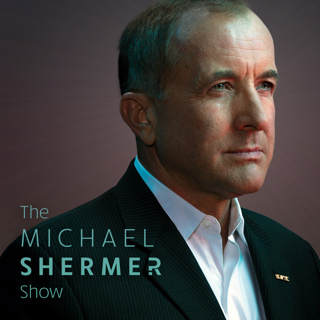
Theodore Schwartz, MD, is the David and Ursel Barnes Endowed Professor of Minimally Invasive Neurosurgery at Weill Cornell Medicine, one of the busiest and highest-ranked neurosurgery centers in the world. He has published over five hundred scientific articles and chapters on neurosurgery, and has lectured around the world—from Bogotá to Vienna to Mumbai—on new, minimally invasive surgical techniques that he helped develop. He also runs a basic science laboratory devoted to epilepsy research. He studied philosophy and literature at Harvard. His new book is: Gray Matters: A Biography of Brain Surgery.

Shermer and Schwartz explore a wide range of neurosurgical topics, from Schwartz's career path to brain anatomy and anesthesia. They discuss brain mapping, sports-related injuries, tumors, strokes, and famous medical cases. The conversation delves into neurological conditions like dementia and historical practices like lobotomies. They examine the neuroscience of aggression, philosophical questions about consciousness and free will, and the concept of self. Personal experiences, including Schwartz's father's stroke, are shared. The discussion includes future technologies like Neurolink and their potential impact on brain-computer interfaces.

Denne episoden er hentet fra en åpen RSS-feed og er ikke publisert av Podme. Den kan derfor inneholde annonser.

Episoder(630)

America at 250: What Did the Founders Get Right?

America at 250: What Did the Founders Get Right?

Michael Shermer makes the case that the U.S. Founding Fathers were not only steeped in Enlightenment values on which the Declaration of Independence was based, but they were also scientists searching ...

6 Jul 17min

When History Goes on Trial: Demjanjuk, Eichmann, and Justice After Atrocity

When History Goes on Trial: Demjanjuk, Eichmann, and Justice After Atrocity

John Demjanjuk lived for decades as a retired autoworker in suburban Cleveland. Then investigators accused him of being "Ivan the Terrible," one of the most notorious guards at Treblinka. What followe...

27 Jun 1h 32min

Why I Joined the Government UAP Science Advisory Council

Why I Joined the Government UAP Science Advisory Council

Michael Shermer has been appointed to the newly formed UAP Science Advisory Council, formed at the request of the White House and in coordination with the All-domain Anomaly Resolution Office (AARO), ...

23 Jun 29min

Massimo Pigliucci on Doubt, Moral Courage, and Living Without Illusions

Massimo Pigliucci on Doubt, Moral Courage, and Living Without Illusions

What does it mean to live well when certainty is unavailable? Michael Shermer speaks with Massimo Pigliucci about moral character, ancient philosophy, and the difficult art of making decisions without...

20 Jun 1h 33min

Cathy Young: Why Free Societies Need Free Speech

Cathy Young: Why Free Societies Need Free Speech

Cathy Young returns to the show for a wide-ranging conversation about free speech, institutional trust, and the strange incentives shaping public debate today. What happens when universities, media ou...

16 Jun 1h 30min

The Zodiac Killer Wasn't Real

The Zodiac Killer Wasn't Real

The Zodiac Killer has been treated for decades as America's ultimate unsolved true crime mystery: one mysterious killer, taunting letters, cryptic ciphers, a strange costume, and a trail of victims ac...

13 Jun 1h 39min

How Algorithms Use Your Data to Control You

How Algorithms Use Your Data to Control You

Michael Shermer speaks with Oxford philosopher Carissa Véliz about the long human desire to know the future—from ancient oracles and astrology to AI, surveillance capitalism, predictive policing, and ...

9 Jun 1h 34min

Batya Ungar-Sargon: Why the Left Sees Jews Differently Now

Batya Ungar-Sargon: Why the Left Sees Jews Differently Now

Batya Ungar-Sargon joins Michael Shermer for a wide-ranging conversation about the historical relationship between Jews and the American left, and why that relationship has become increasingly straine...

6 Jun 54min

Populært innen Vitenskap

fastlegen
tingenes-tilstand
jss
forskningno
sinnsyn
vett-og-vitenskap-med-gaute-einevoll
rekommandert
liberal-halvtime
dekodet-2
villmarksliv
rss-nysgjerrige-norge
rss-inn-til-kjernen-med-sunniva-rose
diagnose
rss-rekommandert
fjellsportpodden
rss-overskuddsliv
nevropodden
rss-kunstig-intelligens-med-elisabeth-maren-og-morten
rss-paradigmepodden
smart-forklart