
Starting a Startup: What does it take? (feat. Josh Sanabria)
In this episode, Krish Palaniappan interviews Josh Sanabria, CEO of Go Architect, discussing the journey of starting a startup. They explore the challenges entrepreneurs face, the importance of patience, effective prospecting strategies, and the significance of building a supportive community. Josh shares insights on narrowing down target audiences and emphasizes that entrepreneurship isn't for everyone, but it can be a rewarding path for those who are passionate about solving problems. Takeaways Everything takes twice as long as you think it will. You don't have to go and be a venture funded company to be successful. Patience is crucial in the entrepreneurial journey. Understanding your customers is key to effective prospecting. Be specific rather than casting a wide net in outreach. Building a support system is essential for success. Not everyone is cut out for entrepreneurship. You don't start a business to save time; it often requires more effort. Entrepreneurship can be an exciting and interesting journey. Take risks on adding value in your community. Chapters 00:00 Introduction to Entrepreneurship and Go Architect 02:20 Challenges of Starting a Startup 11:04 The Importance of Patience in Entrepreneurship 12:52 Prospecting and Sales Strategies 20:39 Narrowing Down Your Target Audience 29:11 Building a Support System 35:53 Is Entrepreneurship for Everyone?
17 Sep 202440min

Entrepreneurship with a Nomadic Lifestyle (feat. Austin Reed)
In this episode, Austin Reed shares his experiences as a digital nomad and entrepreneur, discussing the challenges and rewards of balancing work and travel. He delves into the dynamics of remote work, the importance of flexibility, and the technical challenges faced by distributed teams. The conversation also covers API development, cultural differences in engineering, and the effectiveness of agile methodologies in a remote setting. Austin emphasizes the significance of fostering a collaborative environment and the value of constructive feedback in code reviews. Takeaways Austin Reed has been a digital nomad for eight years, traveling to over 26 countries. He runs a software development agency that focuses on automating processes for businesses. The nomadic lifestyle allows for flexibility and exploration, but requires effective work management. Remote work dynamics differ significantly from traditional office settings, emphasizing freedom and flexibility. Building camaraderie in remote teams is possible through shared activities and communication tools. API development requires clear communication and collaboration between front-end and back-end teams. Cultural differences can impact team dynamics and communication styles in engineering. Sprints can be beneficial for complex projects but may be overkill for simpler tasks. Code reviews should focus on constructive feedback and fostering problem-solving skills. It's essential to establish clear specifications to avoid miscommunication during development. Chapters 00:00 Introduction to the Nomadic Lifestyle 03:10 The Journey to Becoming a Digital Nomad 05:57 Balancing Work and Travel 09:06 Remote Work Dynamics 12:05 Technical Challenges in Remote Teams 14:46 API Development and Collaboration 17:50 Cultural Differences in Engineering 20:46 Sprints and Agile Methodologies 24:06 Code Review Practices 27:08 Final Thoughts and Reflections
13 Sep 20241h 2min
Back to development after 3 months
In this non-technical podcast episode, the host reflects on the challenges of getting back into the routine of software development after a break. They discuss how taking time off can make tasks that were once seamless feel unfamiliar and laborious. The host shares examples of how even simple processes like recording a podcast or fixing a bug can become more difficult after a break. They emphasize the importance of staying connected to the industry and finding one's comfort zone when returning to software development. Takeaways Taking a break from software development can make it challenging to get back into the routine. Tasks that were once seamless can feel unfamiliar and laborious after a break. Staying connected to the industry and keeping up with new developments is important. Finding one's comfort zone and understanding how long of a break can be taken without feeling uncomfortable is crucial. Chapters 00:00 Introduction and Overview 03:17 Challenges of Getting Back into Software Development 08:11 The Laborious Process of Tasks After a Break 09:40 The Importance of Staying Connected to the Industry 13:31 Finding Your Comfort Zone in Returning to Software Development
6 Sep 202416min
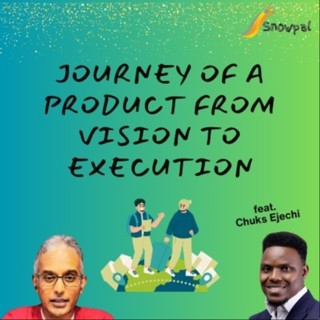
Journey of a product from Vision to Execution (feat. Chuks Ejechi)
In this conversation, Chuks Ejechi, a product leader, discusses the journey of a product from vision to execution. He explains the process of translating a business vision into a product vision and the importance of defining what, who, and why in the product vision. Chuks also highlights the challenges faced in executing ideas, such as resistance from stakeholders, shifting markets, resource limitations, and competition. He emphasizes the need to start small and iterate quickly, using minimum viable products to gather feedback and make improvements. The conversation explores the challenges of building a product from vision to execution, with a focus on the importance of identifying unique selling propositions and avoiding unnecessary features. The discussion also touches on the challenges of working with engineering teams, including the need for clear communication and coordination between front-end and back-end developers. The impact of geographical diversity on product development is also discussed, emphasizing the importance of understanding and appreciating different cultures and backgrounds. The conversation concludes with a discussion on the challenges faced by product teams and the importance of building a happy and cohesive team. Takeaways Translating a business vision into a product vision involves defining what, who, and why. Challenges in executing ideas include resistance from stakeholders, shifting markets, resource limitations, and competition. Starting small and iterating quickly with minimum viable products allows for gathering feedback and making improvements. A minimum viable product should have an element of usefulness and relate to the original vision. Identify and focus on the unique selling propositions of your product to avoid building unnecessary features. Clear communication and coordination between front-end and back-end developers is crucial for successful product development. Understanding and appreciating different cultures and backgrounds is important when working with geographically diverse teams. Building a happy and cohesive team is essential for effective product management and development. Chapters 00:00 Introduction and Background 04:51 The Process of Translating Vision into Product 12:21 Challenges in Executing Ideas 17:02 Starting Small and Iterating Quickly 20:54 The Importance of a Meaningfully Small Product 24:10 Building a Product: From Vision to Execution 26:06 Identifying and Focusing on Unique Selling Propositions 29:12 Challenges of Working with Engineering Teams 32:36 The Impact of Geographical Diversity on Product Development 39:23 Building a Happy and Cohesive Team
5 Sep 202451min
Dealing with Flutter Dependency Conflicts and Third-Party Plugin Changes
In this podcast episode, Krish discusses recent changes made to their mobile app built on Flutter. They highlight the challenges faced when upgrading dependencies and dealing with breaking changes. He shares their experience with dependency conflicts and the need to update dependencies incrementally. He also discuss the changes in Facebook login and the introduction of limited login. Krish provides insights into debugging and finding solutions to these challenges. He concludes by mentioning their exploration of AI technologies and the availability of their APIs on AWS Marketplace. Takeaways Regularly upgrading dependencies in a mobile app is important to avoid dependency issues and breaking changes. Handling dependency conflicts can be challenging, especially when using third-party plugins and libraries. Changes in third-party plugins, like Facebook login, can introduce new features and limitations that need to be accounted for. Debugging and finding solutions to issues with upgrades and changes require thorough investigation and sometimes trial and error. Exploring AI technologies and leveraging existing APIs can save time and effort in software development. Chapters 00:00 Introduction and Apologies for the Delay 04:12 Handling Dependency Upgrades and Breaking Changes 08:38 Challenges with Facebook Login and Limited Login 13:04 Debugging and Finding Solutions to Issues 15:28 Importance of Keeping Up to Date with Software Changes 18:16 Exploring AI Technologies and APIs 29:20 Future Topics and Conclusion
19 Jul 202432min
Measuring Developer Experience and Improving it through Platform Engineering (feat. Ajay Chankramath)
Ajay Chankramath, Head of Platform Engineering at ThoughtWorks, discusses measuring and improving developer experience through platform engineering. Platform engineering is the abstracted set of tools, principles, and techniques that make developers' lives easier and enable DevOps. It focuses on improving developer productivity and reducing friction in the software development process. The key to successful platform engineering is adopting a product management mindset and prioritizing capabilities based on their value. Platform engineering can benefit organizations of all sizes, but the scope and implementation may vary. Internal developer platforms and managed platform engineering services are emerging as options for startups and smaller organizations. Platform engineering is the evolution of software development and delivery. It is not a passing fad or a replacement for DevOps, but rather a cultural paradigm that brings together tools, techniques, and processes. Platform engineering aims to simplify and automate the development process, improve compliance gating, and provide internal developer portals for self-service. It also involves the use of generative AI to enhance operational productivity and enable proactive issue detection. While there is no one-size-fits-all approach to platform engineering, it is important for organizations to invest in platforms that align with their specific requirements and skill sets. Takeaways Platform engineering aims to improve developer productivity and reduce friction in the software development process. Adopting a product management mindset and prioritizing capabilities based on their value is crucial for successful platform engineering. Platform engineering can benefit organizations of all sizes, but the scope and implementation may vary. Internal developer platforms and managed platform engineering services are emerging as options for startups and smaller organizations. Platform engineering is the evolution of software development and delivery. It is not a passing fad or a replacement for DevOps, but rather a cultural paradigm that brings together tools, techniques, and processes. Platform engineering aims to simplify and automate the development process, improve compliance gating, and provide internal developer portals for self-service. Generative AI can be used to enhance operational productivity and enable proactive issue detection. There is no one-size-fits-all approach to platform engineering, and organizations should invest in platforms that align with their specific requirements and skill sets. Chapters 00:00 Introduction to Ajay Chankramath and ThoughtWorks 03:08 Defining Platform Engineering and its Importance 07:48 The Role of Product Management in Platform Engineering 10:21 The Genesis of Platform Engineering and the Importance of Value Modeling 13:22 Platform Engineering for Organizations of All Sizes 22:16 Breaking Down Platform Engineering into Five Planes 25:41 The Importance of Observability in Platform Engineering 29:19 The Role of Orchestrators in Platform Engineering 33:26 The Impact of Platform Engineering on Developers' Daily Work 35:56 The Importance of Compliance Gating 36:47 Internal Developer Portals 38:17 Abstraction with Terraform and Other Tools 49:04 The Potential of Generative AI 55:53 Coexistence of Self-Serve Portals and Conversational UIs 01:06:25 Platform Engineering as an Evolution of Software Development
16 Apr 20241h 8min
Its 2024. Software Development has changed. Completely.
In this conversation, Krish discusses the need for software development to evolve. He emphasizes the importance of adapting to change and exploring new ways of doing things. Krish also highlights the role of AI in software development and the potential benefits it can bring. He encourages reevaluating problem-solving approaches and finding more efficient ways to document and create tickets. Ultimately, Krish emphasizes the need to embrace change and stay ahead in the rapidly evolving software industry. Takeaways Software development needs to evolve by adapting to change and exploring new approaches. AI can play a significant role in improving software development processes and delivering solutions more efficiently. Problem-solving approaches should be reevaluated to ensure they are still relevant and effective. Efficient documentation and ticket creation processes can enhance productivity and collaboration. Chapters 00:00 Introduction 01:01 Adapting to Change 03:54 Reevaluating Problem Solving 05:18 Approaching Documentation 06:40 Efficient Ticket Creation 07:08 Embracing Change
2 Apr 20248min
Entrepreneurship: It's not easy. But, it's worth it.
In this conversation, Krish shares his thoughts on the challenges of entrepreneurship and building a software company. He emphasizes that while technical challenges are expected, non-technical challenges often prove to be more important. He discusses the evolving challenges of AI and the need to balance priorities and efficiency. Krish also highlights the importance of motivating teams and overcoming discouragement. He explains the exponential nature of startups and encourages listeners to embrace challenges and take action. Takeaways Entrepreneurship is not just an option for some, but becomes their only option. Non-technical challenges are often more important than technical challenges in building a software company. The challenges of AI are constantly evolving and require adaptation. Balancing priorities and finding efficiency is crucial for startups. Motivating teams and overcoming discouragement are key to success. Learning by doing and embracing challenges leads to growth and success. Chapters 00:00 Introduction and Resonance with Entrepreneurship 01:20 The Challenges of Building Software 04:41 The Evolving Challenges of AI 06:04 Balancing Priorities and Efficiency 07:02 Motivating Teams and Overcoming Discouragement 09:00 The Exponential Nature of Startups 10:28 Embracing Challenges and Taking Action 12:19 Learning by Doing and Spreading Wings 13:43 Conclusion and Call to Action
2 Apr 202414min