82: The present and future of training and education with Kurt Marfurt

82: The present and future of training and education with Kurt Marfurt

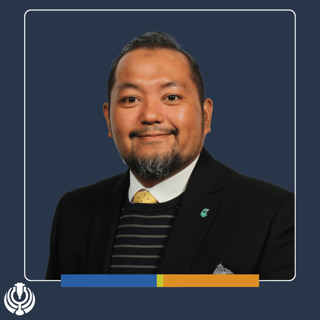
Seismic Soundoff is excited to welcome back Kurt Marfurt. Kurt joined the podcast for our second-ever episode that still remains one of the most popular episodes. For this conversation, Kurt highlights the present state of education and training in geophysics, including the value and benefits of virtual education. He shares his thoughts on the most important area of focus for geophysicists right now, why there's a need to increase your quantitative and programming skills and offers his one piece of advice to succeed in geophysics. As with our first conversation, this one is not to be missed. Join host Andrew Geary and Kurt Marfurt on "The present and future of training and education." Visit https://seg.org/podcast/Post/9056 for the complete show notes and links to Kurt's research articles, books, and courses. BIOGRAPHY Kurt J. Marfurt joined The University of Oklahoma in 2007 where he serves as the Frank and Henrietta Schultz Professor of Geophysics within the ConocoPhillips School of Geology and Geophysics. Marfurt’s primary research interest is in the development and calibration of new seismic attributes to aid in seismic processing, seismic interpretation, and reservoir characterization. Recent work has focused on applying coherence, spectral decomposition, structure-oriented filtering, and volumetric curvature to mapping fractures and karst with a particular focus on resource plays. Marfurt earned a Ph.D. in applied geophysics at Columbia University’s Henry Krumb School of Mines in New York in 1978 where he also taught as an Assistant Professor for four years. He worked 18 years in a wide range of research projects at Amoco’s Tulsa Research Center after which he joined the University of Houston for 8 years as a Professor of Geophysics and the Director of the Allied Geophysics Lab. He has received the SEG best paper (for coherence), SEG best presentation (for seismic modeling), as a coauthor with Satinder Chopra best SEG poster (one on curvature, one on principal component analysis) and best AAPG technical presentation, and as a coauthor with Roderick Perez Altimar, AAPG/SEG Interpretation best paper (on brittleness) awards. Marfurt also served as the SEG/EAGE Distinguished Short Course Instructor for 2006 and 2018 (on seismic attributes). In addition to teaching and research duties at OU, Marfurt leads short courses on attributes for SEG and AAPG and served as first Editor-in-Chief of the AAPG/SEG journal Interpretation. CREDITS Original music by Zach Bridges. This episode was hosted, edited, and produced by Andrew Geary. Thank you to the SEG podcast team: Jennifer Crockett, Ally McGinnis, and Mick Swiney.

Denne episoden er hentet fra en åpen RSS-feed og er ikke publisert av Podme. Den kan derfor inneholde annonser.

Episoder(307)

Why SEG Is Building a Home for Mining Geophysics

Why SEG Is Building a Home for Mining Geophysics

"That’s what we’re trying to achieve with this forum: bringing all the people together with different backgrounds and create this community, which I don’t think fully exists right now.” Jiajia Sun an...

18 Jun 30min

The Human Side of Volcano Monitoring

The Human Side of Volcano Monitoring

"I feel like we are making a change in the way that people now see the volcanoes and see the earthquakes in El Salvador. So in that sense, I think we are making a a big change.” Adonay Martinez Coto ...

11 Jun 33min

How Geophysics Connects Curiosity, Science, and Career Opportunity

How Geophysics Connects Curiosity, Science, and Career Opportunity

“If you're curious about geophysics, there's definitely a place in geophysics for you. The field is so interdisciplinary.” Johanna Villagomez joins Andrew Geary to share how curiosity, fieldwork, stu...

4 Jun 23min

What Geophysicists Gain by Attending URTeC

What Geophysicists Gain by Attending URTeC

"Integration, literally, that's why the URTeC is successful.” Marianne Rauch joins Andrew Geary to explain why URTeC 2026 matters for geophysicists who want their work to shape real field decisions. ...

21 Mai 25min

Why Geophysicists Are Paying More Attention to Groundwater

Why Geophysicists Are Paying More Attention to Groundwater

“The concept of mapping the aquifer from the sky, that’s gigantic. It could change how aquifers are managed around the world.” Seogi Kang and Mike Wilt explain why groundwater is becoming one of the ...

14 Mai 28min

The Hidden Opportunity in Critical Minerals That Geophysicists Can’t Ignore

The Hidden Opportunity in Critical Minerals That Geophysicists Can’t Ignore

“We all realize that we need a lot more mineral resources in the next two decades. And we realized that geophysics can play a critical role.” Sarah Devriese and Jiajia Sun explain why demand for crit...

7 Mai 26min

OTC 2026 Emerging Leaders on the Future of Offshore Energy Collaboration

OTC 2026 Emerging Leaders on the Future of Offshore Energy Collaboration

“Nothing can happen in a vacuum anymore. We need to have the developers talking to the geoscientists, talking to the environmental professionals.” Two OTC 2026 Emerging Leaders share why the future o...

23 Apr 28min

Why Seismic Acquisition Is Making a Quiet Comeback

Why Seismic Acquisition Is Making a Quiet Comeback

"What has happened in the last few years is exploration overall has taken a little bit of a backseat. So they are starting to relook at seismic acquisition to explore new areas and solve more complex ...

16 Apr 27min

Populært innen Vitenskap

fastlegen
tingenes-tilstand
rekommandert
liberal-halvtime
sinnsyn
jss
villmarksliv
forskningno
tomprat-med-gunnar-tjomlid
fjellsportpodden
dekodet-2
rss-kunstig-intelligens-med-elisabeth-maren-og-morten
rss-rekommandert
nevropodden
smart-forklart
rss-paradigmepodden
rss-nysgjerrige-norge
abid-nadia-skyld-og-skam
abels-tarn
rss-overskuddsliv