92: SEG20 Keynote Address and Opening Session
Seismic Soundoff13 Okt 2020

92: SEG20 Keynote Address and Opening Session

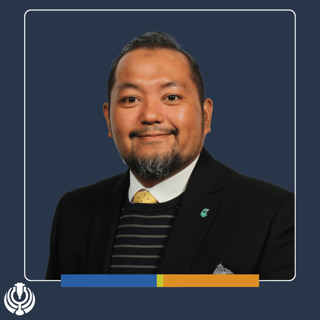
In this episode, the keynote address and SEG president's State of the Society address from the Opening Session at the 90th Annual Meeting hosted virtually for the first time in its history. First, the SEG President Rick Miller presents the State of the Society address, summarizing the year in applied geophysics and what to expect in 2021 at the Society and in the industry. Then Rick is followed by the keynote address from Dr. Michael Oristaglio. It is not too late to register and get engaged with SEG20! Learn more and register at SEG today - https://seg.org/am. * Rick Miller - 1:00 * Michael Oristaglio (with an introduction by SEG20 General Chair, Wafik Beydoun) - 21:11 BIOGRAPHY Michael Oristaglio is cofounder and inaugural director of the Energy Studies Multidisciplinary Academic Program at Yale University, where he is a senior research scientist and lecturer in the Department of Earth and Planetary Sciences. The project at Yale West Campus under the sponsorship of the U.S. Department of Energy National Energy Technology Laboratory in Pittsburgh is doing lab and computer experiments to better understand a natural process called mineral carbonation. In this process, carbon dioxide dissolved in water reacts with rocks that are rich in magnesium-iron silicate minerals, such as basalt, and turns into solid form as magnesium-iron carbonate minerals. Mineral carbonation is part of the carbon cycle, in which carbon dioxide moves through the atmosphere, oceans and solid rock over long periods of geologic time. Artificial mineral carbonation of large volcanic basalt formations that occur near the Earth’s surface would provide the surest form of sequestering carbon dioxide underground if it can be made to work on a fast time scale. For the last five years, he has been working with the startup Canadian company Gedex on the development of a new generation of airborne geophysical sensors for mapping and monitoring of Earth’s near-surface (the first 500 meters below ground level). One of the new sensors is a sensitive gravity measurement that can detect, among other things, tiny changes in groundwater levels from place to place and season to season. Since 2011, he has been the project manager for the Society of Exploration Geophysicists (SEG) advanced modeling project called SEAM Phase II. This project is a collaboration of oil and geophysical services companies from around the world to build large, detailed Earth models, including models of unconventional shale reservoirs. The models are built to represent a region of the Earth probed by a modern 3D seismic survey (roughly 10 km by 10 km by 10 km) at a resolution of about 5 meters and, thus, contain billions and billions of individual cells with varying rock and fluid properties. The digital models are used in computer simulations directed at improving methods of seismic exploration for oil and gas and at developing new methods for seismic monitoring of hydraulic fracturing. From 1982 to 2009, he worked for oilfield services company Schlumberger in a variety of positions, including director of research technical communities for Schlumberger Oilfield Services, manager of the Schlumberger research innovation fund, and portfolio manager and technology advisor for Schlumberger Mergers & Acquisitions. CREDITS Original music by Zach Bridges. This episode was hosted, edited, and produced by Andrew Geary at 51 features, LLC. Thank you to the SEG podcast team: Ted Bakamjian, Jennifer Crockett, Ally McGinnis, and Mick Swiney.

Denne episoden er hentet fra en åpen RSS-feed og er ikke publisert av Podme. Den kan derfor inneholde annonser.

Episoder(307)

Why SEG Is Building a Home for Mining Geophysics

Why SEG Is Building a Home for Mining Geophysics

"That’s what we’re trying to achieve with this forum: bringing all the people together with different backgrounds and create this community, which I don’t think fully exists right now.” Jiajia Sun an...

18 Jun 30min

The Human Side of Volcano Monitoring

The Human Side of Volcano Monitoring

"I feel like we are making a change in the way that people now see the volcanoes and see the earthquakes in El Salvador. So in that sense, I think we are making a a big change.” Adonay Martinez Coto ...

11 Jun 33min

How Geophysics Connects Curiosity, Science, and Career Opportunity

How Geophysics Connects Curiosity, Science, and Career Opportunity

“If you're curious about geophysics, there's definitely a place in geophysics for you. The field is so interdisciplinary.” Johanna Villagomez joins Andrew Geary to share how curiosity, fieldwork, stu...

4 Jun 23min

What Geophysicists Gain by Attending URTeC

What Geophysicists Gain by Attending URTeC

"Integration, literally, that's why the URTeC is successful.” Marianne Rauch joins Andrew Geary to explain why URTeC 2026 matters for geophysicists who want their work to shape real field decisions. ...

21 Mai 25min

Why Geophysicists Are Paying More Attention to Groundwater

Why Geophysicists Are Paying More Attention to Groundwater

“The concept of mapping the aquifer from the sky, that’s gigantic. It could change how aquifers are managed around the world.” Seogi Kang and Mike Wilt explain why groundwater is becoming one of the ...

14 Mai 28min

The Hidden Opportunity in Critical Minerals That Geophysicists Can’t Ignore

The Hidden Opportunity in Critical Minerals That Geophysicists Can’t Ignore

“We all realize that we need a lot more mineral resources in the next two decades. And we realized that geophysics can play a critical role.” Sarah Devriese and Jiajia Sun explain why demand for crit...

7 Mai 26min

OTC 2026 Emerging Leaders on the Future of Offshore Energy Collaboration

OTC 2026 Emerging Leaders on the Future of Offshore Energy Collaboration

“Nothing can happen in a vacuum anymore. We need to have the developers talking to the geoscientists, talking to the environmental professionals.” Two OTC 2026 Emerging Leaders share why the future o...

23 Apr 28min

Why Seismic Acquisition Is Making a Quiet Comeback

Why Seismic Acquisition Is Making a Quiet Comeback

"What has happened in the last few years is exploration overall has taken a little bit of a backseat. So they are starting to relook at seismic acquisition to explore new areas and solve more complex ...

16 Apr 27min

Populært innen Vitenskap

fastlegen
tingenes-tilstand
jss
liberal-halvtime
rekommandert
forskningno
villmarksliv
sinnsyn
tomprat-med-gunnar-tjomlid
rss-kunstig-intelligens-med-elisabeth-maren-og-morten
fjellsportpodden
rss-rekommandert
vett-og-vitenskap-med-gaute-einevoll
dekodet-2
rss-nysgjerrige-norge
smart-forklart
nevropodden
diagnose
rss-paradigmepodden
abels-tarn