
143: Building a Volcano Early Warning System - A GWB Story

143: Building a Volcano Early Warning System - A GWB Story

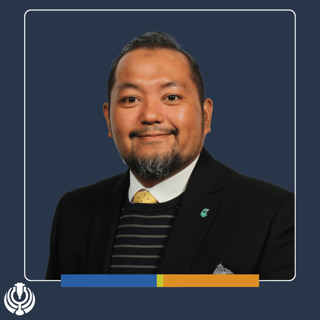
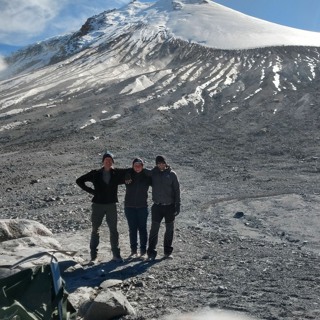
Pico de Orizaba is the highest volcano in Mexico and preserves a glacier at the top. The volcano is an old structure and has experienced several cone collapses and subsequent rebuilds in its eruptive history of fewer than 600,000 years. Thinking about the potential threat to villages located along the major river drainages, Drs. Katrin Sieron and Blake Weissling submitted a Geoscientists without Borders (GWB) proposal (https://seg.org/About-SEG/Geoscientists-Without-Borders/Projects/detail/veracruz-and-puebla-states-mexico-2) to monitor precipitation at altitudes over 4000 meters above sea level and to better characterize the lahar forming zone at the proglacial ramp. They also wanted to work on lahar (mud or debris flows) detection and monitoring and create a lahar-warning system for local habitants. More than 15 students were involved during the project execution, several of whom worked on virtually supported thesis proposals (geomorphology, hydrology, glacier modeling, lahar modeling, vulnerability studies, etc). GWB granted the project a one-year, no-cost extension, making it possible to finish the project. This episode features Katrin and Blake providing an overview of their project, discussing what they accomplished in Mexico, and reflecting on the legacy of their work. Visit https://seg.org/gwb to discover all the Geoscientists without Borders' projects and how to support this award-winning program. EVENT To honor and celebrate International Women’s Day (IWD), the SEG Women’s Network and Geoscientists without Borders® (GWB) are holding a joint event (https://seg.org/Events/SEG-Live/session/wnc-gwb-international-womens-day) highlighting some of the efforts that women geoscientists are leading that contribute to a sustainable society, as well as making a positive impact in communities around the world. BIOGRAPHIES Katrin Sieron is a geologist (MSc) and volcanologist (Ph.D.) academically trained in Germany, Canada, and Mexico. She holds a permanent researcher position at the Center of Earth Sciences at the Veracruz University (Mexico). Sieron has published in several indexed and dissemination journals, apart from numerous technical reports and outreach-related works. She has been a member of the Mexican National System of Researchers (SNI) since 2014 and participated in multiple national and international research projects, of which she led three. She is a member of the Seismological and Volcanological Observatory of Veracruz State (Mexico) and has presented her work at more than 20 international conferences. Dr. Blake Weissling is an Assistant Professor in Practice at the University of Texas at San Antonio. His areas of specialization include cryosphere, remote sensing, and surface water hydrology. SPONSOR This episode is sponsored by Geospace Technologies. As the leading innovator and manufacturer of wireless seismic data acquisition systems, Geospace Technologies offers a series of seabed, wireless seismic data acquisition systems designed for extended-duration seabed seismic data acquisition. Geospace is committed to setting new standards for quality, performance, reliability and cost savings to E&P companies and marine geophysical contractors. Learn more at https://www.geospace.com/. CREDITS SEG produces Seismic Soundoff to benefit its members, the scientific community, and inform the public on the value of geophysics. To show your support for the show, please leave a 5-star rating on Apple Podcasts and Spotify. It takes less than five seconds to leave a 5-star rating and is the number one action you can take to show your appreciation for this free resource. You can follow the podcast to hear the latest episodes on Apple Podcasts, Google Podcasts, and Spotify. Original music created by Zach Bridges. This episode was hosted, edited, and produced by Andrew Geary at 51 features, LLC. Thank you to the SEG podcast team: Jennifer Cobb, Kathy Gamble, and Ally McGinnis.

Episoder(301)

OTC 2026 Emerging Leaders on the Future of Offshore Energy Collaboration

OTC 2026 Emerging Leaders on the Future of Offshore Energy Collaboration

“Nothing can happen in a vacuum anymore. We need to have the developers talking to the geoscientists, talking to the environmental professionals.” Two OTC 2026 Emerging Leaders share why the future o...

23 Apr 28min

Why Seismic Acquisition Is Making a Quiet Comeback

Why Seismic Acquisition Is Making a Quiet Comeback

"What has happened in the last few years is exploration overall has taken a little bit of a backseat. So they are starting to relook at seismic acquisition to explore new areas and solve more complex ...

16 Apr 27min

From Hype to Reality: What Machine Learning Can Actually Do

From Hype to Reality: What Machine Learning Can Actually Do

“You can't be stationary in this field. I've never seen anything like it." Machine learning is changing geophysics faster than most people expected, but knowing what actually works versus what is hyp...

9 Apr 27min

DAS and Seismic Innovation: What Geophysicists Need to Know

DAS and Seismic Innovation: What Geophysicists Need to Know

"For early career geophysicists, I think it's really important to understand that DAS is going to have a unique role in reservoir management, be it onshore or offshore." Distributed acoustic sensing ...

19 Mar 27min

From Oil and Gas to Offshore Wind: Why Everyone Meets at OTC

From Oil and Gas to Offshore Wind: Why Everyone Meets at OTC

“And what the world really needs is this flexibility on energy and the agility to ensure access and affordability. And that's where steering the offshore energy business is really critical.” Offshore...

12 Mar 29min

Applying Near-Surface Geophysics to Agricultural Challenges

Applying Near-Surface Geophysics to Agricultural Challenges

“It’s not only about discovering resources, but about safeguarding them and safeguarding our future. When you understand the subsurface, you understand the foundation of food security, water security,...

5 Mar 26min

Inside the Workflow - Unsupervised Machine Learning for Seismic Interpretation

Inside the Workflow - Unsupervised Machine Learning for Seismic Interpretation

“The major pitfall of machine learning of any kind is to be overly confident in the results. We run the risk of garbage in gospel out.” This discussion offers a rare chance to go a little deeper into...

19 Feb 35min

Why High-Performance Computing Is No Longer Optional in Geophysics

Why High-Performance Computing Is No Longer Optional in Geophysics

“I think that for geophysicists out there, people need to realize that it's an integrated career path. You can't separate the geophysics from the HPC anymore, if we ever did to begin with.” High-perf...

12 Feb 21min

Populært innen Vitenskap

fastlegen
tingenes-tilstand
jss
forskningno
liberal-halvtime
rekommandert
sinnsyn
tomprat-med-gunnar-tjomlid
rss-paradigmepodden
pod-britannia
villmarksliv
rss-inn-til-kjernen-med-sunniva-rose
fjellsportpodden
tidlose-historier
nevropodden
rss-overskuddsliv
nordnorsk-historie
dekodet-2
diagnose
rss-rekommandert