208: Pioneering Seismic Imaging for Energy and Sustainability
Seismic Soundoff21 Des 2023

208: Pioneering Seismic Imaging for Energy and Sustainability

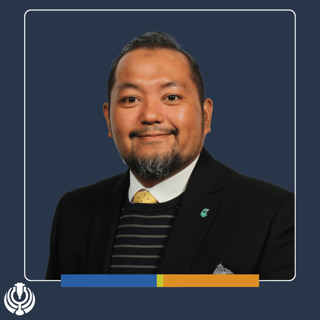
Biondo Biondi, the Director of the Stanford Earth imaging Project (SEP), joins Seismic Soundoff to discuss SEP's 50-year history and future outlook. Biondo reflects on SEP's founding during the 1970s oil crisis and today as it tackles modern energy challenges. Biondo discusses how improving seismic imaging can support the future of carbon capture and geothermal energy and help build resilient cities. Biondo uses an article in The Leading Edge from 1987 on the then-called Stanford Exploration Project to offer insights into what we still know and don't know about geophysical data. He also shares why he believes so many SEP alums have been guests on this podcast! The Stanford Earth imaging Project is an industry-funded academic consortium within the Geophysics Department at Stanford University. SEP research has contributed greatly to improving the theory and practice of constructing 3-D and 4-D images of the earth from seismic echo soundings. The consortium was started in the 1970s by Jon Claerbout and is currently co-directed with Biondo Biondi. SEP pioneered innovations in migration imaging, velocity estimation, dip moveout and slant stack. SEP has recently been involved in 3-D seismic applications such as velocity estimation, wavefield-continuation prestack migration, multidimensional image estimation, and 4-D (time-lapse) reservoir monitoring. 📋 Episode Chapters (01:48) The Stanford Earth imaging Project celebrates its 50th anniversary (10:48) Areas the Stanford Earth imaging Project will impact over the next decade (12:49) The impact of Jon Claerbout's credo on the history and future of the SEP (13:46) Using fiber optic cables to monitor CCS projects and other uses (17:03) Biondo's challenge to the listeners 💬Guest Bio Biondo Biondi is the Chair of the Geophysics Department at Stanford University and Director of the Stanford Earth imaging Project. He and his students devise new algorithms to improve active and passive seismic data imaging. Because the datasets are enormous, and wavefield propagation needs to be accurately modeled to achieve high-resolution imaging, they need to harness the power of the latest computational hardware to test their methods on field data. Therefore, mapping imaging algorithms into high-performance architecture is essential to their research. The amount and quality of information they can extract from seismic data are directly linked to the temporal and spatial sampling of the sources and the receivers. In the past several years, they have been working on methods to process data recorded by using fiber cables as seismic sensors. Fiber-optic seismic recording promises to enable cost-effective continuous seismic monitoring at a large scale. A particularly exciting possibility is leveraging preexisting telecommunication infrastructure to continuously record seismic data with dense arrays in urban environments. In 2016, they pioneered that idea by recording data under the Stanford campus. Since then, they have recorded data in San Jose and on a 48-km array under Stanford and neighboring cities. ✍️ Episode References Visit https://seg.org/podcasts/episode-208-pioneering-seismic-imaging-for-energy-and-sustainability/ for the complete interview transcript and all the links referenced in the show. CREDITS Seismic Soundoff explores the scientific value and usefulness of geophysics. If you want to be the first to know about the next episode, please follow or subscribe to the podcast wherever you listen to podcasts. Two of our favorites are Apple Podcasts and Spotify. If you have episode ideas, feedback for the show, or want to sponsor a future episode, find the "Contact Seismic Soundoff" box at https://seg.org/podcast. Zach Bridges created original music for this show. This episode was hosted, edited, and produced by Andrew Geary at TreasureMint. The SEG podcast team comprises Jennifer Cobb, Kathy Gamble, and Ally McGinnis.

Denne episoden er hentet fra en åpen RSS-feed og er ikke publisert av Podme. Den kan derfor inneholde annonser.

Episoder(310)

302: Why Integration Defines the IMAGE ’26 Technical Program

302: Why Integration Defines the IMAGE ’26 Technical Program

“We’re moving from isolated geoscience disciplines to integrated subsurface solutions. You’re seeing AI becoming an enabling technology rather than the story itself.” Adam R. Goss and Bunmi Elebiju e...

23 Jul 0s

301: Why IMAGE ’26 Is Built Around Connection

301: Why IMAGE ’26 Is Built Around Connection

"It helps to see the bigger picture, to get out of your own sphere of interest. So it can be a good way to see different angles of your own industry.” Applied geoscience is becoming more connected as...

16 Jul 25min

300: The Hardest Part of DAS Isn’t the Technology

300: The Hardest Part of DAS Isn’t the Technology

“It’s hard to tell where the limit is in terms of where it can go. You have to see what is possible to want to drive this.” Andrew Geary speaks with Malc Kent about why distributed acoustic sensing i...

9 Jul 27min

Why SEG Is Building a Home for Mining Geophysics

Why SEG Is Building a Home for Mining Geophysics

"That’s what we’re trying to achieve with this forum: bringing all the people together with different backgrounds and create this community, which I don’t think fully exists right now.” Jiajia Sun an...

18 Jun 30min

The Human Side of Volcano Monitoring

The Human Side of Volcano Monitoring

"I feel like we are making a change in the way that people now see the volcanoes and see the earthquakes in El Salvador. So in that sense, I think we are making a a big change.” Adonay Martinez Coto ...

11 Jun 33min

How Geophysics Connects Curiosity, Science, and Career Opportunity

How Geophysics Connects Curiosity, Science, and Career Opportunity

“If you're curious about geophysics, there's definitely a place in geophysics for you. The field is so interdisciplinary.” Johanna Villagomez joins Andrew Geary to share how curiosity, fieldwork, stu...

4 Jun 23min

What Geophysicists Gain by Attending URTeC

What Geophysicists Gain by Attending URTeC

"Integration, literally, that's why the URTeC is successful.” Marianne Rauch joins Andrew Geary to explain why URTeC 2026 matters for geophysicists who want their work to shape real field decisions. ...

21 Mai 25min

Why Geophysicists Are Paying More Attention to Groundwater

Why Geophysicists Are Paying More Attention to Groundwater

“The concept of mapping the aquifer from the sky, that’s gigantic. It could change how aquifers are managed around the world.” Seogi Kang and Mike Wilt explain why groundwater is becoming one of the ...

14 Mai 28min

Populært innen Vitenskap

fastlegen
tingenes-tilstand
jss
forskningno
liberal-halvtime
sinnsyn
rekommandert
dekodet-2
abels-tarn
tomprat-med-gunnar-tjomlid
villmarksliv
rss-nysgjerrige-norge
hva-er-greia-med
fjellsportpodden
rss-kunstig-intelligens-med-elisabeth-maren-og-morten
mer-enn-hjerne
rss-rekommandert
vett-og-vitenskap-med-gaute-einevoll
nordnorsk-historie
kvinnehelsepodden