
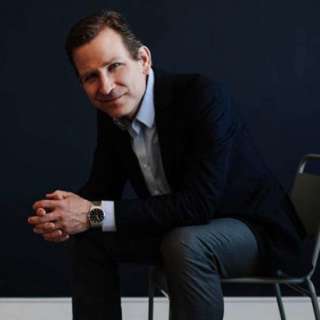
#204 – Nate Silver on making sense of SBF, and his biggest critiques of effective altruism

#204 – Nate Silver on making sense of SBF, and his biggest critiques of effective altruism

Rob Wiblin speaks with FiveThirtyEight election forecaster and author Nate Silver about his new book: On the Edge: The Art of Risking Everything.

Links to learn more, highlights, video, and full transcript.

On the Edge explores a cultural grouping Nate dubs “the River” — made up of people who are analytical, competitive, quantitatively minded, risk-taking, and willing to be contrarian. It’s a tendency he considers himself a part of, and the River has been doing well for itself in recent decades — gaining cultural influence through success in finance, technology, gambling, philanthropy, and politics, among other pursuits.

But on Nate’s telling, it’s a group particularly vulnerable to oversimplification and hubris. Where Riverians’ ability to calculate the “expected value” of actions isn’t as good as they believe, their poorly calculated bets can leave a trail of destruction — aptly demonstrated by Nate’s discussion of the extended time he spent with FTX CEO Sam Bankman-Fried before and after his downfall.

Given this show’s focus on the world’s most pressing problems and how to solve them, we narrow in on Nate’s discussion of effective altruism (EA), which has been little covered elsewhere. Nate met many leaders and members of the EA community in researching the book and has watched its evolution online for many years.

Effective altruism is the River style of doing good, because of its willingness to buck both fashion and common sense — making its giving decisions based on mathematical calculations and analytical arguments with the goal of maximising an outcome.

Nate sees a lot to admire in this, but the book paints a mixed picture in which effective altruism is arguably too trusting, too utilitarian, too selfless, and too reckless at some times, while too image-conscious at others.

But while everything has arguable weaknesses, could Nate actually do any better in practice? We ask him:

  • How would Nate spend $10 billion differently than today’s philanthropists influenced by EA?
  • Is anyone else competitive with EA in terms of impact per dollar?
  • Does he have any big disagreements with 80,000 Hours’ advice on how to have impact?
  • Is EA too big a tent to function?
  • What global problems could EA be ignoring?
  • Should EA be more willing to court controversy?
  • Does EA’s niceness leave it vulnerable to exploitation?
  • What moral philosophy would he have modelled EA on?

Rob and Nate also talk about:

  • Nate’s theory of Sam Bankman-Fried’s psychology.
  • Whether we had to “raise or fold” on COVID.
  • Whether Sam Altman and Sam Bankman-Fried are structurally similar cases or not.
  • “Winners’ tilt.”
  • Whether it’s selfish to slow down AI progress.
  • The ridiculous 13 Keys to the White House.
  • Whether prediction markets are now overrated.
  • Whether venture capitalists talk a big talk about risk while pushing all the risk off onto the entrepreneurs they fund.
  • And plenty more.

Chapters:

  • Cold open (00:00:00)
  • Rob's intro (00:01:03)
  • The interview begins (00:03:08)
  • Sam Bankman-Fried and trust in the effective altruism community (00:04:09)
  • Expected value (00:19:06)
  • Similarities and differences between Sam Altman and SBF (00:24:45)
  • How would Nate do EA differently? (00:31:54)
  • Reservations about utilitarianism (00:44:37)
  • Game theory equilibrium (00:48:51)
  • Differences between EA culture and rationalist culture (00:52:55)
  • What would Nate do with $10 billion to donate? (00:57:07)
  • COVID strategies and tradeoffs (01:06:52)
  • Is it selfish to slow down AI progress? (01:10:02)
  • Democratic legitimacy of AI progress (01:18:33)
  • Dubious election forecasting (01:22:40)
  • Assessing how reliable election forecasting models are (01:29:58)
  • Are prediction markets overrated? (01:41:01)
  • Venture capitalists and risk (01:48:48)

Producer and editor: Keiran Harris
Audio engineering by Ben Cordell, Milo McGuire, Simon Monsour, and Dominic Armstrong
Video engineering: Simon Monsour
Transcriptions: Katy Moore

Episoder(333)

#20 - Bruce Friedrich on inventing outstanding meat substitutes to end speciesism & factory farming

#20 - Bruce Friedrich on inventing outstanding meat substitutes to end speciesism & factory farming

Before the US Civil War, it was easier for the North to morally oppose slavery. Why? Because unlike the South they weren’t profiting much from its existence. The fight for abolition was partly won bec...

19 Feb 20181h 18min
#19 - Samantha Pitts-Kiefer on working next to the White House trying to prevent nuclear war

#19 - Samantha Pitts-Kiefer on working next to the White House trying to prevent nuclear war

Rogue elements within a state’s security forces enrich dozens of kilograms of uranium. It’s then assembled into a crude nuclear bomb. The bomb is transported on a civilian aircraft to Washington D.C, ...

14 Feb 20181h 4min

#18 - Ofir Reich on using data science to end poverty & the spurious action-inaction distinction

#18 - Ofir Reich on using data science to end poverty & the spurious action-inaction distinction

Ofir Reich started out doing math in the military, before spending 8 years in tech startups - but then made a sharp turn to become a data scientist focussed on helping the global poor. At UC Berkeley...

31 Jan 20181h 18min

#17 - Will MacAskill on moral uncertainty, utilitarianism & how to avoid being a moral monster

#17 - Will MacAskill on moral uncertainty, utilitarianism & how to avoid being a moral monster

Immanuel Kant is a profoundly influential figure in modern philosophy, and was one of the earliest proponents for universal democracy and international cooperation. He also thought that women have no ...

19 Jan 20181h 52min

#16 - Michelle Hutchinson on global priorities research & shaping the ideas of intellectuals

#16 - Michelle Hutchinson on global priorities research & shaping the ideas of intellectuals

In the 40s and 50s neoliberalism was a fringe movement within economics. But by the 80s it had become a dominant school of thought in public policy, and achieved major policy changes across the Englis...

22 Des 201755min

#15 - Phil Tetlock on how chimps beat Berkeley undergrads and when it’s wise to defer to the wise

#15 - Phil Tetlock on how chimps beat Berkeley undergrads and when it’s wise to defer to the wise

Prof Philip Tetlock is a social science legend. Over forty years he has researched whose predictions we can trust, whose we can’t and why - and developed methods that allow all of us to be better at p...

20 Nov 20171h 24min
#14 - Sharon Nunez & Jose Valle on going undercover to expose animal abuse

#14 - Sharon Nunez & Jose Valle on going undercover to expose animal abuse

What if you knew that ducks were being killed with pitchforks? Rabbits dumped alive into containers? Or pigs being strangled with forklifts? Would you be willing to go undercover to expose the crime? ...

13 Nov 20171h 25min
#13 - Claire Walsh on testing which policies work & how to get governments to listen to the results

#13 - Claire Walsh on testing which policies work & how to get governments to listen to the results

In both rich and poor countries, government policy is often based on no evidence at all and many programs don’t work. This has particularly harsh effects on the global poor - in some countries governm...

31 Okt 201752min

Populært innen Fakta

fastlegen
dine-penger-pengeradet
relasjonspodden-med-dora-thorhallsdottir-kjersti-idem
mikkels-paskenotter
foreldreradet
rss-bisarr-historie
treningspodden
rss-strid-de-norske-borgerkrigene
jakt-og-fiskepodden
rss-sunn-okonomi
ukast
hverdagspsyken
lederskap-nhhs-podkast-om-ledelse
sinnsyn
rss-bak-luftfarten
takk-og-lov-med-anine-kierulf
fryktlos
rss-kunsten-a-leve
rss-kull
gravid-uke-for-uke