Sayonara Nuclear? Japan’s Energy Transitions
Decouple26 Okt 2021

Sayonara Nuclear? Japan’s Energy Transitions

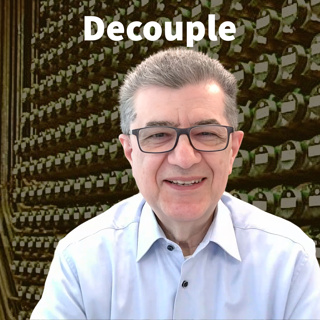
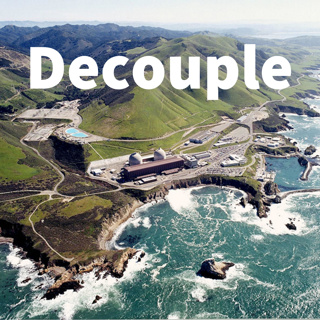
I am joined by Yuriy Humber, founder of Japan NRG, to discuss Japan’s complex relationship with nuclear technology and its energy issues past and present. The first and only wartime victim of atomic weapons, it went on to embrace nuclear energy for peaceful purposes, becoming a world leader in the manufacture of nuclear technology and relying on it for 30% of its electricity before turning against nuclear after the Fukushima accident in 2011. Public opinions against nuclear energy ran as high as 80% at one point.

A decade on and with new commitments to reducing emissions, public opposition is turning, and the government wants to revive nuclear power to improve Japan’s energy security in the context of the country’s high dependency on fuel imports and ongoing energy shocks around the world. Japan has started to invest in nuclear power technologies again, with some private money going into Small Modular Reactors (SMR) in the U.S. and state funding trickling into Japan’s own High-Temperature Gas-Cooled Reactor (HTGR) program. 
Although local municipalities have the final say on restarting nuclear power plants, Humber says that the pro-nuclear message has been re-gaining popularity with many arguing that Japan cannot meet its “green growth” strategy without it.


We discuss how Japan went from being the victim of nuclear weapons to a major player in nuclear energy, tying that in with a broader history of energy of Japan, characterized by a series of rapid energy transitions. The transition from coal to nuclear could serve as an example to other countries, though it was a process that faced many challenges of its own and relied on making some promises the government ultimately couldn’t keep. As someone who lived near both the Chernobyl and Fukushima accidents at the time when they occured, Humber has a first hand perspective on the cultural and political changes around nuclear in 2011. We discuss these aspects as well as technical problems facing Japanese energy supply following the closure of its many nuclear plants.

Finally, we discuss the alternatives for Japanese decarbonization. The challenge of providing constant power to a megapolis such as the Tokyo metro area is immense. Already Japan has the most solar panels per square meter of any country on Earth. And it has ambitious plans for off-shore wind and eventually a hydrogen economy. Carbon capture has been discussed, yet only one geological carbon storage test facility exists in all of Japan. The obstacles to more ambitious renewables plans too are becoming clear, not only from land use, materials intensity, and issues of intermittency, but NIMBYism. About 1/10 of all municipalities in Japan have ordinances to limit wind and solar deployment or ban it completely. Offshore wind forecasts of 10 GW by 2030 and 45 GW by 2040-2045 have slowed to perhaps 2-3 GW by 2030. Even if Japan is able to rely on nuclear for 20-22% of its electricity needs, decarbonization will be a long and bumpy road, with a likely dependence on LNG and other fossil fuel imports for long into the future.

Yuriy Humber is the founder of the Japan NRG platform, which provides regular information and analysis about the Japanese energy and power industry, markets, and policy. He is also a columnist on energy issues for the “Nikkei Asia” and co-author of an economic research report on Japan by the American Chamber of Commerce in Japan.

Denne episoden er hentet fra en åpen RSS-feed og er ikke publisert av Podme. Den kan derfor inneholde annonser.

Episoder(321)

The Gas Turbine: The Final Revelation in Humanity’s Pantheon of Prime Movers (w/ David Helmer)

The Gas Turbine: The Final Revelation in Humanity’s Pantheon of Prime Movers (w/ David Helmer)

David Helmer spent years working on cooling systems for GE jet turbines before moving to Boston Consulting Group, the Applied Physics Laboratory, and West Point. He joins Decouple to explain why the g...

12 Mai 1h 5min

Understanding the World's Most Unusual Commodity Cycle

Understanding the World's Most Unusual Commodity Cycle

Grant Isaac, President and COO of Cameco, joins Decouple to explain why uranium behaves unlike any other commodity. With essentially zero fundamental in-year demand, a spot market that reports prices ...

30 Apr 1h 18min

The Absolute Best Water Reactor: What Happened to the World’s Fastest Constructed Reactor?

The Absolute Best Water Reactor: What Happened to the World’s Fastest Constructed Reactor?

Nuclear construction once hit timelines that today sound implausible. First of a kind reactors completed in under four years, delivered at lower cost than mature designs, and executed with a level of ...

23 Apr 1h 9min

Nuclear Reprocessing: Promise vs Reality

Nuclear Reprocessing: Promise vs Reality

In this episode of Decouple, Chris Keefer is joined once again by Michael Seely of the Atomic Blender to explore nuclear fuel reprocessing and the promise of unlocking vastly more energy from existing...

9 Apr 1h 41min

Greenwashing with Chinese Characteristics

Greenwashing with Chinese Characteristics

In this episode we are joined by Seaver Wang to discuss the physical foundations of China’s industrial dominance in solar, batteries, electric vehicles, semiconductors, rare earth magnets, and aluminu...

2 Apr 1h 6min

The Luxury Beliefs That Broke Europe’s Energy System | Doomberg

The Luxury Beliefs That Broke Europe’s Energy System | Doomberg

Europe once treated energy as the foundation of civilization. After the oil shocks of the 1970s, it built nuclear at scale, opened the North Sea, and secured long term pipeline supply. That system pro...

24 Mar 1h 17min

What's happening with CANDU?

What's happening with CANDU?

This episode features Joe St. Julian, President of Nuclear at AtkinsRéalis, outlining why Canada may be closer to a new nuclear fleet build than most observers realize. Drawing on his background deliv...

19 Mar 1h 16min

The Week LNG Became a Target

The Week LNG Became a Target

The Iranian drone strike on Qatar’s Ras Laffan industrial complex has sent shockwaves through global energy markets, triggering force majeure on 20 percent of the world’s LNG supply and closing the St...

13 Mar 1h 15min

Populært innen Vitenskap

fastlegen
tingenes-tilstand
jss
dekodet-2
rekommandert
forskningno
sinnsyn
villmarksliv
liberal-halvtime
rss-paradigmepodden
rss-nysgjerrige-norge
rss-zahid-ali-hjelper-deg
tidlose-historier
rss-inn-til-kjernen-med-sunniva-rose
kvinnehelsepodden
rss-rekommandert
nordnorsk-historie
fjellsportpodden
rss-lundqvist-podden
vett-og-vitenskap-med-gaute-einevoll