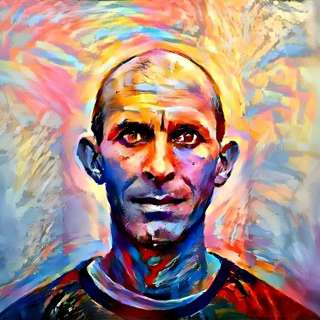
#206 – Anil Seth on the predictive brain and how to study consciousness

#206 – Anil Seth on the predictive brain and how to study consciousness

"In that famous example of the dress, half of the people in the world saw [blue and black], half saw [white and gold]. It turns out there’s individual differences in how brains take into account ambient light. Colour is one example where it’s pretty clear that what we experience is a kind of inference: it’s the brain’s best guess about what’s going on in some way out there in the world. And that’s the claim that I’ve taken on board as a general hypothesis for consciousness: that all our perceptual experiences are inferences about something we don’t and cannot have direct access to." —Anil Seth

In today’s episode, host Luisa Rodriguez speaks to Anil Seth — director of the Sussex Centre for Consciousness Science — about how much we can learn about consciousness by studying the brain.

Links to learn more, highlights, and full transcript.

They cover:

  • What groundbreaking studies with split-brain patients and blindsight have already taught us about the nature of consciousness.
  • Anil’s theory that our perception is a “controlled hallucination” generated by our predictive brains.
  • Whether looking for the parts of the brain that correlate with consciousness is the right way to learn about what consciousness is.
  • Whether our theories of human consciousness can be applied to nonhuman animals.
  • Anil’s thoughts on whether machines could ever be conscious.
  • Disagreements and open questions in the field of consciousness studies, and what areas Anil is most excited to explore next.
  • And much more.

Chapters:

  • Cold open (00:00:00)
  • Luisa’s intro (00:01:02)
  • The interview begins (00:02:42)
  • How expectations and perception affect consciousness (00:03:05)
  • How the brain makes sense of the body it’s within (00:21:33)
  • Psychedelics and predictive processing (00:32:06)
  • Blindsight and visual consciousness (00:36:45)
  • Split-brain patients (00:54:56)
  • Overflow experiments (01:05:28)
  • How much can we learn about consciousness from empirical research? (01:14:23)
  • Which parts of the brain are responsible for conscious experiences? (01:27:37)
  • Current state and disagreements in the study of consciousness (01:38:36)
  • Digital consciousness (01:55:55)
  • Consciousness in nonhuman animals (02:18:11)
  • What’s next for Anil (02:30:18)
  • Luisa’s outro (02:32:46)

Producer: Keiran Harris
Audio engineering: Ben Cordell, Milo McGuire, Simon Monsour, and Dominic Armstrong
Content editing: Luisa Rodriguez, Katy Moore, and Keiran Harris
Transcriptions: Katy Moore

Episoder(326)

#5 - Alex Gordon-Brown on how to donate millions in your 20s working in quantitative trading

#5 - Alex Gordon-Brown on how to donate millions in your 20s working in quantitative trading

Quantitative financial trading is one of the highest paying parts of the world’s highest paying industry. 25 to 30 year olds with outstanding maths skills can earn millions a year in an obscure set of...

28 Aug 20171h 45min

#4 - Howie Lempel on pandemics that kill hundreds of millions and how to stop them

#4 - Howie Lempel on pandemics that kill hundreds of millions and how to stop them

What disaster is most likely to kill more than 10 million human beings in the next 20 years? Terrorism? Famine? An asteroid? Actually it’s probably a pandemic: a deadly new disease that spreads out o...

23 Aug 20172h 35min
#3 - Dario Amodei on OpenAI and how AI will change the world for good and ill

#3 - Dario Amodei on OpenAI and how AI will change the world for good and ill

Just two years ago OpenAI didn’t exist. It’s now among the most elite groups of machine learning researchers. They’re trying to make an AI that’s smarter than humans and have $1b at their disposal. Ev...

21 Jul 20171h 38min
#2 - David Spiegelhalter on risk, stats and improving understanding of science

#2 - David Spiegelhalter on risk, stats and improving understanding of science

Recorded in 2015 by Robert Wiblin with colleague Jess Whittlestone at the Centre for Effective Altruism, and recovered from the dusty 80,000 Hours archives. David Spiegelhalter is a statistician at th...

21 Jun 201733min

#1 - Miles Brundage on the world's desperate need for AI strategists and policy experts

#1 - Miles Brundage on the world's desperate need for AI strategists and policy experts

Robert Wiblin, Director of Research at 80,000 Hours speaks with Miles Brundage, research fellow at the University of Oxford's Future of Humanity Institute. Miles studies the social implications surrou...

5 Jun 201755min

#0 – Introducing the 80,000 Hours Podcast

#0 – Introducing the 80,000 Hours Podcast

80,000 Hours is a non-profit that provides research and other support to help people switch into careers that effectively tackle the world's most pressing problems. This podcast is just one of many th...

1 Mai 20173min

Populært innen Fakta

fastlegen
dine-penger-pengeradet
relasjonspodden-med-dora-thorhallsdottir-kjersti-idem
foreldreradet
rss-strid-de-norske-borgerkrigene
treningspodden
jakt-og-fiskepodden
rss-sunn-okonomi
sinnsyn
mikkels-paskenotter
takk-og-lov-med-anine-kierulf
hverdagspsyken
gravid-uke-for-uke
rss-kunsten-a-leve
tomprat-med-gunnar-tjomlid
hagespiren-podcast
rss-bisarr-historie
rss-var-forste-kaffe
fryktlos
rss-kull