Ryan Kitchens on Learning from Incidents at Netflix, the Role of SRE, and Sociotechnical Systems

Ryan Kitchens on Learning from Incidents at Netflix, the Role of SRE, and Sociotechnical Systems

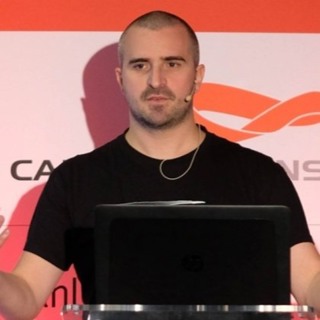
In today’s podcast we sit down with Ryan Kitchens, a senior site reliability engineer and member of the CORE team at Netflix. This team is responsible for the entire lifecycle of incident management at Netflix, from incident response to memorialising an issue. Why listen to this podcast: - Top level metrics can be used as a proxy for user experience, and can be used to determine that issue should be alerted on an investigated. For example, at Netflix if the customer playback initiation “streams per second” metric declines rapidly, this may be an indication that something has broken. - Focusing on how things go right can provide valuable insight into the resilience within your system e.g. what are people doing everyday that helps us overcome incidents. Finding sources of resilience is somewhat “the story of the incident you didn’t have”. - When conducting an incident postmortem, simply reconstructing an incident is often not sufficient to determine what needs to be fixed; there is no root cause with complex socio-technical systems as found at Netflix and most modern web-based organisations. Instead, teams must dig a little deeper, and look for what went well, what contributed to the problem, and where are the recurring patterns. - Resilience engineering is a multidisciplinary field that was established in the early 2000s, and the associated community that has emerged is both academic and deeply practical. Although much resilience engineering focuses on domains such as aviation, surgery and military agencies, there is much overlap with the domain of software engineering. - Make sure that support staff within an organisation have a feedback loop into the product team, as these people providing support often know where all of the hidden problems are, the nuances of the systems, and the workarounds. More on this: Quick scan our curated show notes on InfoQ https://bit.ly/2LLwk8T You can also subscribe to the InfoQ newsletter to receive weekly updates on the hottest topics from professional software development. bit.ly/24x3IVq Subscribe: www.youtube.com/infoq Like InfoQ on Facebook: bit.ly/2jmlyG8 Follow on Twitter: twitter.com/InfoQ Follow on LinkedIn: www.linkedin.com/company/infoq Check the landing page on InfoQ: https://bit.ly/2LLwk8T

Denne episoden er hentet fra en åpen RSS-feed og er ikke publisert av Podme. Den kan derfor inneholde annonser.

Episoder(386)

Will Agentic AI Bring Fantasia’s Sorcerer's Apprentice to Life?: A Conversation with Tracy Bannon

Will Agentic AI Bring Fantasia’s Sorcerer's Apprentice to Life?: A Conversation with Tracy Bannon

In this podcast, Michael Stiefel spoke to Tracy Bannon about the role of artificial intelligence in software and the attendant risks in the areas of security, software development, and society at larg...

17 Aug 49min
Cloud and DevOps InfoQ Trends Report 2026: AI, Resilience, Platforms, FinOps, and Sovereignty

Cloud and DevOps InfoQ Trends Report 2026: AI, Resilience, Platforms, FinOps, and Sovereignty

In this episode of the podcast, members of the InfoQ editorial staff and friends of InfoQ will discuss current trends in the cloud and DevOps domains as part of our annual trends report. These reports...

12 Aug 50min
WebAssembly on the JVM: Feature Evolution, Performance, and the Transition to Endive

WebAssembly on the JVM: Feature Evolution, Performance, and the Transition to Endive

Andrea Peruffo discusses the evolution of WebAssembly beyond the browser and its growing role on the server-side JVM. He covers performance advancements in Wasm runtimes, moving from interpreters to e...

3 Aug 34min

Rethinking Data: Moving From the Traditional Three-Tier Web Stack to Client-Side Event Sourcing

Rethinking Data: Moving From the Traditional Three-Tier Web Stack to Client-Side Event Sourcing

Johannes Schickling explores how he moved beyond the traditional three-tier web stack to a local-first approach. He shares his experience transitioning from Prisma to developing Overtone—a music curat...

27 Jul 43min

Strands Agents with Clare Liguori

Strands Agents with Clare Liguori

In this episode, Thomas Betts talks with Clare Liguori, the technical lead on the open source Strands Agents SDK. The conversation covers how Strands Agents has grown from a Python SDK to a full agent...

20 Jul 38min

Governance in the Age of AI: A Conversation with Sarah Wells

Governance in the Age of AI: A Conversation with Sarah Wells

In this podcast Michael Stiefel spoke to Sarah Wells about the relationship of governance to software architecture. Governance enables teams to work effectively by establishing procedures that minimiz...

13 Jul 48min

Spite-Driven Engineering: A New Blueprint for Cloud Security in the AI Native Era

Spite-Driven Engineering: A New Blueprint for Cloud Security in the AI Native Era

In this episode, Alex Zenla (CTO/Co-founder, Edera) challenges the "laissez-faire" attitude toward modern infrastructure. She promotes "spite-driven development", building software to solve genuine te...

6 Jul 40min

Architectural Patterns: Moving Beyond Cloud-Native to Local-First - Insights from Adam Wiggins

Architectural Patterns: Moving Beyond Cloud-Native to Local-First - Insights from Adam Wiggins

In this episode, Heroku co-founder and Ink & Switch founder Adam Wiggins argues for a 'local-first' architecture that reconciles cloud-based collaboration with the performance and data ownership of lo...

29 Jun 38min

Populært innen Teknologi

lydartikler-fra-aftenposten
tomprat-med-gunnar-tjomlid
teknisk-sett
smart-forklart
elektropodden
nasjonal-sikkerhetsmyndighet-nsm
rss-ki-praten
fornybaren
shifter
rss-kunstig-intelligens-med-elisabeth-maren-og-morten
teknologi-og-mennesker
rss-alt-som-gar-pa-strom
rss-snakk-om-sikkerhet
rss-ai-forklart
rss-alt-vi-kan
rss-fisketimen
digital-forretningsforstaelse
rss-bouvet-bobler
pedagogisk-intelligens
rss-polypod