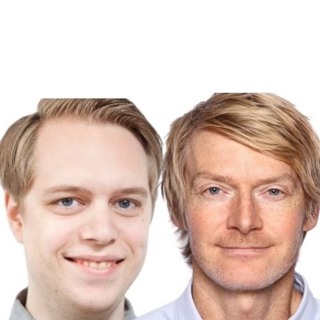
Matt Debergalis on GraphQL and Data Modelling in the Enterprise

Matt Debergalis on GraphQL and Data Modelling in the Enterprise

In this podcast, Matt Debergalis, Founder and CTO at Apollo, sat down with InfoQ podcast co-host Daniel Bryant. Topics discussed included: the motivations for GraphQL, the Apollo Data Graph platform, data modelling in an enterprise context, and how incrementally adopting GraphQL can help with decoupling the evolution of frontend and backend systems. Why listen to this podcast: - The challenges of defining client-side-friendly data models, building maintainable and composable backend APIs, and moving data from the cloud to a client application contributes to making modern software development difficult and time consuming. - GraphQL is an open-source data query and manipulation language for APIs, and a runtime for fulfilling queries with existing data. GraphQL lets application developers describe the data they need and bring that data into the screens that they are building for their users. - The Apollo Data Graph platform is a middleware layer that provides a way of decoupling the core business APIs from the client-side consumption patterns. Apollo can implement cross-cutting concerns, such as transaction management, which mitigates the need to implement this in (potentially multiple) client-side applications. - Apollo makes it possible to build a “data graph”: a series of graphs that are composed from an organisation’s data for use within client-side applications. A data graph is especially valuable in larger enterprises because it is here that many (money making) systems with existing APIs need to be combined to meet new business requirements. - GraphQL can be adopted in an incremental fashion. To begin adoption just build the simplest possible graph that matches the needs of the first application, the first screen, or the first component that is required to transition over to the graph. Then let that graph evolve. More on this: Quick scan our curated show notes on InfoQ https://bit.ly/3fhaeqP You can also subscribe to the InfoQ newsletter to receive weekly updates on the hottest topics from professional software development. bit.ly/24x3IVq Subscribe: www.youtube.com/infoq Like InfoQ on Facebook: bit.ly/2jmlyG8 Follow on Twitter: twitter.com/InfoQ Follow on LinkedIn: www.linkedin.com/company/infoq Check the landing page on InfoQ: https://bit.ly/3fhaeqP

Denne episoden er hentet fra en åpen RSS-feed og er ikke publisert av Podme. Den kan derfor inneholde annonser.

Episoder(387)

The Human Edge: Why Brownfield Codebases Need Mob Programming, Not Just AI Vibes

The Human Edge: Why Brownfield Codebases Need Mob Programming, Not Just AI Vibes

Asgaut Mjølne Söderbom and Ola Hast discuss the evolution of their software engineering practices past continuous deployment and pair engineering. The conversation continues where it left off in the p...

24 Aug 39min

Will Agentic AI Bring Fantasia’s Sorcerer's Apprentice to Life?: A Conversation with Tracy Bannon

Will Agentic AI Bring Fantasia’s Sorcerer's Apprentice to Life?: A Conversation with Tracy Bannon

In this podcast, Michael Stiefel spoke to Tracy Bannon about the role of artificial intelligence in software and the attendant risks in the areas of security, software development, and society at larg...

17 Aug 49min
Cloud and DevOps InfoQ Trends Report 2026: AI, Resilience, Platforms, FinOps, and Sovereignty

Cloud and DevOps InfoQ Trends Report 2026: AI, Resilience, Platforms, FinOps, and Sovereignty

In this episode of the podcast, members of the InfoQ editorial staff and friends of InfoQ will discuss current trends in the cloud and DevOps domains as part of our annual trends report. These reports...

12 Aug 50min
WebAssembly on the JVM: Feature Evolution, Performance, and the Transition to Endive

WebAssembly on the JVM: Feature Evolution, Performance, and the Transition to Endive

Andrea Peruffo discusses the evolution of WebAssembly beyond the browser and its growing role on the server-side JVM. He covers performance advancements in Wasm runtimes, moving from interpreters to e...

3 Aug 34min

Rethinking Data: Moving From the Traditional Three-Tier Web Stack to Client-Side Event Sourcing

Rethinking Data: Moving From the Traditional Three-Tier Web Stack to Client-Side Event Sourcing

Johannes Schickling explores how he moved beyond the traditional three-tier web stack to a local-first approach. He shares his experience transitioning from Prisma to developing Overtone—a music curat...

27 Jul 43min

Strands Agents with Clare Liguori

Strands Agents with Clare Liguori

In this episode, Thomas Betts talks with Clare Liguori, the technical lead on the open source Strands Agents SDK. The conversation covers how Strands Agents has grown from a Python SDK to a full agent...

20 Jul 38min

Governance in the Age of AI: A Conversation with Sarah Wells

Governance in the Age of AI: A Conversation with Sarah Wells

In this podcast Michael Stiefel spoke to Sarah Wells about the relationship of governance to software architecture. Governance enables teams to work effectively by establishing procedures that minimiz...

13 Jul 48min

Spite-Driven Engineering: A New Blueprint for Cloud Security in the AI Native Era

Spite-Driven Engineering: A New Blueprint for Cloud Security in the AI Native Era

In this episode, Alex Zenla (CTO/Co-founder, Edera) challenges the "laissez-faire" attitude toward modern infrastructure. She promotes "spite-driven development", building software to solve genuine te...

6 Jul 40min

Populært innen Teknologi

lydartikler-fra-aftenposten
teknisk-sett
smart-forklart
tomprat-med-gunnar-tjomlid
elektropodden
nasjonal-sikkerhetsmyndighet-nsm
rss-kunstig-intelligens-med-elisabeth-maren-og-morten
rss-ki-praten
fornybaren
shifter
rss-alt-som-gar-pa-strom
teknologi-og-mennesker
rss-snakk-om-sikkerhet
rss-fisketimen
rss-ai-forklart
rss-alt-vi-kan
digital-forretningsforstaelse
rss-polypod
pedagogisk-intelligens
rss-plateprat