82: Lydia Carlisi
HMA Podcast11 Des 2019

82: Lydia Carlisi

My guest today is Professor of Music Theory, Lydia Carlisi.

She studied in Rome (Università di Roma 2/Tor Vergata) completing in 2010 a Bachelor Thesis on Leonardo Leo's Partimenti under the direction of Professor Giorgio Sanguinetti.

In 2015 she completed a Master in Music Theory in the class of Prof. Dr. Ludwig Holtmeier at the Hochschule für Musik Freiburg (DE) with a thesis on Gaspare Selvaggi's «Trattato di armonia» (1823). During this time she was awarded a DAAD scholarship.

She worked at creating the Neapolitan canon project at the university of the arts Bern and she is now professor for music theory at the Conservatorio of Lugano, Switzerland. Her upcoming PhD thesis focuses on the French reception of Partimento.

-----

1:02 When was the Paris Conservatory founded?
2:39 Was Italian music very influential in France at the time?
3:26 Did France have it's own music tradition separate from Italy?
4:02 How and why was the Paris Conservatory founded?
4:56 What happened in 1799?
5:47 Emanuele Imbimbo's background
7:12 Fenaroli's popularity in France
8:38 On French music theory
8:52 Talking about Honoré Langlé
9:32 Was Niccolò Piccinni the first head of the Paris Conservatory?
10:23 Did the French government send people to Naples to procure Italian music materials?
13:27 Was the Paris Conservatory interested also in German music at the time?
14:10 Gaspare Selvaggi's massive collection of Neapolitan composers
14:55 Did people like to collect music scores?
15:33 Did the Paris Conservatory copy the Neapolitan model of Solfeggio and Partimenti?
18:02 Was the Paris Conservatory Solfeggio different from the Neapolitan Solfeggio?
19:50 Did other conservatories around the world copy the model of the Paris Conservatory?
20:46 On the separation of subjects within the Paris Conservatory curriculum
21:05 On Luigi Cherubini's background and training
25:30 Was the word "partimenti" found in any of the French texts
26:18 Did Partimenti get "reborn" in France in the middle of the 19th century?
27:28 How did they learn counterpoint in the Paris Conservatory?
28:07 Did Choron have any influence on the Paris Conservatory?
29:03 Was partimenti viewed as old-fashioned or incomplete according to François-Joseph Fétis at the Paris Conservatory?
30:22 Was the Paris Conservatory approach to harmony similar to the Neapolitan method?
31:02 Were only composers and accompanists the ones who practiced improvisation?
32:00 Who was responsible for the fragmentation of the Neapolitan method in the Paris Conservatory?
33:10 Did accompanists like Debussy learn how to do "partimenti"-like exercises?
34:20 Were accompanists only practicing chords?
35:48 What were the important pedagogical books that the students would use at the Paris Conservatory?
36:40 Did the Charles-Simon Catel book erase the Neapolitan view of harmony?
37:43 What do you teach at the mentiParti?
39:07 How is the Partimenti composition class different from a more orthodox composition class?
39:53 What books can you recommend to people interested in developing their compositional training?
41:08 How do you improve your written counterpoint?
41:26 What are some basics for counterpoint that beginners can use?
43:12 Is renaissance-style counterpoint useful for learning galant music?
43:48 Is partimento counterpoint considered strict?
44:29 Are fugues at the end of the counterpoint study?
45:54 How do you introduce orchestration into composition study?
46:46 What are some common mistakes when learning the Neapolitan tradition?
48:05 Do you have unlearn a lot of information when learning partimento?
48:27 Who are your favorite Neapolitan composers?
49:00 Do you have favorite Partimenti?
49:29 What is the future for Partimento research?
51:06 Did Bach have Durante scores?
51:35 Is Partimento theory applicable for the 21st century?
52:22 If you could reform music education, how would you do it?
53:43 Can you learn to compose as an adult or is it too late?
54:37 Wrapping up

Episoder(84)

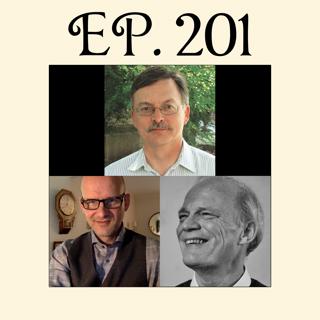
201: Counterpoint Panel: Why "Harmony" Classes Fail, Fux Myths, Bach Traps & Better Methods

201: Counterpoint Panel: Why "Harmony" Classes Fail, Fux Myths, Bach Traps & Better Methods

Counterpoint is the "huge topic" that crowns the Neapolitan method and the Paris Conservatoire tradition—and yet it's often taught today in ways that leave students confused, discouraged, and musicall...

5 Jan 1h 24min
182: Giovanna Barbati (Partimento and Improvisation on the Cello)

182: Giovanna Barbati (Partimento and Improvisation on the Cello)

Today I speak to cellist and viola da gamba player Giovanna Barbati, whose repertoire extends from early to contemporary music and who has a special interest in improvisation. She appears frequently a...

3 Jun 20241h 41min

144: Sietze de Vries (Classical Improviser, Organist)

144: Sietze de Vries (Classical Improviser, Organist)

Professor Sietze de Vries, famed for his mastery in classical improvisation, joins the show to talk about his education, training, approach to music, music education, and demonstrates classical improv...

17 Mai 20241h 37min

158: Nicholas Baragwanath (Hexachordal Italian Solfeggio)

158: Nicholas Baragwanath (Hexachordal Italian Solfeggio)

Professor Nicholas Baragwanath, author of the groundbreaking "Solfeggio Tradition" (published by Oxford University Press), returns to the show to talk about Hexachordal Italian Solfeggio. This was the...

17 Mai 20241h 9min

157: Ewald Demeyere (Fedele Fenaroli's Partimenti and Pedagogy)

157: Ewald Demeyere (Fedele Fenaroli's Partimenti and Pedagogy)

Professor Ewald Demeyere returns on the show to discuss his critical edition of Fenaroli's partimenti collection and discusses Fenaroli's approach to pedagogy and partimento realization.

1 Apr 20241h 59min

154: Partimento Panel (Gjerdingen, Sanguinetti, van Tour, Cafiero)

154: Partimento Panel (Gjerdingen, Sanguinetti, van Tour, Cafiero)

In this episode, I am joined by eminent professors Robert O. Gjerdingen, Giorgio Sanguinetti, Peter van Tour, and Rosa Cafiero, in a special panel session about the subject of partimento. We discuss t...

1 Mar 20241h 32min

174: Niels Berentsen (1300-1500 Polyphony | Improvising Vocal Counterpoint)

174: Niels Berentsen (1300-1500 Polyphony | Improvising Vocal Counterpoint)

I talk to Professor Niels Berentsen about the beginnings of improvised counterpoint, the reconstruction of incomplete music by Johannes Ciconia, computational analysis of counterpoint, teaching 15th/1...

1 Feb 20241h 19min

167: Solfeggio Panel (Baragwanath, Gjerdingen, IJzerman, van Tour)

167: Solfeggio Panel (Baragwanath, Gjerdingen, IJzerman, van Tour)

Today we have a special episode dedicated to Solfeggio, featuring Professors Nicholas Baragwanath, Job IJzerman, Robert O. Gjerdingen, and Peter van Tour. The famed students of the 18th-century Neapol...

1 Feb 20241h 23min

Populært innen Fakta

fastlegen
dine-penger-pengeradet
relasjonspodden-med-dora-thorhallsdottir-kjersti-idem
foreldreradet
rss-strid-de-norske-borgerkrigene
mikkels-paskenotter
treningspodden
rss-bisarr-historie
jakt-og-fiskepodden
rss-sunn-okonomi
sinnsyn
rss-kunsten-a-leve
hverdagspsyken
ukast
rss-bak-luftfarten
tomprat-med-gunnar-tjomlid
fryktlos
lederskap-nhhs-podkast-om-ledelse
gravid-uke-for-uke
rss-kull