87: Johannes Menke
HMA Podcast9 Apr 2020

87: Johannes Menke

I'm really happy to introduce my guest today, Professor Johannes Menke. In 2004, he received his doctorate with a thesis on Giacinto Scelsi at the TU Berlin.

From 1999-2009 he taught music theory and ear training at the Musikhochschule Freiburg and was also active as a radio author, organist and choirmaster. Since 2007 he has been Professor of Historical Theory at the Schola Cantorum Basiliensis.

From 2008 to 2012 he was President of the Society for Music Theory (GMTH). He is co-editor of the book series Sinefonia (Wolke-Verlag) and the journal Musik & Ästhetik (Klett-Cotta). His numerous publications deal mainly with questions of music theory and analysis, especially with regard to history and didactics. His focus is on the music of the 16th and 17th centuries. These are the book publications counterpoint I: The music of the Renaissance and counterpoint II: The music of the Baroque.

His work at the Schola Cantorum Basiliensis includes subjects in the fields of Renaissance to Romantic music, Early Music, the History of Music Theory as well as supervising doctoral projects. He is also co-founder of the project series Klangwelt Renaissance and the Basel Forum for Music Aesthetics.

-----

1:02 When did the State of Germany come about?
2:03 Was it originally divided by religion or culture?
2:39 Siefried Dehn
3:52 How was Dehn trained?
4:17 Had generalbass existed in Germany at that time?
4:58 On parallels with Italian partimento and their differences
5:21 Adolf Bernhard Marx
6:36 How did Marx learn music?
7:00 Was his training similar to Dehn's training?
8:05 What artist would represent the ancient regime?
8:29 Why would Marx say these things when many of old German masters studied generalbass?
9:16 What kind of music theory was Marx trying to promote to replace generalbass?
10:08 Does that include Roman Numerals?
10:31 Who came up with Roman Numerals?
10:50 Marx's nationalist sentiments
11:37 Ferdinand Hiller
12:33 The reception of partimenti and Fenaroli in Germany
13:42 The perception that partimento was deficient because it appeared to lack chordal theory
14:28 Did Marx win the music theory wars?
14:59 Did Marx have successful students of note?
15:33 Was Dehn nationalistic as well?
16:05 Richard Wagner before Weinlig
17:09 Who was Christian Theodor Weinlig?
17:37 Weinlig called himself a Maestro, an Italian term
18:05 Wagner's recollections in his autobiography about his lessons
19:41 Wagner being a grandchild of the Bologna tradition
20:07 Would Wagner have composed thinking more along the lines of generalbass?
21:27 How do we know that Wagner liked Bellini?
22:07 Did the love for Bellini stay with Wagner for his whole life?
23:14 What was the reception of Italian music, such as Opera, in Germany?
24:15 Is the word partimento mentioned in Germany in the 19th century?
25:08 Did the lack of figures in partimento influence generalbass or was it more like bologna, which had figures?
25:38 Is there an equivalent for the Rule of the Octave in Germany?
26:53 Was Partimento hard to be accepted because it was an oral tradition and lacked detailed treatises
27:54 What were the famous harmony books in Germany?
28:44 Gottfried Weber
30:03 How did Mendelssohn learn music?
30:49 Was Johann Georg Albrechtsberger familiar with the italian methods or was he more of a generalbass-ist?
31:46 On generalbass being thought of as just accompaniment rather than a complete method of composition and counterpoint.
33:03 If I was a student in the 19th century, how would I learn to be a composer?
33:31 Do different cities in Germany have different music theory traditions?
34:30 Did Germany have an equivalent to Italian Solfeggio and the study of melody?
35:46 How do you learn music in the generalbass way?
36:55 Franz Liszt being part of the generalbass tradition through Czerny
37:25 Where did the newer, progressive methods of music theory come from?
38:24 So do these ideas come from the new ideas of chordal thinking?
39:22 How do the traditional ideas of generalbass influence modern music education?
40:35 With so many music theory methods, what should the modern music student learn?
41:56 Would you use roman numerals to explain romantic music?
43:07 What music would be good to analyze with chord inversions and roman numerals?
44:26 Would you expect a student to learn all the tools?
45:22 Upcoming articles and projects for 2020
45:50 Where to find Professor Menke's work
46:12 How would you reform music education?
46:52 Should everyone learn generalbass?
47:10 Wrapping Up

Episoder(84)

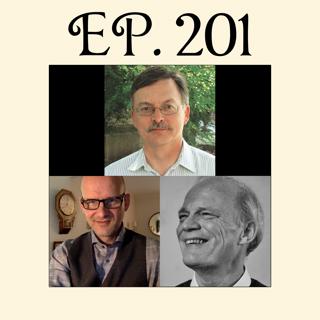
201: Counterpoint Panel: Why "Harmony" Classes Fail, Fux Myths, Bach Traps & Better Methods

201: Counterpoint Panel: Why "Harmony" Classes Fail, Fux Myths, Bach Traps & Better Methods

Counterpoint is the "huge topic" that crowns the Neapolitan method and the Paris Conservatoire tradition—and yet it's often taught today in ways that leave students confused, discouraged, and musicall...

5 Jan 1h 24min
182: Giovanna Barbati (Partimento and Improvisation on the Cello)

182: Giovanna Barbati (Partimento and Improvisation on the Cello)

Today I speak to cellist and viola da gamba player Giovanna Barbati, whose repertoire extends from early to contemporary music and who has a special interest in improvisation. She appears frequently a...

3 Jun 20241h 41min

144: Sietze de Vries (Classical Improviser, Organist)

144: Sietze de Vries (Classical Improviser, Organist)

Professor Sietze de Vries, famed for his mastery in classical improvisation, joins the show to talk about his education, training, approach to music, music education, and demonstrates classical improv...

17 Mai 20241h 37min

158: Nicholas Baragwanath (Hexachordal Italian Solfeggio)

158: Nicholas Baragwanath (Hexachordal Italian Solfeggio)

Professor Nicholas Baragwanath, author of the groundbreaking "Solfeggio Tradition" (published by Oxford University Press), returns to the show to talk about Hexachordal Italian Solfeggio. This was the...

17 Mai 20241h 9min

157: Ewald Demeyere (Fedele Fenaroli's Partimenti and Pedagogy)

157: Ewald Demeyere (Fedele Fenaroli's Partimenti and Pedagogy)

Professor Ewald Demeyere returns on the show to discuss his critical edition of Fenaroli's partimenti collection and discusses Fenaroli's approach to pedagogy and partimento realization.

1 Apr 20241h 59min

154: Partimento Panel (Gjerdingen, Sanguinetti, van Tour, Cafiero)

154: Partimento Panel (Gjerdingen, Sanguinetti, van Tour, Cafiero)

In this episode, I am joined by eminent professors Robert O. Gjerdingen, Giorgio Sanguinetti, Peter van Tour, and Rosa Cafiero, in a special panel session about the subject of partimento. We discuss t...

1 Mar 20241h 32min

174: Niels Berentsen (1300-1500 Polyphony | Improvising Vocal Counterpoint)

174: Niels Berentsen (1300-1500 Polyphony | Improvising Vocal Counterpoint)

I talk to Professor Niels Berentsen about the beginnings of improvised counterpoint, the reconstruction of incomplete music by Johannes Ciconia, computational analysis of counterpoint, teaching 15th/1...

1 Feb 20241h 19min

167: Solfeggio Panel (Baragwanath, Gjerdingen, IJzerman, van Tour)

167: Solfeggio Panel (Baragwanath, Gjerdingen, IJzerman, van Tour)

Today we have a special episode dedicated to Solfeggio, featuring Professors Nicholas Baragwanath, Job IJzerman, Robert O. Gjerdingen, and Peter van Tour. The famed students of the 18th-century Neapol...

1 Feb 20241h 23min

Populært innen Fakta

fastlegen
dine-penger-pengeradet
relasjonspodden-med-dora-thorhallsdottir-kjersti-idem
foreldreradet
rss-strid-de-norske-borgerkrigene
mikkels-paskenotter
treningspodden
rss-bisarr-historie
jakt-og-fiskepodden
rss-sunn-okonomi
sinnsyn
rss-kunsten-a-leve
hverdagspsyken
ukast
rss-bak-luftfarten
tomprat-med-gunnar-tjomlid
fryktlos
lederskap-nhhs-podkast-om-ledelse
gravid-uke-for-uke
rss-kull