#211 – Sam Bowman on why housing still isn't fixed and what would actually work

#211 – Sam Bowman on why housing still isn't fixed and what would actually work

Rich countries seem to find it harder and harder to do anything that creates some losers. People who don’t want houses, offices, power stations, trains, subway stations (or whatever) built in their area can usually find some way to block them, even if the benefits to society outweigh the costs 10 or 100 times over.

The result of this ‘vetocracy’ has been skyrocketing rent in major cities — not to mention exacerbating homelessness, energy poverty, and a host of other social maladies. This has been known for years but precious little progress has been made. When trains, tunnels, or nuclear reactors are occasionally built, they’re comically expensive and slow compared to 50 years ago. And housing construction in the UK and California has barely increased, remaining stuck at less than half what it was in the ’60s and ’70s.

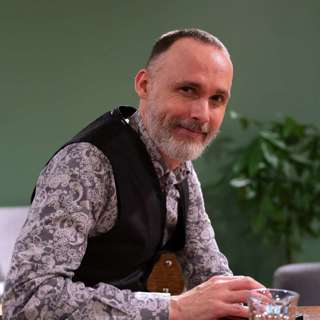
Today’s guest — economist and editor of Works in Progress Sam Bowman — isn’t content to just condemn the Not In My Backyard (NIMBY) mentality behind this stagnation. He wants to actually get a tonne of stuff built, and by that standard the strategy of attacking ‘NIMBYs’ has been an abject failure. They are too politically powerful, and if you try to crush them, sooner or later they crush you.

Links to learn more, highlights, video, and full transcript.

So, as Sam explains, a different strategy is needed, one that acknowledges that opponents of development are often correct that a given project will make them worse off. But the thing is, in the cases we care about, these modest downsides are outweighed by the enormous benefits to others — who will finally have a place to live, be able to get to work, and have the energy to heat their home.

But democracies are majoritarian, so if most existing residents think they’ll be a little worse off if more dwellings are built in their area, it’s no surprise they aren’t getting built. Luckily we already have a simple way to get people to do things they don’t enjoy for the greater good, a strategy that we apply every time someone goes in to work at a job they wouldn’t do for free: compensate them.

Sam thinks this idea, which he calls “Coasean democracy,” could create a politically sustainable majority in favour of building and underlies the proposals he thinks have the best chance of success — which he discusses in detail with host Rob Wiblin.

Chapters:

  • Cold open (00:00:00)
  • Introducing Sam Bowman (00:00:59)
  • We can’t seem to build anything (00:02:09)
  • Our inability to build is ruining people's lives (00:04:03)
  • Why blocking growth of big cities is terrible for science and invention (00:09:15)
  • It's also worsening inequality, health, fertility, and political polarisation (00:14:36)
  • The UK as the 'limit case' of restrictive planning permission gone mad (00:17:50)
  • We've known this for years. So why almost no progress fixing it? (00:36:34)
  • NIMBYs aren't wrong: they are often harmed by development (00:43:58)
  • Solution #1: Street votes (00:55:37)
  • Are street votes unfair to surrounding areas? (01:08:31)
  • Street votes are coming to the UK — what to expect (01:15:07)
  • Are street votes viable in California, NY, or other countries? (01:19:34)
  • Solution #2: Benefit sharing (01:25:08)
  • Property tax distribution — the most important policy you've never heard of (01:44:29)
  • Solution #3: Opt-outs (01:57:53)
  • How to make these things happen (02:11:19)
  • Let new and old institutions run in parallel until the old one withers (02:18:17)
  • The evil of modern architecture and why beautiful buildings are essential (02:31:58)
  • Northern latitudes need nuclear power — solar won't be enough (02:45:01)
  • Ozempic is still underrated and “the overweight theory of everything” (03:02:30)
  • How has progress studies remained sane while being very online? (03:17:55)

Video editing: Simon Monsour
Audio engineering: Ben Cordell, Milo McGuire, Simon Monsour, and Dominic Armstrong
Transcriptions: Katy Moore

Episoder(333)

#207 – Sarah Eustis-Guthrie on why she shut down her charity, and why more founders should follow her lead

#207 – Sarah Eustis-Guthrie on why she shut down her charity, and why more founders should follow her lead

"I think one of the reasons I took [shutting down my charity] so hard is because entrepreneurship is all about this bets-based mindset. So you say, “I’m going to take a bunch of bets. I’m going to tak...

14 Nov 20242h 58min

Parenting insights from Rob and 8 past guests

Parenting insights from Rob and 8 past guests

With kids very much on the team's mind we thought it would be fun to review some comments about parenting featured on the show over the years, then have hosts Luisa Rodriguez and Rob Wiblin react to t...

8 Nov 20241h 35min
#206 – Anil Seth on the predictive brain and how to study consciousness

#206 – Anil Seth on the predictive brain and how to study consciousness

"In that famous example of the dress, half of the people in the world saw [blue and black], half saw [white and gold]. It turns out there’s individual differences in how brains take into account ambie...

1 Nov 20242h 33min
How much does a vote matter? (Article)

How much does a vote matter? (Article)

If you care about social impact, is voting important? In this piece, Rob investigates the two key things that determine the impact of your vote:The chances of your vote changing an election’s outcome....

28 Okt 202432min
#205 – Sébastien Moro on the most insane things fish can do

#205 – Sébastien Moro on the most insane things fish can do

"You have a tank split in two parts: if the fish gets in the compartment with a red circle, it will receive food, and food will be delivered in the other tank as well. If the fish takes the blue trian...

23 Okt 20243h 11min

#204 – Nate Silver on making sense of SBF, and his biggest critiques of effective altruism

#204 – Nate Silver on making sense of SBF, and his biggest critiques of effective altruism

Rob Wiblin speaks with FiveThirtyEight election forecaster and author Nate Silver about his new book: On the Edge: The Art of Risking Everything.Links to learn more, highlights, video, and full transc...

16 Okt 20241h 57min

#203 – Peter Godfrey-Smith on interfering with wild nature, accepting death, and the origin of complex civilisation

#203 – Peter Godfrey-Smith on interfering with wild nature, accepting death, and the origin of complex civilisation

"In the human case, it would be mistaken to give a kind of hour-by-hour accounting. You know, 'I had +4 level of experience for this hour, then I had -2 for the next hour, and then I had -1' — and you...

3 Okt 20241h 25min

Luisa and Keiran on free will, and the consequences of never feeling enduring guilt or shame

Luisa and Keiran on free will, and the consequences of never feeling enduring guilt or shame

In this episode from our second show, 80k After Hours, Luisa Rodriguez and Keiran Harris chat about the consequences of letting go of enduring guilt, shame, anger, and pride.Links to learn more, highl...

27 Sep 20241h 36min

Populært innen Fakta

fastlegen
dine-penger-pengeradet
relasjonspodden-med-dora-thorhallsdottir-kjersti-idem
foreldreradet
mikkels-paskenotter
treningspodden
rss-strid-de-norske-borgerkrigene
rss-bisarr-historie
jakt-og-fiskepodden
rss-sunn-okonomi
hverdagspsyken
sinnsyn
ukast
rss-kunsten-a-leve
fryktlos
rss-bak-luftfarten
rss-kull
lederskap-nhhs-podkast-om-ledelse
gravid-uke-for-uke
level-up-med-anniken-binz