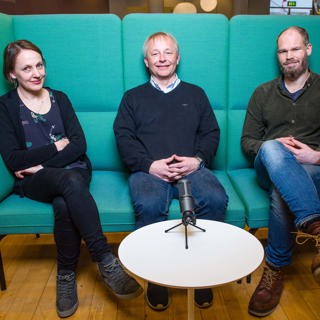
Gillian Straker and Jacqui Winship, "The Talking Cure: Normal People, their Hidden Struggles and the Life-Changing Power of Therapy" (Macmillan, 2019)

Gillian Straker and Jacqui Winship, "The Talking Cure: Normal People, their Hidden Struggles and the Life-Changing Power of Therapy" (Macmillan, 2019)

Gillian Straker’s name has long been on my radar, particularly for the ways in which she has used psychoanalytic thought to contend with the vicissitudes of apartheid and its aftermath in her home country, South Africa. But she has also made use of what apartheid taught her about the human mind. Indeed, there is much for psychoanalysis to learn from apartheid. For over 20 years, Straker has published, largely in relational journals, about racism, and the ways in which living under the extremes of racist duress take their particular toll. (It is high time for those articles to be collected and published.) Straker begins with trauma and dissociation—and the work of thinkers like Donnell Stern on unformulated experience gird some of her thinking. But she also turns to minds outside the field as well to elaborate certain ideas that pertain to fetishism, morality, mutuality, and perversion—foremost among them Bourdieu, Butler and Bhabha. Straker’s reflections on her own capacity to block from consciousness the damning impact of apartheid provides a guidepost for all her theorizing. This is an author who knows of what she speaks, and to read her is to be immersed in both her vulnerability and her searching intellect. Perhaps her two most eye-opening articles—“Race for Cover: Castrated Whiteness, Perverse Consequences” and “A Crisis in the Subjectivity of the Analyst: The Trauma of Morality”—could perhaps only have been written by someone living under apartheid. And yet, I find them useful for thinking about working in an interracial analytic couple. By the time she wrote her most unique theoretical contribution, “The Anti-Analytic Third”, one feels that she wants to warn white analysts, or heterosexual analysts to avoid taking politically correct positions when working with black or queer patients and to not back off from engaging with pathological conflicts that they may bring into the consulting room. Identity politics (and the patient’s desire to “know” if the analyst is “like” her at the level of social identity) can create a kind of noxious ethos that “opposes analysis.” Indeed, bending the frame for a patient because one feels a guiltiness does more harm than good. An especial contribution of hers is to help analyst’s think about working with difference in politically charged situations. Given that in this moment, at least in the United States, from where I am writing, the psychoanalytic world seems to be attempting a reckoning with its own racism, Straker reminds us that leading with guilt will not help anyone—black or white—to make the best use of the clinical encounter. Gillian Straker has also recently co-authored The Talking Cure: Normal people, their Hidden Struggles and the Life-Changing Power of Therapy (Macmillan, 2019) with Dr. Jacqui Winship, designed to reach a popular audience, enticing them to take to the couch, and serves as the supervisor on a newly created podcast on psychoanalytic supervision titled Three Associating. Learn more about your ad choices. Visit megaphone.fm/adchoices Support our show by becoming a premium member! https://newbooksnetwork.supportingcast.fm/psychoanalysis

Episoder(400)

Lynn Chancer and John Andrews, “The Unhappy Divorce of Sociology and Psychoanalysis” (Palgrave MacMillan, 2014)

Lynn Chancer and John Andrews, “The Unhappy Divorce of Sociology and Psychoanalysis” (Palgrave MacMillan, 2014)

The Unhappy Divorce of Sociology and Psychoanalysis: Diverse Perspectives on the Psychosocial (Palgrave MacMillan, 2014)is an edited volume. Its chapters document the central place of psychoanalysis i...

12 Feb 201551min

Sally Weintrobe, “Engaging with Climate Change: Psychoanalytic and Interdisciplinary Perspectives” (Routledge, 2012)

Sally Weintrobe, “Engaging with Climate Change: Psychoanalytic and Interdisciplinary Perspectives” (Routledge, 2012)

How up to date are you on the projected impact of climate change on human civilization in the next 100 years? Once you look at latest predictions, quickly come back and listen to this interview with S...

11 Feb 201544min

Daniel Shaw, “Traumatic Narcissism: Relational Systems of Subjugation” (Routledge, 2013)

Daniel Shaw, “Traumatic Narcissism: Relational Systems of Subjugation” (Routledge, 2013)

Conventional psychoanalytic views of narcissism focus on familiar character traits: grandiosity, devaluation, entitlement and a lack of empathy. In his new book Traumatic Narcissism: Relational System...

28 Jan 201554min

Bruce Fink, “Against Understanding: Volume 2: Cases and Commentary in a Lacanian Key” (Routledge, 2014)

Bruce Fink, “Against Understanding: Volume 2: Cases and Commentary in a Lacanian Key” (Routledge, 2014)

Bruce Fink joins me for a second interview to discuss Volume 2 of Against Understanding: Cases and Commentary in a Lacanian Key (Routledge, 2014). We talk about everything from desire, jouissance, an...

13 Jan 20151h 5min

Liran Razinsky, “Freud, Psychoanalysis, and Death” (Cambridge UP, 2013)

Liran Razinsky, “Freud, Psychoanalysis, and Death” (Cambridge UP, 2013)

Liran Razinsky’s book, titled Freud, Psychoanalysis, and Death (Cambridge University Press, 2014) came out of a decade’s long attempt to reconcile Liran’s personal search for meaning within two areas ...

5 Jan 201555min

Gohar Homayounpour, “Doing Psychoanalysis in Tehran” (MIT Press, 2012)

Gohar Homayounpour, “Doing Psychoanalysis in Tehran” (MIT Press, 2012)

In Doing Psychoanalysis in Tehran (MIT Press, 2012) — part memoir, part elegy, and part collection of clinical vignettes — Gohar Homayounpour takes a defiant position against the Orientalizing gaze of...

19 Des 201455min

Jennifer Kunst, “Wisdom From the Couch: Knowing and Growing Yourself from the Inside Out” (Central Recovery Press, 2014)

Jennifer Kunst, “Wisdom From the Couch: Knowing and Growing Yourself from the Inside Out” (Central Recovery Press, 2014)

What happens when a Kleinian psychoanalyst wants to write an intelligent self-help book for the general reader? First, she recognizes that one must have an online platform from which to launch, so she...

13 Des 201452min

Bruce Fink, “Against Understanding. Volume 1: Commentary and Critique in a Lacanian Key” (Routledge, 2014)

Bruce Fink, “Against Understanding. Volume 1: Commentary and Critique in a Lacanian Key” (Routledge, 2014)

What can possibly be wrong with the process of understanding in psychoanalytic treatment? Everything, according to Bruce Fink. In Against Understanding. Volume 1: Commentary and Critique in a Lacanian...

17 Nov 20141h 2min

Populært innen Vitenskap

fastlegen
jss
tingenes-tilstand
forskningno
rekommandert
sinnsyn
rss-paradigmepodden
villmarksliv
liberal-halvtime
rss-nysgjerrige-norge
diagnose
fjellsportpodden
nevropodden
tomprat-med-gunnar-tjomlid
rss-inn-til-kjernen-med-sunniva-rose
tidlose-historier
kvinnehelsepodden
psykopoden
dekodet-2
smart-forklart