
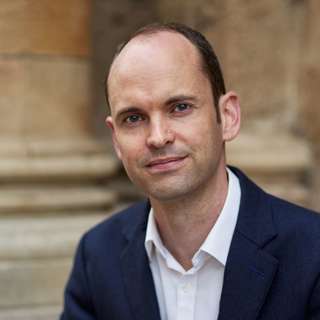
#138 Classic episode – Sharon Hewitt Rawlette on why pleasure and pain are the only things that intrinsically matter

#138 Classic episode – Sharon Hewitt Rawlette on why pleasure and pain are the only things that intrinsically matter

What in the world is intrinsically good — good in itself even if it has no other effects? Over the millennia, people have offered many answers: joy, justice, equality, accomplishment, loving god, wisdom, and plenty more.

The question is a classic that makes for great dorm-room philosophy discussion. But it’s hardly just of academic interest. The issue of what (if anything) is intrinsically valuable bears on every action we take, whether we’re looking to improve our own lives, or to help others. The wrong answer might lead us to the wrong project and render our efforts to improve the world entirely ineffective.

Today’s guest, Sharon Hewitt Rawlette — philosopher and author of The Feeling of Value: Moral Realism Grounded in Phenomenal Consciousness — wants to resuscitate an answer to this question that is as old as philosophy itself.

Rebroadcast: this episode was originally released in September 2022.

Links to learn more, highlights, and full transcript.

That idea, in a nutshell, is that there is only one thing of true intrinsic value: positive feelings and sensations. And similarly, there is only one thing that is intrinsically of negative value: suffering, pain, and other unpleasant sensations.

Lots of other things are valuable too: friendship, fairness, loyalty, integrity, wealth, patience, houses, and so on. But they are only instrumentally valuable — that is to say, they’re valuable as means to the end of ensuring that all conscious beings experience more pleasure and other positive sensations, and less suffering.

As Sharon notes, from Athens in 400 BC to Britain in 1850, the idea that only subjective experiences can be good or bad in themselves — a position known as ‘philosophical hedonism’ — has been one of the most enduringly popular ideas in ethics.

And few will be taken aback by the notion that, all else equal, more pleasure is good and less suffering is bad. But can they really be the only intrinsically valuable things?

Over the 20th century, philosophical hedonism became increasingly controversial in the face of some seemingly very counterintuitive implications. For this reason the famous philosopher of mind Thomas Nagel called The Feeling of Value “a radical and important philosophical contribution.”

So what convinces Sharon that philosophical hedonism deserves another go? In today’s interview with host Rob Wiblin, Sharon explains the case for a theory of value grounded in subjective experiences, and why she believes these counterarguments are misguided. A philosophical hedonist shouldn’t get in an experience machine, nor override an individual’s autonomy, except in situations so different from the classic thought experiments that it no longer seems strange they would do so.

Chapters:

  • Cold open (00:00:00)
  • Rob’s intro (00:00:41)
  • The interview begins (00:04:27)
  • Metaethics (00:05:58)
  • Anti-realism (00:12:21)
  • Sharon's theory of moral realism (00:17:59)
  • The history of hedonism (00:24:53)
  • Intrinsic value vs instrumental value (00:30:31)
  • Egoistic hedonism (00:38:12)
  • Single axis of value (00:44:01)
  • Key objections to Sharon’s brand of hedonism (00:58:00)
  • The experience machine (01:07:50)
  • Robot spouses (01:24:11)
  • Most common misunderstanding of Sharon’s view (01:28:52)
  • How might a hedonist actually live (01:39:28)
  • The organ transplant case (01:55:16)
  • Counterintuitive implications of hedonistic utilitarianism (02:05:22)
  • How could we discover moral facts? (02:19:47)
  • Rob’s outro (02:24:44)

Producer: Keiran Harris
Audio mastering: Ryan Kessler
Transcriptions: Katy Moore

Episoder(326)

#163 – Toby Ord on the perils of maximising the good that you do

#163 – Toby Ord on the perils of maximising the good that you do

Effective altruism is associated with the slogan "do the most good." On one level, this has to be unobjectionable: What could be bad about helping people more and more?But in today's interview, Toby O...

8 Sep 20233h 7min
The 80,000 Hours Career Guide (2023)

The 80,000 Hours Career Guide (2023)

An audio version of the 2023 80,000 Hours career guide, also available on our website, on Amazon, and on Audible.If you know someone who might find our career guide helpful, you can get a free copy se...

4 Sep 20234h 41min

#162 – Mustafa Suleyman on getting Washington and Silicon Valley to tame AI

#162 – Mustafa Suleyman on getting Washington and Silicon Valley to tame AI

Mustafa Suleyman was part of the trio that founded DeepMind, and his new AI project is building one of the world's largest supercomputers to train a large language model on 10–100x the compute used to...

1 Sep 202359min

#161 – Michael Webb on whether AI will soon cause job loss, lower incomes, and higher inequality — or the opposite

#161 – Michael Webb on whether AI will soon cause job loss, lower incomes, and higher inequality — or the opposite

"Do you remember seeing these photographs of generally women sitting in front of these huge panels and connecting calls, plugging different calls between different numbers? The automated version of th...

23 Aug 20233h 30min

#160 – Hannah Ritchie on why it makes sense to be optimistic about the environment

#160 – Hannah Ritchie on why it makes sense to be optimistic about the environment

"There's no money to invest in education elsewhere, so they almost get trapped in the cycle where they don't get a lot from crop production, but everyone in the family has to work there to just stay a...

14 Aug 20232h 36min

#159 – Jan Leike on OpenAI's massive push to make superintelligence safe in 4 years or less

#159 – Jan Leike on OpenAI's massive push to make superintelligence safe in 4 years or less

In July, OpenAI announced a new team and project: Superalignment. The goal is to figure out how to make superintelligent AI systems aligned and safe to use within four years, and the lab is putting a ...

7 Aug 20232h 51min
We now offer shorter 'interview highlights' episodes

We now offer shorter 'interview highlights' episodes

Over on our other feed, 80k After Hours, you can now find 20-30 minute highlights episodes of our 80,000 Hours Podcast interviews. These aren’t necessarily the most important parts of the interview, a...

5 Aug 20236min

#158 – Holden Karnofsky on how AIs might take over even if they're no smarter than humans, and his 4-part playbook for AI risk

#158 – Holden Karnofsky on how AIs might take over even if they're no smarter than humans, and his 4-part playbook for AI risk

Back in 2007, Holden Karnofsky cofounded GiveWell, where he sought out the charities that most cost-effectively helped save lives. He then cofounded Open Philanthropy, where he oversaw a team making b...

31 Jul 20233h 13min

Populært innen Fakta

fastlegen
mikkels-paskenotter
dine-penger-pengeradet
relasjonspodden-med-dora-thorhallsdottir-kjersti-idem
foreldreradet
treningspodden
rss-strid-de-norske-borgerkrigene
jakt-og-fiskepodden
takk-og-lov-med-anine-kierulf
sinnsyn
hverdagspsyken
rss-bisarr-historie
gravid-uke-for-uke
rss-kunsten-a-leve
tomprat-med-gunnar-tjomlid
rss-sunn-okonomi
rss-kull
hagespiren-podcast
fryktlos
rss-var-forste-kaffe