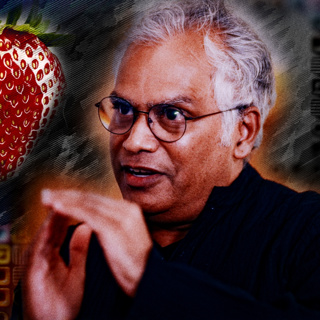

Subbarao Kambhampati - Do o1 models search?

Subbarao Kambhampati - Do o1 models search?

Join Prof. Subbarao Kambhampati and host Tim Scarfe for a deep dive into OpenAI's O1 model and the future of AI reasoning systems.


* How O1 likely uses reinforcement learning similar to AlphaGo, with hidden reasoning tokens that users pay for but never see

* The evolution from traditional Large Language Models to more sophisticated reasoning systems

* The concept of "fractal intelligence" in AI - where models work brilliantly sometimes but fail unpredictably

* Why O1's improved performance comes with substantial computational costs

* The ongoing debate between single-model approaches (OpenAI) vs hybrid systems (Google)

* The critical distinction between AI as an intelligence amplifier vs autonomous decision-maker


SPONSOR MESSAGES:

***

CentML offers competitive pricing for GenAI model deployment, with flexible options to suit a wide range of models, from small to large-scale deployments.

https://centml.ai/pricing/


Tufa AI Labs is a brand new research lab in Zurich started by Benjamin Crouzier focussed on o-series style reasoning and AGI. Are you interested in working on reasoning, or getting involved in their events?


Goto https://tufalabs.ai/

***


TOC:

1. **O1 Architecture and Reasoning Foundations**

[00:00:00] 1.1 Fractal Intelligence and Reasoning Model Limitations

[00:04:28] 1.2 LLM Evolution: From Simple Prompting to Advanced Reasoning

[00:14:28] 1.3 O1's Architecture and AlphaGo-like Reasoning Approach

[00:23:18] 1.4 Empirical Evaluation of O1's Planning Capabilities


2. **Monte Carlo Methods and Model Deep-Dive**

[00:29:30] 2.1 Monte Carlo Methods and MARCO-O1 Implementation

[00:31:30] 2.2 Reasoning vs. Retrieval in LLM Systems

[00:40:40] 2.3 Fractal Intelligence Capabilities and Limitations

[00:45:59] 2.4 Mechanistic Interpretability of Model Behavior

[00:51:41] 2.5 O1 Response Patterns and Performance Analysis


3. **System Design and Real-World Applications**

[00:59:30] 3.1 Evolution from LLMs to Language Reasoning Models

[01:06:48] 3.2 Cost-Efficiency Analysis: LLMs vs O1

[01:11:28] 3.3 Autonomous vs Human-in-the-Loop Systems

[01:16:01] 3.4 Program Generation and Fine-Tuning Approaches

[01:26:08] 3.5 Hybrid Architecture Implementation Strategies


Transcript: https://www.dropbox.com/scl/fi/d0ef4ovnfxi0lknirkvft/Subbarao.pdf?rlkey=l3rp29gs4hkut7he8u04mm1df&dl=0


REFS:

[00:02:00] Monty Python (1975)

Witch trial scene: flawed logical reasoning.

https://www.youtube.com/watch?v=zrzMhU_4m-g


[00:04:00] Cade Metz (2024)

Microsoft–OpenAI partnership evolution and control dynamics.

https://www.nytimes.com/2024/10/17/technology/microsoft-openai-partnership-deal.html


[00:07:25] Kojima et al. (2022)

Zero-shot chain-of-thought prompting ('Let's think step by step').

https://arxiv.org/pdf/2205.11916


[00:12:50] DeepMind Research Team (2023)

Multi-bot game solving with external and internal planning.

https://deepmind.google/research/publications/139455/


[00:15:10] Silver et al. (2016)

AlphaGo's Monte Carlo Tree Search and Q-learning.

https://www.nature.com/articles/nature16961


[00:16:30] Kambhampati, S. et al. (2023)

Evaluates O1's planning in "Strawberry Fields" benchmarks.

https://arxiv.org/pdf/2410.02162


[00:29:30] Alibaba AIDC-AI Team (2023)

MARCO-O1: Chain-of-Thought + MCTS for improved reasoning.

https://arxiv.org/html/2411.14405


[00:31:30] Kambhampati, S. (2024)

Explores LLM "reasoning vs retrieval" debate.

https://arxiv.org/html/2403.04121v2


[00:37:35] Wei, J. et al. (2022)

Chain-of-thought prompting (introduces last-letter concatenation).

https://arxiv.org/pdf/2201.11903


[00:42:35] Barbero, F. et al. (2024)

Transformer attention and "information over-squashing."

https://arxiv.org/html/2406.04267v2


[00:46:05] Ruis, L. et al. (2023)

Influence functions to understand procedural knowledge in LLMs.

https://arxiv.org/html/2411.12580v1


(truncated - continued in shownotes/transcript doc)

Denne episoden er hentet fra en åpen RSS-feed og er ikke publisert av Podme. Den kan derfor inneholde annonser.

Episoder(271)

What Most People Get Wrong About Evolution | Akarsh Kumar

What Most People Get Wrong About Evolution | Akarsh Kumar

A lot of people in AI treat evolution as a dumb fallback, basically random search for when you can't take a gradient. Akarsh Kumar thinks that is wrong. Selection hangs on to partial solutions, so mut...

10 Okt 47min

How a Voice Agent Learns the Rhythm of Conversation — Shawn Wen

How a Voice Agent Learns the Rhythm of Conversation — Shawn Wen

Tsung-Hsien (Shawn) Wen, CTO of PolyAI, tells Tim Scarfe why voice agents are harder than text agents. Voice adds time, and a good conversation depends on adapting to the person on the line, not just ...

1 Okt 1h 10min

Who Checks a Proof No Human Can Read? — Leo de Moura

Who Checks a Proof No Human Can Read? — Leo de Moura

Leonardo de Moura created Lean and co-created Z3. ---This episode is sponsored by Parallel.Parallel, where agents find answers: web search, extraction and deep research APIs built for AI agents.Start ...

30 Sep 1h 14min

When AI Research Starts Moving Faster Than Human Research - Zhengyao Jiang

When AI Research Starts Moving Faster Than Human Research - Zhengyao Jiang

Weco let an AI coding agent rewrite the harness around another agent for eight days: its code, prompts and tools, while the underlying language model stayed fixed. Tim Scarfe asks Weco co-founder Zhen...

26 Sep 43min

How Deep Learning Finally Cracked Messy Tables - Frank Hutter

How Deep Learning Finally Cracked Messy Tables - Frank Hutter

Frank Hutter, co-founder of Prior Labs, talks about TabPFN, a tabular foundation model that makes predictions in a single forward pass, and the research behind it.TabPFN is pre-trained on synthetic da...

23 Sep 1h 53min

Why Scaling Prediction Cannot Create Intelligence - Alexander Mattick

Why Scaling Prediction Cannot Create Intelligence - Alexander Mattick

Alexander Mattick is a researcher at Fraunhofer IIS and a PhD researcher at the University of Technology Nuremberg (UTN), and a regular on Yannic Kilcher's Discord. He first came on MLST in 2022, afte...

21 Sep 2h 14min

How Physical AI Learns Across Language, Video and Action — Ming-Yu Liu

How Physical AI Learns Across Language, Video and Action — Ming-Yu Liu

The car making a left turn at the start of this episode was never filmed. Cosmos 3 generated it. Ming-Yu Liu, who leads the Cosmos research at NVIDIA, explains how one model can describe a video, gene...

15 Sep 25min

Speech Recognition Is Not a Solved Problem — Pavan Kumar Reddy

Speech Recognition Is Not a Solved Problem — Pavan Kumar Reddy

Pavan Kumar Reddy leads audio research at Mistral AI. He joins Tim Scarfe for a deep technical tour of Voxtral — and explains why the frontier of deployed voice is still a cascade of specialised model...

14 Sep 1h 42min

Populært innen Teknologi

teknisk-sett
energi-og-klima
lydartikler-fra-aftenposten
nasjonal-sikkerhetsmyndighet-nsm
elektropodden
tomprat-med-gunnar-tjomlid
rss-ai-forklart
rss-kunstig-intelligens-med-elisabeth-maren-og-morten
shifter
smart-forklart
fornybaren
pedagogisk-intelligens
rss-alt-som-gar-pa-strom
rss-bak-skyen
rss-alt-vi-kan
teknologimagasinet-aftenposten
rss-hvorfor-ble-det-sann
rss-romnasjonen
kortslutning
rss-ki-praten