
Using quantum tools to track dark matter, why rabies remains, and a book series on science and food

Using quantum tools to track dark matter, why rabies remains, and a book series on science and food

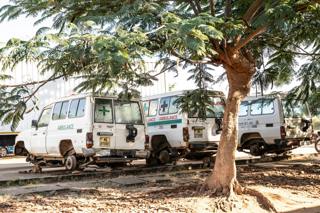
On this week’s show: How physicists are using quantum sensors to suss out dark matter, how rabies thwarts canine vaccination campaigns, and a kickoff for our new series with authors of books on food, land management, and nutrition science Dark matter hunters have turned to quantum sensors to find elusive subatomic particles that may exist outside physicists’ standard model. Adrian Cho, a staff writer for Science, joins host Sarah Crespi to give a tour of the latest dark matter particle candidates—and the traps that physicists are setting for them. Next, we hear from Katie Hampson, a professor in the Institute of Biodiversity, Animal Health & Comparative Medicine at the University of Glasgow, about her work contact tracing rabies in Tanzania. Her group was able to track rabies in a population of 50,000 dogs over 14 years. The massive study gives new insight into how to stop a virus that circulates at superlow levels but keeps popping up, despite vaccine campaigns. Finally, we launch our 2022 books series on food and agriculture. In six interviews, which will be released monthly for the rest of the year, host and science journalist Angela Saini will speak to authors of recent books on topics from Indigenous land management to foods that are going extinct. This month, Angela talks with Lenore Newman, director of the Food and Agriculture Institute at the University of the Fraser Valley, who helped select the books for the series. This week’s episode was produced with help from Podigy. [Image: Suzanne McNabb; Music: Jeffrey Cook] [alt: Dogs in Tanzania with podcast symbol overlay] Authors: Sarah Crespi; Angela Saini, Adrian Cho Episode page: https://www.science.org/content/podcast/using-quantum-tools-track-dark-matter-why-rabies-remains-and-book-series-science-and About the Science Podcast: https://www.science.org/content/page/about-science-podcast Learn more about your ad choices. Visit megaphone.fm/adchoices

Denne episoden er hentet fra en åpen RSS-feed og er ikke publisert av Podme. Den kan derfor inneholde annonser.

Episoder(641)

A team effort to save a giant fish, the power of moonlight, and how scientists can navigate a tough political environment

A team effort to save a giant fish, the power of moonlight, and how scientists can navigate a tough political environment

First up on the podcast, along Brazil’s Juruá River, local residents have been working with scientists to manage a giant fish called the arapaima—affecting the land, the people, and the economy. Contr...

7 Mai 53min

Watching a spiders’ heart beat, epigenetic ethics, and what science biographies reveal about fame

Watching a spiders’ heart beat, epigenetic ethics, and what science biographies reveal about fame

First up on the podcast, Online News Editor David Grimm shares a batch of fun stories with podcast host Sarah Crespi—from spider hearts racing when traffic gets loud to a disease-preventing house. Sta...

30 Apr 46min

Cleaning up uranium mining, and how the heart avoids cancer

Cleaning up uranium mining, and how the heart avoids cancer

First up on the podcast, freelance science and environmental journalist Quentin Septer joins host Sarah Crespi to talk about a controversial uranium mine getting fast-tracked in South Dakota. Septer c...

23 Apr 30min

The normals | Episode 3

The normals | Episode 3

The final of a three-part limited Science Podcast series that looks at the history of normal human subjects in research In episode two, we heard what happened to the normals program after church volu...

21 Apr 33min

How to keep quantum computers cool, whether prediction markets harm public health, and podcasting on podcasting

How to keep quantum computers cool, whether prediction markets harm public health, and podcasting on podcasting

First up on the podcast, quantum computers require extremely low temperatures—less than 1°C away from absolute zero. But getting down to those temperatures has usually required dilution fridges using ...

16 Apr 50min

The Normals | Episode 2

The Normals | Episode 2

Last time on The Normals, we learned that in the 1950s, the National Institutes of Health (NIH) wanted to recruit many healthy volunteers for basic research. Two peace churches, the Mennonites and the...

14 Apr 27min

A chimpanzee ‘civil war,’ and NASA plans for nuclear propulsion

A chimpanzee ‘civil war,’ and NASA plans for nuclear propulsion

First up on the podcast, freelance science journalist Hannah Richter joins host Sarah Crespi to discuss NASA’s plans to send a nuclear-powered spacecraft to Mars in less than 3 years. Having not launc...

9 Apr 42min

The Normals | Episode 1

The Normals | Episode 1

How do we know what's normal in a person? In the early 1950s, the National Institutes of Health (NIH) set out to do something unprecedented. It wanted to start studying normal humans on a grand scale....

7 Apr 23min

Populært innen Politikk og nyheter

giver-og-gjengen-vg
aftenpodden
forklart
aftenpodden-usa
popradet
stopp-verden
fotballpodden-2
nokon-ma-ga
det-store-bildet
dine-penger-pengeradet
rss-gukild-johaug
hanna-de-heldige
rss-espen-lee-usensurert
lydartikler-fra-aftenposten
rss-ness
aftenbla-bla
rss-dannet-uten-piano
e24-podden
rss-utenrikskomiteen-med-bogen-og-grasvik
rss-gilbrantsuvatne