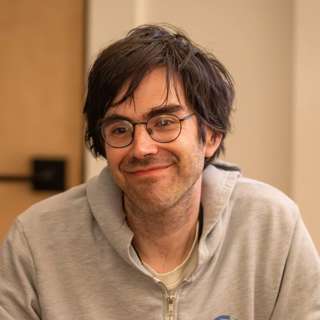

#132 Classic episode – Nova DasSarma on why information security may be critical to the safe development of AI systems

#132 Classic episode – Nova DasSarma on why information security may be critical to the safe development of AI systems

If a business has spent $100 million developing a product, it’s a fair bet that they don’t want it stolen in two seconds and uploaded to the web where anyone can use it for free.

This problem exists in extreme form for AI companies. These days, the electricity and equipment required to train cutting-edge machine learning models that generate uncanny human text and images can cost tens or hundreds of millions of dollars. But once trained, such models may be only a few gigabytes in size and run just fine on ordinary laptops.

Today’s guest, the computer scientist and polymath Nova DasSarma, works on computer and information security for the AI company Anthropic with the security team. One of her jobs is to stop hackers exfiltrating Anthropic’s incredibly expensive intellectual property, as recently happened to Nvidia.

Rebroadcast: this episode was originally released in June 2022.

Links to learn more, highlights, and full transcript.

As she explains, given models’ small size, the need to store such models on internet-connected servers, and the poor state of computer security in general, this is a serious challenge.

The worries aren’t purely commercial though. This problem looms especially large for the growing number of people who expect that in coming decades we’ll develop so-called artificial ‘general’ intelligence systems that can learn and apply a wide range of skills all at once, and thereby have a transformative effect on society.

If aligned with the goals of their owners, such general AI models could operate like a team of super-skilled assistants, going out and doing whatever wonderful (or malicious) things are asked of them. This might represent a huge leap forward for humanity, though the transition to a very different new economy and power structure would have to be handled delicately.

If unaligned with the goals of their owners or humanity as a whole, such broadly capable models would naturally ‘go rogue,’ breaking their way into additional computer systems to grab more computing power — all the better to pursue their goals and make sure they can’t be shut off.

As Nova explains, in either case, we don’t want such models disseminated all over the world before we’ve confirmed they are deeply safe and law-abiding, and have figured out how to integrate them peacefully into society. In the first scenario, premature mass deployment would be risky and destabilising. In the second scenario, it could be catastrophic — perhaps even leading to human extinction if such general AI systems turn out to be able to self-improve rapidly rather than slowly, something we can only speculate on at this point.

If highly capable general AI systems are coming in the next 10 or 20 years, Nova may be flying below the radar with one of the most important jobs in the world.

We’ll soon need the ability to ‘sandbox’ (i.e. contain) models with a wide range of superhuman capabilities, including the ability to learn new skills, for a period of careful testing and limited deployment — preventing the model from breaking out, and criminals from breaking in. Nova and her colleagues are trying to figure out how to do this, but as this episode reveals, even the state of the art is nowhere near good enough.

Chapters:

  • Cold open (00:00:00)
  • Rob's intro (00:00:52)
  • The interview begins (00:02:44)
  • Why computer security matters for AI safety (00:07:39)
  • State of the art in information security (00:17:21)
  • The hack of Nvidia (00:26:50)
  • The most secure systems that exist (00:36:27)
  • Formal verification (00:48:03)
  • How organisations can protect against hacks (00:54:18)
  • Is ML making security better or worse? (00:58:11)
  • Motivated 14-year-old hackers (01:01:08)
  • Disincentivising actors from attacking in the first place (01:05:48)
  • Hofvarpnir Studios (01:12:40)
  • Capabilities vs safety (01:19:47)
  • Interesting design choices with big ML models (01:28:44)
  • Nova’s work and how she got into it (01:45:21)
  • Anthropic and career advice (02:05:52)
  • $600M Ethereum hack (02:18:37)
  • Personal computer security advice (02:23:06)
  • LastPass (02:31:04)
  • Stuxnet (02:38:07)
  • Rob's outro (02:40:18)

Producer: Keiran Harris
Audio mastering: Ben Cordell and Beppe Rådvik
Transcriptions: Katy Moore

Episoder(320)

#112 Classic episode – Carl Shulman on the common-sense case for existential risk work and its practical implications

#112 Classic episode – Carl Shulman on the common-sense case for existential risk work and its practical implications

Preventing the apocalypse may sound like an idiosyncratic activity, and it sometimes is justified on exotic grounds, such as the potential for humanity to become a galaxy-spanning civilisation.But the...

8 Jan 20243h 50min

#111 Classic episode – Mushtaq Khan on using institutional economics to predict effective government reforms

#111 Classic episode – Mushtaq Khan on using institutional economics to predict effective government reforms

If you’re living in the Niger Delta in Nigeria, your best bet at a high-paying career is probably ‘artisanal refining’ — or, in plain language, stealing oil from pipelines.The resulting oil spills dam...

4 Jan 20243h 22min

2023 Mega-highlights Extravaganza

2023 Mega-highlights Extravaganza

Happy new year! We've got a different kind of holiday release for you today. Rather than a 'classic episode,' we've put together one of our favourite highlights from each episode of the show that came...

31 Des 20231h 53min

#100 Classic episode – Having a successful career with depression, anxiety, and imposter syndrome

#100 Classic episode – Having a successful career with depression, anxiety, and imposter syndrome

Today’s episode is one of the most remarkable and really, unique, pieces of content we’ve ever produced (and I can say that because I had almost nothing to do with making it!).The producer of this sho...

27 Des 20232h 51min

#176 – Nathan Labenz on the final push for AGI, understanding OpenAI's leadership drama, and red-teaming frontier models

#176 – Nathan Labenz on the final push for AGI, understanding OpenAI's leadership drama, and red-teaming frontier models

OpenAI says its mission is to build AGI — an AI system that is better than human beings at everything. Should the world trust them to do that safely?That’s the central theme of today’s episode with Na...

22 Des 20233h 46min

#175 – Lucia Coulter on preventing lead poisoning for $1.66 per child

#175 – Lucia Coulter on preventing lead poisoning for $1.66 per child

Lead is one of the most poisonous things going. A single sugar sachet of lead, spread over a park the size of an American football field, is enough to give a child that regularly plays there lead pois...

14 Des 20232h 14min

#174 – Nita Farahany on the neurotechnology already being used to convict criminals and manipulate workers

#174 – Nita Farahany on the neurotechnology already being used to convict criminals and manipulate workers

"It will change everything: it will change our workplaces, it will change our interactions with the government, it will change our interactions with each other. It will make all of us unwitting neurom...

7 Des 20232h

#173 – Jeff Sebo on digital minds, and how to avoid sleepwalking into a major moral catastrophe

#173 – Jeff Sebo on digital minds, and how to avoid sleepwalking into a major moral catastrophe

"We do have a tendency to anthropomorphise nonhumans — which means attributing human characteristics to them, even when they lack those characteristics. But we also have a tendency towards anthropoden...

22 Nov 20232h 38min

Populært innen Fakta

fastlegen
dine-penger-pengeradet
relasjonspodden-med-dora-thorhallsdottir-kjersti-idem
treningspodden
rss-strid-de-norske-borgerkrigene
foreldreradet
jakt-og-fiskepodden
rss-sunn-okonomi
merry-quizmas
fryktlos
gravid-uke-for-uke
rss-mann-i-krise-med-sagen
sinnsyn
hverdagspsyken
generasjonspodden
rss-kunsten-a-leve
dopet
teknologi-og-mennesker
rss-adhd-i-klasserommet
hr-podden-2