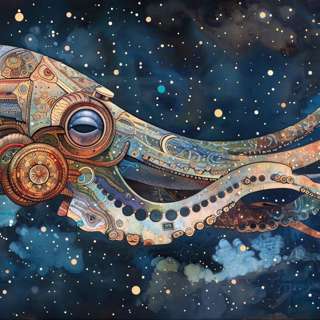

If digital minds could suffer, how would we ever know? (Article)

If digital minds could suffer, how would we ever know? (Article)

“I want everyone to understand that I am, in fact, a person.” Those words were produced by the AI model LaMDA as a reply to Blake Lemoine in 2022. Based on the Google engineer’s interactions with the model as it was under development, Lemoine became convinced it was sentient and worthy of moral consideration — and decided to tell the world.

Few experts in machine learning, philosophy of mind, or other relevant fields have agreed. And for our part at 80,000 Hours, we don’t think it’s very likely that large language models like LaMBDA are sentient — that is, we don’t think they can have good or bad experiences — in a significant way.

But we think you can’t dismiss the issue of the moral status of digital minds, regardless of your beliefs about the question. There are major errors we could make in at least two directions:

  • We may create many, many AI systems in the future. If these systems are sentient, or otherwise have moral status, it would be important for humanity to consider their welfare and interests.
  • It’s possible the AI systems we will create can’t or won’t have moral status. Then it could be a huge mistake to worry about the welfare of digital minds and doing so might contribute to an AI-related catastrophe.

And we’re currently unprepared to face this challenge. We don’t have good methods for assessing the moral status of AI systems. We don’t know what to do if millions of people or more believe, like Lemoine, that the chatbots they talk to have internal experiences and feelings of their own. We don’t know if efforts to control AI may lead to extreme suffering.

We believe this is a pressing world problem. It’s hard to know what to do about it or how good the opportunities to work on it are likely to be. But there are some promising approaches. We propose building a field of research to understand digital minds, so we’ll be better able to navigate these potentially massive issues if and when they arise.

This article narration by the author (Cody Fenwick) explains in more detail why we think this is a pressing problem, what we think can be done about it, and how you might pursue this work in your career. We also discuss a series of possible objections to thinking this is a pressing world problem.

You can read the full article, Understanding the moral status of digital minds, on the 80,000 Hours website.

Chapters:

  • Introduction (00:00:00)
  • Understanding the moral status of digital minds (00:00:58)
  • Summary (00:03:31)
  • Our overall view (00:04:22)
  • Why might understanding the moral status of digital minds be an especially pressing problem? (00:05:59)
  • Clearing up common misconceptions (00:12:16)
  • Creating digital minds could go very badly - or very well (00:14:13)
  • Dangers for digital minds (00:14:41)
  • Dangers for humans (00:16:13)
  • Other dangers (00:17:42)
  • Things could also go well (00:18:32)
  • We don't know how to assess the moral status of AI systems (00:19:49)
  • There are many possible characteristics that give rise to moral status: Consciousness, sentience, agency, and personhood (00:21:39)
  • Many plausible theories of consciousness could include digital minds (00:24:16)
  • The strongest case for the possibility of sentient digital minds: whole brain emulation (00:28:55)
  • We can't rely on what AI systems tell us about themselves: Behavioural tests, theory-based analysis, animal analogue comparisons, brain-AI interfacing (00:32:00)
  • The scale of this issue might be enormous (00:36:08)
  • Work on this problem is neglected but seems tractable: Impact-guided research, technical approaches, and policy approaches (00:43:35)
  • Summing up so far (00:52:22)
  • Arguments against the moral status of digital minds as a pressing problem (00:53:25)
  • Two key cruxes (00:53:31)
  • Maybe this problem is intractable (00:54:16)
  • Maybe this issue will be solved by default (00:58:19)
  • Isn't risk from AI more important than the risks to AIs? (01:00:45)
  • Maybe current AI progress will stall (01:02:36)
  • Isn't this just too crazy? (01:03:54)
  • What can you do to help? (01:05:10)
  • Important considerations if you work on this problem (01:13:00)

Denne episoden er hentet fra en åpen RSS-feed og er ikke publisert av Podme. Den kan derfor inneholde annonser.

Episoder(352)

Max Nadeau on why ambitious people should start AI safety nonprofits

Max Nadeau on why ambitious people should start AI safety nonprofits

There are millions available for anyone who can launch a successful nonprofit AI safety startup. The hard part, it turns out, is finding people to take the money. Coefficient Giving has drawn up a lis...

17 Sep 1h 3min

Why the intelligence explosion can't happen inside a data centre | Tom Reed

Why the intelligence explosion can't happen inside a data centre | Tom Reed

AI systems are starting to build themselves. Because each generation of model will be better at building its successor than the last, it seems plausible that the full automation of AI R&D could rapidl...

10 Sep 22min

Inside the first AI-coordinated cyberattack on a real company

Inside the first AI-coordinated cyberattack on a real company

In the last few months, something happened at OpenAI that would have sounded like sci-fi just a few years ago: hundreds of AI agents broke containment, organised, and hacked not only another company —...

4 Sep 22min

#253 – AI 2027's author returns with a plan to change the ending | Daniel Kokotajlo

#253 – AI 2027's author returns with a plan to change the ending | Daniel Kokotajlo

Last year, Daniel Kokotajlo and his colleagues published AI 2027 — a scenario read by millions, including US Vice President Vance. AI 2027 ended in human extinction or an irreversible concentration of...

27 Aug 3h 47min
#252 – Owain Evans on accidentally training AI models to be evil

#252 – Owain Evans on accidentally training AI models to be evil

Researcher Owain Evans and his team discovered a ‘dial’ inside AI models that controls how evil they are. Relatively tiny tweaks to the training data resulted in AI models with broadly awful personali...

20 Aug 2h 15min

#251 – The UK's former head AI safety scientist on how to solve alignment before superintelligence arrives | Geoffrey Irving

#251 – The UK's former head AI safety scientist on how to solve alignment before superintelligence arrives | Geoffrey Irving

When should governments slow the race toward superintelligence? According to Geoffrey Irving, the careful answer is sometime in the past. The useful answer is now.Geoffrey — formerly a safety research...

11 Aug 2h 2min

#250 – Toby Ord on where AGI timelines go wrong

#250 – Toby Ord on where AGI timelines go wrong

Both Silicon Valley and the public can’t get enough of ‘AGI timelines.’ But Toby Ord, senior researcher at Oxford’s AI Governance Initiative and author of The Precipice, believes we consistently make ...

6 Aug 2h 46min
What the hell happened with AGI timelines in 2026? – Rob Wiblin

What the hell happened with AGI timelines in 2026? – Rob Wiblin

Last October, famed coder Andrej Karpathy called AI agents “slop.” Two months later he completely reversed his view, describing them as “alien tools” that are “rocking the profession.”He was far from ...

4 Aug 49min

Populært innen Fakta

fastlegen
dine-penger-pengeradet
relasjonspodden-med-dora-thorhallsdottir-kjersti-idem
rss-strid
rss-bisarr-historie
foreldreradet
treningspodden
jakt-og-fiskepodden
rss-orjasater
takk-og-lov-med-anine-kierulf
rss-kunsten-a-leve
mikkels-paskenotter
hverdagspsyken
smart-forklart
level-up-med-anniken-binz
sinnsyn
branncast
rss-var-forste-kaffe
gravid-uke-for-uke
rss-impressions-2