Could Starlink & Other Satellites Reignite the Ozone Hole Problem?

Could Starlink & Other Satellites Reignite the Ozone Hole Problem?

Environmental Impacts of Satellite Re-entry

Executive Summary:

Meteorology Matters synthesizes information from five sources regarding the growing concern over the environmental impact of satellites burning up in the atmosphere upon re-entry. Driven by the increasing number of satellites, particularly mega-constellations like Starlink, this process releases metallic particles into the mesosphere and stratosphere, potentially affecting ozone depletion and climate. While research is ongoing, studies indicate a significant increase in stratospheric aluminum levels and raise concerns about the long-term consequences of this "satellite ash."

Key Themes and Ideas:

  1. The Rise of Satellite Constellations and Increased Re-entries:
  • The number of satellites in orbit has increased dramatically in recent years, and is expected to continue growing exponentially. The MIT Technology Review article notes, "Some 15 years ago, barely a thousand satellites orbited our planet. Now the number has risen to about 10,000, and with the rise of satellite constellations like Starlink, another tenfold increase is forecast by the end of this decade."
  • This growth leads to a corresponding increase in satellite re-entries as these satellites reach the end of their operational lives. The same article states that 2024 had already seen "950 satellite reentries" by late November.
  • "Almost 20 percent of all satellites ever launched have re-entered Earth’s atmosphere in the last half-decade, burning up in superfast, superhot blazes," according to the New York Times article.
  1. The Problem of Satellite Ash:
  • When satellites re-enter the atmosphere, they burn up, releasing metallic particles, primarily aluminum, into the atmosphere. This is described as "satellite ash."
  • The MIT Technology Review article emphasizes that this ash "can harm the atmosphere and potentially alter the climate."
  • The PNAS paper provides evidence: "Measurements show that about 10% of the aerosol particles in the stratosphere contain aluminum and other metals that originated from the 'burn-up' of satellites and rocket stages during reentry." It also notes that planned increases in satellite numbers "could cause up to half of stratospheric sulfuric acid particles to contain metals from reentry."
  1. Atmospheric Impact & Ozone Depletion:
  • The primary concern revolves around the potential impact on the ozone layer. "The long-term accumulation of aluminum oxides from reentering satellites can cause significant ozone depletion" (Potential Ozone Depletion From Satellite Demise During Atmospheric Reentry in th.pdf).
  • The PNAS paper notes the lack of definite implications yet identified but raises the possibility of effects on "the nucleation of ice or nitric acid trihydrate (NAT)," which could impact polar stratospheric clouds.
  • The "Potential Ozone Depletion" source determined the 2022 level of aluminum from satellite reentry to be a "29.5% increase of aluminum in the atmosphere above the natural level, resulting in around 17 metric tons of aluminum oxides injected into the mesosphere."
  1. Composition of the Ash & Stratospheric Aerosol Changes:
  • Research indicates that the metallic content of stratospheric aerosol particles is changing due to satellite re-entry. The PNAS paper found "over 20 elements from reentry were detected and were present in ratios consistent with alloys used in spacecraft."
  • Specific metals identified include lithium, aluminum, copper, niobium, silver, and hafnium. The presence of these metals can be linked to specific components

Denne episoden er hentet fra en åpen RSS-feed og er ikke publisert av Podme. Den kan derfor inneholde annonser.

Episoder(234)

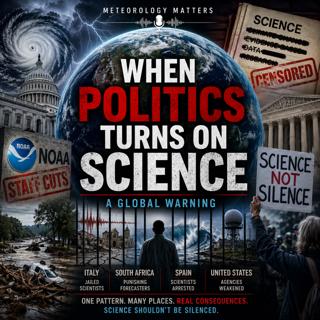
When Politics Turns on Science Globally

When Politics Turns on Science Globally

Weather scientists are increasingly being ignored, censored, arrested, or pushed aside by political movements around the world. From NOAA staffing cuts in the United States to jailed earthquake scient...

15 Mai 45min
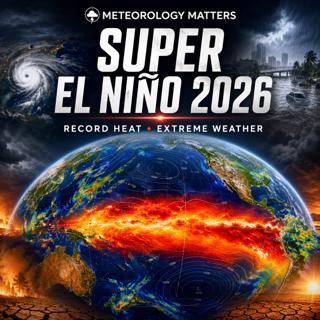
2026 Weather Shock: Super El Niño, Record Heat, and a Planet Running Hot

2026 Weather Shock: Super El Niño, Record Heat, and a Planet Running Hot

A Super El Niño may be forming for 2026, and it could push global heat, extreme weather, flooding, drought, and hurricane impacts into dangerous new territory.A Super El Niño may be forming for 2026, ...

8 Mai 33min
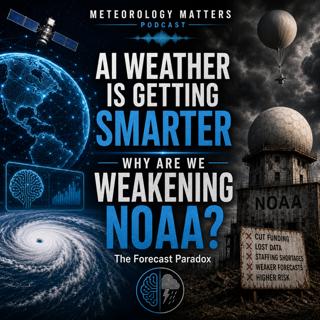
AI Weather Forecasts Are Getting Smarter. So Why Are We Weakening NOAA?

AI Weather Forecasts Are Getting Smarter. So Why Are We Weakening NOAA?

AI is revolutionizing weather forecasting. New models like Google DeepMind’s GraphCast and GenCast, ECMWF’s AIFS, and NOAA’s experimental AI-GEFS are producing faster, cheaper, and increasingly accura...

5 Mai 42min
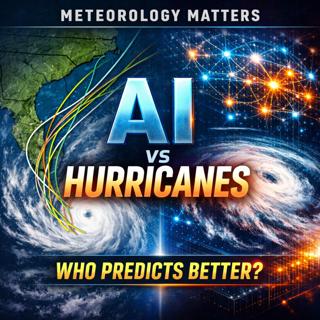
AI Just Beat Hurricane Forecasting… Should We Be Worried?

AI Just Beat Hurricane Forecasting… Should We Be Worried?

AI just changed hurricane forecasting forever. In 2025, it outperformed traditional models and even challenged official NHC forecasts. Artificial Intelligence is no longer experimental in meteorology ...

21 Apr 53min
Will Hurricane Forecasts Get Worse? Inside the NOAA Budget Cuts

Will Hurricane Forecasts Get Worse? Inside the NOAA Budget Cuts

Could hurricane forecasts actually get worse? A deep dive into the proposed 2027 budget cuts to NOAA and how eliminating key research could impact storm prediction, safety, and future forecast accurac...

13 Apr 32min
Fired, Sued, and Still Forecasting: The Matt Devitt vs WINK News Battle

Fired, Sued, and Still Forecasting: The Matt Devitt vs WINK News Battle

Fired. Sued. And still forecasting.The sudden termination of longtime Southwest Florida meteorologist Matt Devitt has exploded into one of the most fascinating media and legal battles in recent years....

4 Apr 37min
“It Only Takes One”: Why 2026’s Hurricane Season Could Be Worse Than It Looks

“It Only Takes One”: Why 2026’s Hurricane Season Could Be Worse Than It Looks

The 2026 hurricane season warning nobody is talking about. The numbers may be average but the risk is anything but because “It only takes one”.The 2026 Atlantic hurricane season may look average on pa...

28 Mar 40min
This Should NOT Be Happening in March… 112° Heat + Hawaii Flood Disaster

This Should NOT Be Happening in March… 112° Heat + Hawaii Flood Disaster

In this episode of Meteorology Matters, we break down two extreme and highly unusual weather events happening right now:🔥 Record-shattering March heat reaching 112°F🌊 Dangerous flooding impacting pa...

21 Mar 38min

Populært innen Politikk og nyheter

giver-og-gjengen-vg
aftenpodden
stopp-verden
forklart
aftenpodden-usa
popradet
fotballpodden-2
det-store-bildet
dine-penger-pengeradet
rss-gukild-johaug
lydartikler-fra-aftenposten
hanna-de-heldige
nokon-ma-ga
rss-ness
rss-espen-lee-usensurert
rss-penger-polser-og-politikk
rss-utenrikskomiteen-med-bogen-og-grasvik
aftenbla-bla
e24-podden
rss-dannet-uten-piano