Could You Farm More Precisely? w/ Josh Kayser CSA

Could You Farm More Precisely? w/ Josh Kayser CSA

  • Intro
  • Review: Just wanted to shoot you guys a message and thank you all for the podcast. I really enjoy it because it’s so relatable! @LeemsMcGeems. Kris Lehman
    • Remind them to leave reviews on the platform they listen on, message us on social media or send ideas to farm4profitllc@gmail.com
  • What’s Working in AG – Walkabout mother bins and Outback Wraps
  • www.outbackwraps.com
    • David Hedt (pronounced head), is an Australian born entrepreneur who has a passion for helping farmers increase their efficiency and profit for their operation. Dave grew up on a farm outside of Dimboola, Victoria in Australia. He became a diesel mechanic and worked with Volvo and Mack Trucks. Coming to the US the first time in 2000 he migrated here permanently in 2012. Building a stripmall in Faulkton, SD and then starting Walkabout Mother bins in 2015.
    • (Item #1)Walkabout Mother Bin is the missing link between grain carts and trucks
      • Helps you keep up with the combine with less labor and trucks
      • Large portable grain storage
    • (Item #2) Outback Wrap – designed to make farmers lives easier and reduce the frustrations of hydraulic hose handling and identification
      • Simple to use, no tools required, can be changed
      • Replaces old methods: zip ties, tape, ear tags
      • Color schemes that work with any color of machine
    • Use Code FARM4PROFIT to get 20% off
  • Main Topic – Using precision agronomy to positively affect your bottom line (VRT and Soil Sampling)
  • Intro: Josh Kayser, a Granular Agronomy CSA in South Dakota is joining today. Josh works with growers and Pioneer seed reps on variable rate seed, N and fertility. He also grows corn and soybeans near Emery, SD with his two brothers and his father. Kayser is also the Mayor of Emery, serves on the board for the Emery Volunteer Fire District and was a former ASA DuPont Young Leader. When not farming, Josh enjoys time with his wife and their four children. BUSY GUY!
  • Josh, tell us a little more about how you got to where you are
    • share background and how you became CSA

We want to explore more options to help us achieve higher levels of profitability.

  • Do you see the use of our current and developing variable rate technology being a way to do that?
    • Key talking points:
      • VR equates to more profitability by:
        • better optimizing input investments (not over-applying where you don’t have the yield potential, and pushing yield on most productive ground)
        • better accounting for variability within fields
        • being able to adjust your plans to account for farming variables like weather
  • What goes into the process of getting started or set up to do VRT?
    • Key talking points:
      • overview technology needs
      • overview who to partner with to get the support/service you need
        • start with soil sampling
        • set yield goals
        • create custom scripts
        • in-season monitoring/adjusting
  • Is it necessary to do soil sampling to get a good baseline or can you do without?
    • Follow-up Questions:
      • Why do we soil sample anyway?
        • N P K or more? Level up?
      • How often should we be sampling?
      • What time of year should we sample?
      • What’s the best technique of sampling?
      • What determines the size of the sample or area for sample?
  • Have we really reached the point in our advancements with technology where VRT actually works?
    • Key talking points:
      • Flat rate isn’t only uneconomical, it’s not environmentally friendly
      • As we look at how farming has changed in recent decades, we’ve transitioned to thinking about our entire farm to really focusing on the fields within the farm. Now, we’re moving towards better managing zones within fields, and in the future we’ll be managing every plant with things like drone application. Technology is allowing us to better manage in-field variables so that we can set yield targets and then put plans in place to achieve them, but it takes a different kind of management than how we farmed in the past.
  • What makes Granular Agronomy different from other precision offerings on the market?
    • Key Talking Points
      • We start by creating what we call decision zones within your field. These zones are comprised of three things:
        • Environmental response units, which take into account your soil type, field elevation, and how the field lays
        • MYYA (Multi-year yield analysis) We utilize multiple years of yield data to determine historical areas of low, medium and high production. This layer intersects the ERUs to provide even greater clarity on yield capability.
        • Irrigation – If a field has irrigation, zones are created to denote irrigated and non-irrigated. Different yield targets can be set accordingly, and irrigated zones utilize user-entered irrigation events, including fertigation
      • We use these decision zones when we come up with N, seeding and fertility recommendations.
      • In addition to these zones, Granular Agronomy works with Corteva and IBM/The Weather Company to look at the past 20 years of weather history. With that, we can run scenarios so that we’re prepared to adjust plans for drought or extremely wet years.
      • I don't just create the rec and walk away. I’m there to partner with growers throughout the season to make sure we’re adjusting to in-season variables. Granular Agronomy has more than 200 CSAs throughout the country to make sure we’re providing the boots-on-the-ground service farmers need
      • Also included with Granular Agronomy is directed scouting from Granular Insights, which is the best satellite imagery on the market. During the growing season, it ranks which fields are changing in terms of plant health the most, so you know where to prioritize scouting efforts.
  • How do Granular Agronomy and Pioneer seed work together?
  • Do you have any good examples of how someone made the transition from not using VRT and now is a believer?
    • Key Talking Points
      • Share one or two first-hand examples
      • GA has been used on millions of acres in the U.S. On average, the farmers who have used it have:
  • Boosted Profits: $27/Acre return
  • Reduced Inputs: 9 pounds less nitrogen per acre
  • Increased Yield 6 bu/A increase
  • What would you say to those who don’t think it works?
  • Any stories of mistakes to avoid?
  • Open comments, last thoughts?
  • Go to Granular.ag or your local Pioneer agent to learn more and find your CSA
  • Summary
    • .
  • Challenge
    • .
  • Closing
    • Reminder about the partnership to get 10% off up to $1,000.

Want Farm4Profit Merch? Custom order your favorite items today!

https://farmfocused.com/farm-4profit/

Don’t forget to like the podcast on all platforms and leave a review where ever you listen!

Website: www.Farm4Profit.com

Shareable episode link: https://intro-to-farm4profit.simplecast.com

Email address: Farm4profitllc@gmail.com

Call/Text: 515.207.9640

Subscribe to YouTube: https://www.youtube.com/channel/UCSR8c1BrCjNDDI_Acku5Xqw

Follow us on TikTok: https://www.tiktok.com/@farm4profitllc

Connect with us on Facebook: https://www.facebook.com/Farm4ProfitLLC/

Farm4Profit Media is not a financial, legal, or tax advisor. Content is provided for informational purposes only, and we serve solely as a platform for third-party opinions. Any actions taken based on this content are at your own risk.


Hosted by Simplecast, an AdsWizz company. See pcm.adswizz.com for information about our collection and use of personal data for advertising.

Denne episoden er hentet fra en åpen RSS-feed og er ikke publisert av Podme. Den kan derfor inneholde annonser.

Episoder(615)

From Farm Trials to Equity: A Different Way to Build AgTech

From Farm Trials to Equity: A Different Way to Build AgTech

How does an agricultural idea go from someone's garage or university lab to something farmers actually want to use? AgLaunch's Margaret Oldham and North Central Iowa farmer Mark take Farm4Profit behin...

31 Aug 58min
AI, Data & Trust with Amazon Exec Dr. Karen Hildebrand

AI, Data & Trust with Amazon Exec Dr. Karen Hildebrand

What does Amazon Web Services (one of the worlds largest companies) have to do with agriculture? A lot more than most farmers probably realize. Dr. Karen Hildebrand joins Farm4Profit at Tech Hub LIVE ...

27 Aug 57min
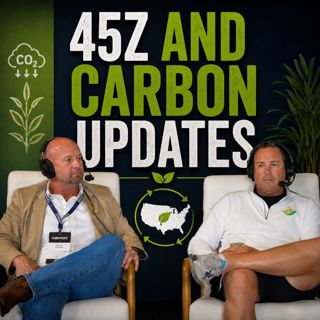
Carbon Markets, CI Scores & 45Z: Separating Fact from Fiction

Carbon Markets, CI Scores & 45Z: Separating Fact from Fiction

Carbon credits. Regenerative agriculture. CI scores. 45Z. If you've been hearing these terms but still aren't sure what they actually mean for your farm, this episode is for you. Tanner, Corey, and Da...

26 Aug 22min
Grain Quality : What to Do with Fines, FM, & Your Grain

Grain Quality : What to Do with Fines, FM, & Your Grain

Kyle Kirchhoff joins Farm4Profit for a conversation about manufacturing, entrepreneurship, and an often-overlooked piece of grain management: grain quality. Kyle shares how growing up on a Southwest I...

24 Aug 1h
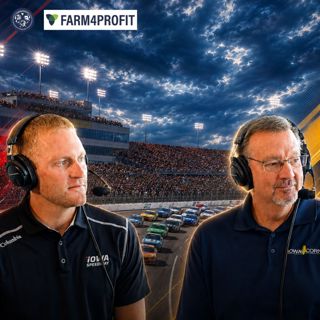
From the Cornfield to the Checkered Flag: Ethanol Wins Every Race

From the Cornfield to the Checkered Flag: Ethanol Wins Every Race

Farm4Profit heads to Iowa Speedway for the Iowa Corn 350 powered by Ethanol with Craig Floss, CEO of Iowa Corn, and Eric Petersen, President of Iowa Speedway, to talk NASCAR, ethanol, corn demand, and...

20 Aug 43min
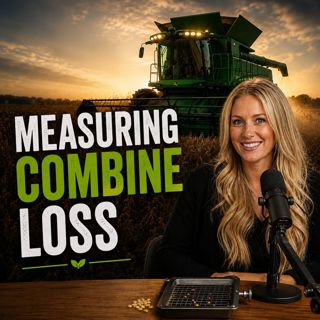
Every Kernel Counts: Measuring Combine Loss

Every Kernel Counts: Measuring Combine Loss

But how many actually know what those kernels are worth? In this episode of What's Working in Ag, Shianne from BranValt explains how the SmartPan harvest loss system helps farmers move beyond visual e...

19 Aug 15min
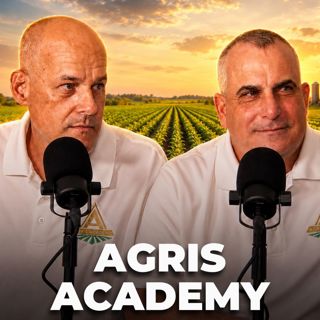
Former Traders Reveal How Grain Merchants Really Think

Former Traders Reveal How Grain Merchants Really Think

Most farmers spend countless hours trying to grow another five bushels per acre. Mike Rolfsen and Jeff Kazin believe there may be an even bigger opportunity waiting after harvest. The Agris Academy co...

17 Aug 58min

Mike Naig: The Pressure Farmers Are Feeling and the Next Opportunity

Mike Naig: The Pressure Farmers Are Feeling and the Next Opportunity

In this episode of Farm4Profit, Iowa Secretary of Agriculture Mike Naig returns to the studio for a conversation that covers nearly every major issue impacting producers today. Mike begins by sharing ...

13 Aug 1h 9min

Populært innen Business og økonomi

stopp-verden
lydartikler-fra-aftenposten
dine-penger-pengeradet
e24-podden
rss-borsmorgen-okonominyhetene
rss-penger-polser-og-politikk
rss-skravla-gar
pengepodden-2
utbytte
rss-pa-konto
livet-pa-veien-med-jan-erik-larssen
rss-orjasater
lederpodden
tid-er-penger-en-podcast-med-peter-warren
finansredaksjonen
stormkast-med-valebrokk-stordalen
liberal-halvtime
pengesnakk
morgenkaffen-med-finansavisen
okonomiamatorene