
COVID-19: What are the facts? (11 March 2020)
Sydney Ideas13 Mar 2020

COVID-19: What are the facts? (11 March 2020)

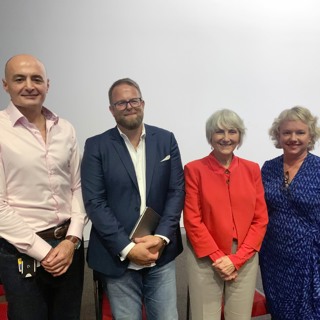
Since COVID-19 (the novel coronavirus) first emerged in December last year there’s been a lot of uncertainty, anxiety and misinformation. As of Thursday 12th March, the World Health Organisation has officially declared a pandemic. The situation is of course rapidly developing. But it’s useful to get some perspective. What can we do to prepare and respond to this issue? On Wednesday 11 March we hosted an information session with academic experts from the University of Sydney to answer critical questions, from health facts to broader societal implications in Australia. THE PANEL – Associate Professor Adam Kamradt-Scott, expert in global health security and international relations – Professor Julie Leask, who has qualifications in nursing and midwifery. Her research focuses on risk communication – Professor Ramon Shaban, Professor of Infection Prevention and Disease Control, and internationally respected clinician and educator – Professor Tania Sorrell AM is Director of the Marie Bashir Institute for Infectious Diseases and Biosecurity (MBI) and Chair of the NHMRC’s Research Translation Faculty Steering Group on New and Emerging Health Threats - Anna Burns, Public Programs Manager at Sydney Ideas, moderated the discussion. WHAT WE COVER – Where are we right now? A brief timeline – What are the clinical symptoms (1.20) – The risk: how is it transmitted? (2.10) – Insights into the international perspective: how does it relate to our own experience here in Australia? (5.30) – Lessons from how other governments have responded? (9.00) – What's the level of contagion and the incubation period? (10.50) – Testing: where does it fit into the incubation and symptom timeline? (14.00) – Criteria for testing (14.35) – What's my risk and prevention tips with hubs and spots like public transport, pools, schools? (16.00) – Contact surfaces: how long does the pathogen stick around for? (17.20) – Level of risk for particular groups depending on age brackets, whether you have underlying symptoms? (19.20) – Anxiety and preparedness: how do you look after your mental health? (20.50) – The importance of accurate information (24.40) – Scenario planning and containment strategy, in Australia and abroad (25.20) – Are we likely to see an outbreak in NSW? And what would this mean? (28.30) – Capacity of our health system to deal with spike in cases? (30.20) – Insights on people's profiles and risk: pregnancies and chronic lung disease (34.30) – Hand hygiene, proximity: what are measures to minimise our risk? (37.25) – Consider the stigma social risks too, such as racism and be vigilant about this (38.35) – Re-infection: is it possible? Likely? (40.00) – A key message for people to take away: keep calm (41.50), trust the health experts and government (42.20), be cognisant of your impact on others (44.20) and scenario plan (44.45)

Denne episoden er hentet fra en åpen RSS-feed og er ikke publisert av Podme. Den kan derfor inneholde annonser.

Episoder(500)

Conversations for Good: Across political philosophies

Conversations for Good: Across political philosophies

[Content warning: Please note there is mild coarse language] What can we say about the common good in a world marked by deep moral, philosophical, and religious disagreement? Join University of Sydne...

20 Jul 58min
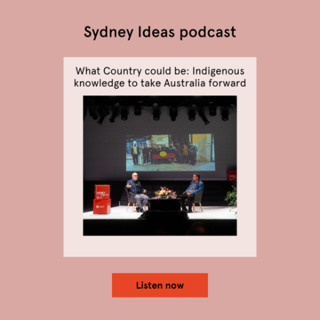
What Country could be: Indigenous knowledge to take Australia forward

What Country could be: Indigenous knowledge to take Australia forward

What happens when Indigenous knowledge systems are elevated? Leading thinkers from the University of Sydney, Professor Reuben Bolt and Associate Professor Michael Mossman, discuss the creative potenti...

17 Jun 1h 9min
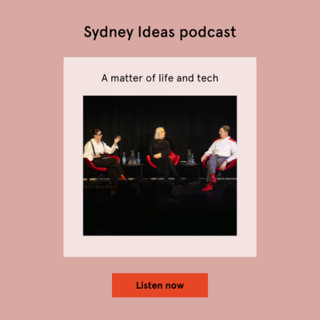
A matter of life and tech

A matter of life and tech

Does the rise of AI mean the death of the humanities? Hear from University of Sydney star academics Sophie Gee, Sandra Peter and Kai Riemer; with music from Titus Grenyer. For centuries, the humaniti...

1 Jun 1h 13min
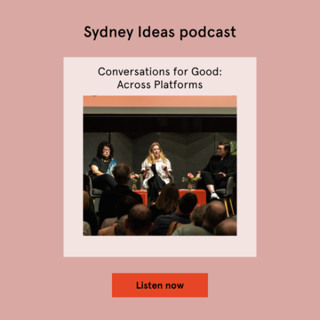
Conversations for Good: Across platforms

Conversations for Good: Across platforms

Dr Joanne Gray and Dr Rebecca Huntley discuss public discourse, digital platforms and democracy. Hosted by Fenella Kernebone. Is big tech skewing our views and undoing our capacity for tolerance? Wha...

24 Apr 55min
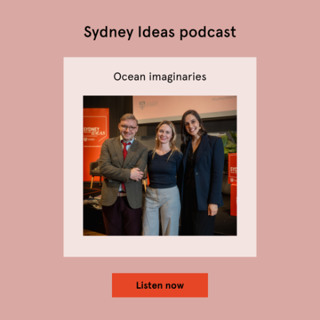
Ocean imaginaries

Ocean imaginaries

What stories have taken hold in the public imagination about sharks and marine animals? How does this shape attitudes and policy responses to ocean conservation? Hear political scientist Christopher ...

27 Mar 59min
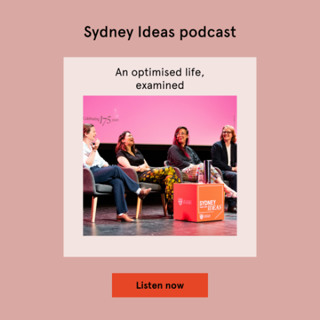
An optimised life, examined

An optimised life, examined

How, and for what, should life be optimised? Is the growing culture of optimisation leading us towards the homogenisation of culture? These days we're using technology to help us write, make decision...

6 Jan 54min
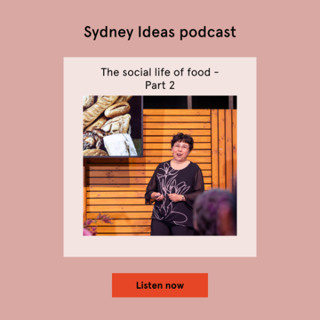
The social life of food - Part 2

The social life of food - Part 2

How can we eat well to live longer, feed future populations, and sustain planetary health? What's the science behind creating the world's most resilient hybrid wheat? Food makes us who we are. The wa...

4 Des 202539min
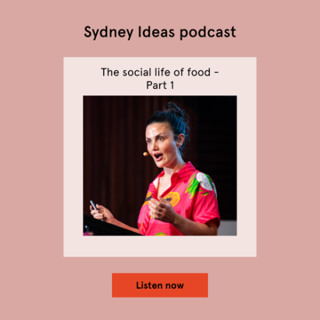
The social life of food - Part 1

The social life of food - Part 1

How can we eat well to live longer, feed future populations, and sustain planetary health? What's the science behind creating the world's most resilient hybrid wheat? Food makes us who we are. The wa...

22 Nov 202546min

Populært innen Fakta

fastlegen
dine-penger-pengeradet
relasjonspodden-med-dora-thorhallsdottir-kjersti-idem
treningspodden
rss-orjasater
foreldreradet
jakt-og-fiskepodden
rss-strid-de-norske-borgerkrigene
rss-kunsten-a-leve
sinnsyn
hverdagspsyken
rss-var-forste-kaffe
rss-impressions-2
gravid-uke-for-uke
mikkels-paskenotter
fryktlos
tomprat-med-gunnar-tjomlid
rss-kunstig-intelligens-med-elisabeth-maren-og-morten
hr-podden-2
rss-renters-rente