Relationships 2.0: The Power of Tiny Interactions
Hidden Brain14 Apr 2025

Relationships 2.0: The Power of Tiny Interactions

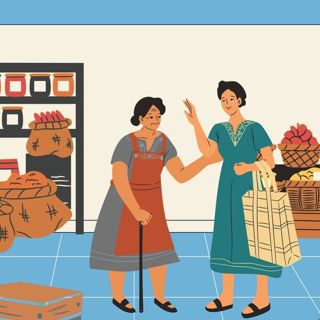
As you go about your day, you likely interact with family, friends and coworkers. These relationships can help you feel cared for and connected. But what if there’s a whole category of people in your life whose impact is overlooked? Today, in a favorite episode from our archives, psychologist Gillian Sandstrom reveals some simple ways to make your life a little more joyful and maybe even a little less lonely. Then, we talk with researcher Erica Bailey, who responds to listeners' questions about authenticity and how to reveal our true selves to the people around us.

In this episode you'll learn:

  • The sociological concept of "weak" and "strong" ties, and the important roles they play in our lives.
  • How "weak ties" contribute to our happiness.
  • How to talk to strangers — including how to start, maintain, and end a conversation.
  • How to decrease feelings of loneliness and increase feelings of connectivity in your daily life.

If you enjoyed today's conversation with Gillian Sandstrom, be sure to check out these other Hidden Brain episodes:

You 2.0: The Gift of Other People

How Others See You


Hosted by Simplecast, an AdsWizz company. See pcm.adswizz.com for information about our collection and use of personal data for advertising.

Denne episoden er hentet fra en åpen RSS-feed og er ikke publisert av Podme. Den kan derfor inneholde annonser.

Episoder(628)

How to Make a Difference: Part 2

How to Make a Difference: Part 2

Think about the last time you had a discouraging thought. Maybe you told yourself, "This won't work. I'm not cut out for this." Did you take that thought as fact? Last week, we talked with psychologis...

28 Sep 49min

How to Make a Difference: Part 1

How to Make a Difference: Part 1

Why do some people act on the possibilities before them, while others come to believe that nothing they do will make a difference? Psychologist Martin Seligman describes his groundbreaking research on...

21 Sep 48min

Why Conversations Go Wrong

Why Conversations Go Wrong

Do you ever struggle to communicate with your mom? Or feel like you and your spouse sometimes speak different languages? This week, we revisit a favorite conversation with linguist Deborah Tannen. She...

14 Sep 1h 38min

Blowing Up Your Life

Blowing Up Your Life

Have you ever had a flash of insight that hit you when you least expected it? How did it change your life? Psychologist Anthony Klotz studies the "jolts" that shake us out of our routines, and how the...

7 Sep 1h 26min

The Things We Don't Say

The Things We Don't Say

From childhood, we're taught that honesty is the best policy. Yet in everyday life, we hedge, soften our words, and leave things unsaid. This week, we talk with psychologist Steven Pinker about why in...

31 Aug 50min

What Art Does For Your Brain

What Art Does For Your Brain

Think about the last time a piece of music stopped you in your tracks, or a novel kept you up late at night. Why do these experiences feel so powerful? Psychobiologist Daisy Fancourt says engagement w...

24 Aug 49min

How to Be A Better Partner

How to Be A Better Partner

When we look at the people we love, how clearly do we really see them? This week, we talk with psychologist Edward Lemay about how our fears, desires, and insecurities can shape our perceptions of our...

17 Aug 1h 26min

How Feelings Make Us Smarter

How Feelings Make Us Smarter

Some people are remarkably good at reading the emotional temperature of a situation. They can pick up on what others are feeling, manage their own emotions, and respond skillfully. What's their secret...

10 Aug 48min

Populært innen Vitenskap

fastlegen
romkapsel
liberal-halvtime
jss
tingenes-tilstand
forskningno
tomprat-med-gunnar-tjomlid
rekommandert
sinnsyn
villmarksliv
rss-paradigmepodden
fjellsportpodden
rss-nysgjerrige-norge
rss-kunstig-intelligens-med-elisabeth-maren-og-morten
rss-rekommandert
tidlose-historier
nordnorsk-historie
rss-inn-til-kjernen-med-sunniva-rose
psykopoden
grunnstoffene