
#040: Autologous stem cell therapy (aHSCT) in MS. Facts and experiences with Dr. Roland Martin

#040: Autologous stem cell therapy (aHSCT) in MS. Facts and experiences with Dr. Roland Martin

Dr. Roland Martin is one of the leading experts in autologous stem cell therapy (aHSCT) for MS. He shares facts and his experience.

You can find the written version of the interview on my blog: https://ms-perspektive.com/40-ahsct-roland-martin

This time I talk to Prof. Dr. Roland Martin about the findings to date on autologous stem cell therapy (aHSCT) in MS patients and his experiences. As former head of the Section for Neuroimmunology and MS Research at the University Hospital Zurich, he played a key role in establishing this induction therapy in Switzerland and making it a health insurance benefit. But retirement is not on the cards. He is still affiliated with the University of Zurich and pursue research in the Institute of Experimental Immunology as an emeritus. Roland is also Chief Scientific Officer at Cellerys AG in Schlieren, Switzerland, and continues to be associated with the Department of Clinical Neurosciences at the Karolinska Institute in Stockholm, Sweden.

Introduction – Who is Dr. Roland Martin?

I am a neurologist and immunologist by training and have worked for 40 years both in research and clinical care for multiple sclerosis patients (MS) and also patients with other neuroinflammatory diseases. My wife, Dr. Mireia Sospedra, is also an immunologist, who works on disease mechanisms of MS and recently more and more on nutrition.

The development of new treatments for MS has been an important part of our work, and these reach from small molecules, natural compounds, biologicals such as monoclonal antibodies and cell therapies that aim at immune tolerance or – the topic of the interview – complete exchange and renewal of the immune system.

Mireia and I have a 16 year-old son, and from my first marriage, I have four more children, 2 girls and 2 boys, who are all married and work, three in the US, and one in Berlin.

Currently, I have 6 grandchildren. Besides our research, which has always been a hobby and vocation, I am an enthusiast photographer, love to walk and hike with Mireia.

How and where can interested people follow your research activities?

As I may have said at the beginning, I have retired from my clinical position last year since the retirement age is interpreted very strictly in Switzerland, which is a pity for somebody who loves his work and works with the brain rather than with a hoe in a coal mine. I continue research in the field of MS at the University of Zurich and the Karolinska Institute in Stockholm and spend most of my time at a startup company that we founded to develop yet another very interesting cell therapy for MS, that is antigen-specific tolerance induction.

We have written many articles on aHSCT in MS, but also about other therapies, disease mechanisms, infectious triggers, and more. All this is easily accessible on the internet, but most of it is (unfortunately) rather scientific and sometimes to hard to understand for a lay person.

Roland Martin on PubMed

Cellerys

---

Many thanks to Roland Martin for this clear picture of the aHSCT as a whole. I learned a lot during the interview. I hope the same applies to you.

See you soon and try to make the best out of your life,
Nele

For more information and positive thoughts, subscribe to my newsletter for free.

Click here for an overview of all podcast episodes published so far.

Denne episoden er hentet fra en åpen RSS-feed og er ikke publisert av Podme. Den kan derfor inneholde annonser.

Episoder(180)

#178: Tai Chi and Qigong for MS: Supporting Balance, Movement and Body Awareness – Interview with Mirko Lorenz

#178: Tai Chi and Qigong for MS: Supporting Balance, Movement and Body Awareness – Interview with Mirko Lorenz

Tai Chi and Qigong can be gentle, adaptable ways to support balance, coordination, mobility and body awareness in people with multiple sclerosis. In this episode, I talk with Tai Chi instructor Mirko...

12 Aug 25min
#177: A First Diagnosis of Multiple Sclerosis: Symptoms, Tests, and Next Steps

#177: A First Diagnosis of Multiple Sclerosis: Symptoms, Tests, and Next Steps

What may be the first signs of multiple sclerosis? Which tests are needed to diagnose MS, and what happens after the diagnosis? In this episode, I speak with Dr Datzmann, Senior Consultant at the MS C...

5 Aug 22min
#176: Progressive MS Research: Milestones, Setbacks and Hope with Tim Coetzee

#176: Progressive MS Research: Milestones, Setbacks and Hope with Tim Coetzee

Progressive MS research has made important advances, but many questions about disability progression, biomarkers, treatment, and quality of life remain unanswered. In this episode, I speak with Tim Co...

22 Jul 56min
#175: Multiple Sclerosis and Pain. How Exercise and Physical Activity Can Help

#175: Multiple Sclerosis and Pain. How Exercise and Physical Activity Can Help

Pain is one of the most common and life-impacting symptoms in multiple sclerosis. In this episode, Nele talks with Rasmus Christian Jungersen, PhD student at the Department of Exercise Biology at Aarh...

15 Jul 1h 8min
#174: MS Treatment Access in Australia. Deanna and Rachel on Living with Multiple Sclerosis, Advocacy, and the Future of Ocrevus, Kesimpta & Briumvi

#174: MS Treatment Access in Australia. Deanna and Rachel on Living with Multiple Sclerosis, Advocacy, and the Future of Ocrevus, Kesimpta & Briumvi

Deanna Renee and Rachel Kerr speak about living with multiple sclerosis in Australia, the importance of lived experience in policy, and the current uncertainty around PBS access to Ocrevus and Kesimpt...

8 Jul 41min
#173: Immunoadsorption for MS Relapses. Interview with senior physician Anna-Katharina Eser

#173: Immunoadsorption for MS Relapses. Interview with senior physician Anna-Katharina Eser

In this episode, I speak with Anna-Katharina Eser, senior physician at the MS Centre in Mainkofen, Germany, about immunoadsorption in multiple sclerosis. Immunoadsorption is a specialized blood purifi...

1 Jul 15min

#172: AI for MS. How the CLAIMS Project Could Transform MS Care – with Prof. Friedemann Paul

#172: AI for MS. How the CLAIMS Project Could Transform MS Care – with Prof. Friedemann Paul

In this episode, Prof. Friedemann Paul from Charité – Universitätsmedizin Berlin, Germany, explains how the European CLAIMS project aims to improve multiple sclerosis care through AI-assisted decision...

24 Jun 35min
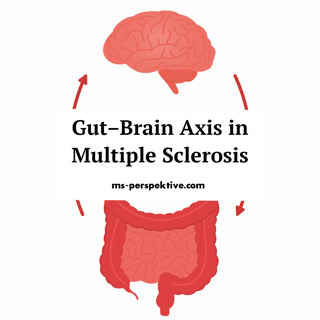
#171: The Gut-Brain Axis in Multiple Sclerosis. Interview with Prof. Dr. Anne-Katrin Pröbstel

#171: The Gut-Brain Axis in Multiple Sclerosis. Interview with Prof. Dr. Anne-Katrin Pröbstel

The gut–brain axis in multiple sclerosis is an exciting field of research that connects the gut microbiome, immune system and central nervous system. In this interview, Prof. Dr. Anne-Katrin Pröbstel ...

17 Jun 19min

Populært innen Fakta

fastlegen
dine-penger-pengeradet
relasjonspodden-med-dora-thorhallsdottir-kjersti-idem
foreldreradet
jakt-og-fiskepodden
treningspodden
mikkels-paskenotter
rss-strid-de-norske-borgerkrigene
rss-kunsten-a-leve
rss-orjasater
tomprat-med-gunnar-tjomlid
hverdagspsyken
fryktlos
rss-var-forste-kaffe
sinnsyn
gravid-uke-for-uke
dopet
kvallm
hagespiren-podcast
diagnose