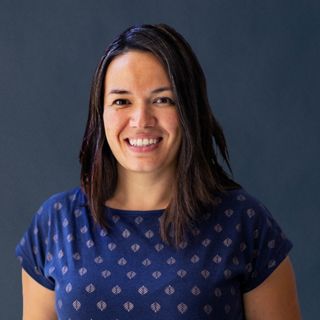
Systems Failure: With the climate crisis hitting poor people hardest, David Keith says now is the time to explore solar geoengineering
PolicyCast2 Nov 2021

Systems Failure: With the climate crisis hitting poor people hardest, David Keith says now is the time to explore solar geoengineering

Leaders from around the globe are meeting in Scotland today for the COP26 summit, talking about ways to speed up efforts to fight global warming. Yet even the optimists in Glasgow admit that the scientific consensus is that it’s already too late to cut emissions fast enough to avoid a dangerous rise in the earth’s temperature by 2 degrees Celsius, which is expected to lead to severe droughts, blistering heat waves, deadly flooding, and rising seas.

Despite these dire predictions, there has been one potential weapon in humanity’s anti-warming arsenal that, in terms of practical research, has been a taboo subject: solar geoengineering. Now Professor David Keith says it’s time for that to change. Keith is an award-winning physicist who holds professorships at both Harvard Kennedy School and Harvard’s School of Engineering and Applied Sciences. Working at the intersection of physics and policy, Keith is a pioneer in the field, which involves making man-made changes to the atmosphere that would cool the planet by either preventing some of the sun’s energy from getting through, or making it easier for heat already in the atmosphere to escape.

Critics have had a tough time wrapping their heads around solar geoengineering. They call it the stuff of science fiction, say it could be used as an excuse not to further cut emissions, and even suggest that governments might someday use it as a weapon. But Keith says that it’s now time to explore it as one of major strategies to fight warming, which include cutting emissions, capturing the carbon that’s already in the atmosphere, and helping people and societies adapt to the effects already being felt. One of his primary arguments for starting serious research on solar geoengineering is inequality. After all, he says, planetary warming doesn’t play fair. It is mostly people in the world’s poorest countries who will suffer the worst harm from a warming climate, yet they are the least responsible for it in terms of per capita emissions. And amid all the recent talk of climate adaptation, there is comparatively little mention that it is much easier for a rich country in a colder latitude to adapt than it is for a developing one in a hotter region.

Keith is also known for his work on carbon capture and founded a company working on technology to pull carbon from the air — although he says that is at best a long-term strategy that could take decades to have any beneficial effect.

About the “Systems Failure” series:

To kick off the fall 2021 season, we’re launching a mini-series of episodes built around a theme we’re calling “Systems Failure.” Our conversations will focus on how the economic, technological, and other systems that play a vital role in determining how we live our lives can not only treat individuals and groups of people unequally, but can also exacerbate inequality more generally in society. We’ll also talk about strategies to change those systems to make them more equitable.

About our guest:

David Keith has worked near the interface between climate science, energy technology, and public policy for twenty five years. He took first prize in Canada's national physics prize exam, won MIT's prize for excellence in experimental physics, and was one of TIME magazine's Heroes of the Environment. Best known for work on solar geoengineering, David’s analytical work has ranged from the climatic impacts of large-scale wind power to an early critique of the prospects for hydrogen fuel. David is Professor of Applied Physics in the School of Engineering and Applied Sciences and Professor of Public Policy in the Harvard Kennedy School. He spends about a third of his time in Calgary, Canada where he helps lead Carbon Engineering, a company developing technology to capture CO2 from ambient air.

PolicyCast is a production of Harvard Kennedy School and is hosted by Staff Writer and Producer Ralph Ranalli

PolicyCast is co-produced by Susan Hughes.

For more information please visit our web page or contact us at PolicyCast@hks.harvard.edu.

Denne episoden er hentet fra en åpen RSS-feed og er ikke publisert av Podme. Den kan derfor inneholde annonser.

Episoder(220)

Forget smaller or bigger. If you want better government, invest.

Forget smaller or bigger. If you want better government, invest.

Elizabeth Linos is the Emma Bloomberg Associate Professor for Public Policy and Management, and Faculty Director of The People Lab at the Harvard Kennedy School of Government. The majority of her rese...

17 Jul 202545min

Christiane Amanpour says objective journalism means pursuing truth—not neutrality

Christiane Amanpour says objective journalism means pursuing truth—not neutrality

Christiane Amanpour is chief international anchor of CNN’s flagship global affairs program “Amanpour,” which airs weekdays on CNN International and nightly on PBS in the United States. She is also hos...

4 Jun 202529min
The Arctic faces historic pressures from competition, climate change, and Trump

The Arctic faces historic pressures from competition, climate change, and Trump

John Holdren is the Teresa and John Heinz Research Professor for Science and International Affairs at Harvard University’s Kennedy School of Government and co-director of the Science, Technology, and ...

16 Mai 202550min
Moments that matter: How to bake fairness into the workplace

Moments that matter: How to bake fairness into the workplace

Iris Bohnet is the Albert Pratt Professor of Business and Government and the co-director of the Women and Public Policy Program at Harvard Kennedy School. She is a behavioral economist, combining insi...

6 Mai 202543min
Crypto is merging with mainstream finance. Regulators aren’t ready

Crypto is merging with mainstream finance. Regulators aren’t ready

Timothy Massad is currently a Senior Fellow at the Mossavar-Rahmani Center for Business and Government at Kennedy School of Government at Harvard University, an Adjunct Professor of Law at Georgetown ...

17 Apr 202555min

Professor Joe Nye coined the term “soft power.” He says America’s is in decline under Trump

Professor Joe Nye coined the term “soft power.” He says America’s is in decline under Trump

Joseph S. Nye Jr. is a Harvard University Distinguished Service Professor, Emeritus, and former Dean of Harvard's Kennedy School of Government. He has served as assistant secretary of defense for inte...

9 Apr 202531min

America’s geopolitical realignments, authoritarianism, and Trump’s endgame

America’s geopolitical realignments, authoritarianism, and Trump’s endgame

Ambassador Wendy Sherman, the 21st U.S. Deputy Secretary of State and the first woman in that position, has been a diplomat, businesswoman, professor, political strategist, author, and social worker. ...

3 Apr 202539min

If the U.S. courts can’t defend the rule of law, who can?

If the U.S. courts can’t defend the rule of law, who can?

With a Republican Congress apparently unwilling to check Trump’s power, many Americans fear a looming constitutional crisis and are looking to the federal courts to ride to the rescue. But political s...

19 Mar 202546min

Populært innen Fakta

fastlegen
dine-penger-pengeradet
relasjonspodden-med-dora-thorhallsdottir-kjersti-idem
treningspodden
jakt-og-fiskepodden
foreldreradet
rss-orjasater
rss-strid-de-norske-borgerkrigene
tomprat-med-gunnar-tjomlid
sinnsyn
hverdagspsyken
rss-var-forste-kaffe
rss-kunsten-a-leve
mikkels-paskenotter
gravid-uke-for-uke
rss-impressions-2
fryktlos
hr-podden-2
kvallm
hagespiren-podcast