
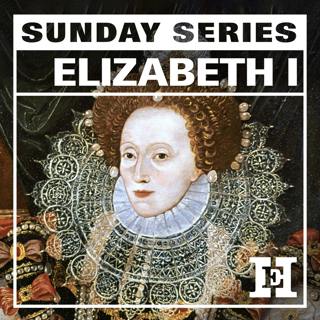
Elizabeth I: a woman in a man’s world
By 1559, Elizabeth I had secured the crown – but holding on to power would prove far more challenging. In this second episode of our four-part Sunday Series on the Tudor monarch, Rachel Dinning is joi...
15 Mar 35min

Life on the mean streets of 19th-century London
What can Charlie Chaplin's life tell us about the experiences of poor working-class people in 19th- and early 20th-century London? Quite a lot, it turns out. Speaking to Charlotte Vosper, author and h...
13 Mar 36min
Trailblazers and troublemakers: women who made French history
Have women been relegated to the footnotes of French history? Katherine Pangonis – whose latest book is A History of France in 21 Women – tells Charlotte Vosper about why their stories have been pushe...
11 Mar 34min
Vladimir Lenin: life of the week
Few people had as much impact on the course of the 20th century as Vladimir Lenin – from his years as an émigré across the capitals of western Europe, to his role in the October Revolution of 1917 and...
10 Mar 1h
Why Britons rejected fascism in the 1930s
The 1920s and 30s were golden decades for extremism. Across Europe, dictators including Hitler, Stalin and Mussolini goose-stepped their way into power, but in Britain, it was a different story. Here,...
9 Mar 31min
Young Elizabeth I: the making of a queen
Elizabeth I is one of history's most iconic monarchs, but her path to the throne was anything but secure. In this first episode of our four-part Sunday Series on the 16th-century royal, Rachel Dinning...
8 Mar 35min
A poetic history of England
How can you do justice to the story of 1,300 years of English history? Through verse, according to cultural historian Catherine Clarke – whose latest book is A History of England in 25 Poems. She take...
6 Mar 40min
The hidden history behind Mount Rushmore
Mount Rushmore is one of the most iconic images in US history – but its story is far more complex and controversial than that of a simple sculpture. In this episode, historian Matthew Davis joins Elin...
4 Mar 40min