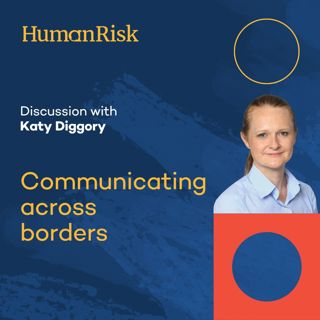
Katy Diggory on communicating across borders

Katy Diggory on communicating across borders

What happens when a British communications expert takes her political instincts and corporate storytelling skills to Germany?

🎙️ Overview
On this episode, I speak with Katy Diggory, who’s done exactly that — and learned a lot about tone, culture, and translation along the way. It’s a brilliant conversation that blends politics, international business, and linguistic nuance.

We explore the difference between translating and localising a message, why AI struggles to sound human, and how tone of voice can make or break communication, from Ryanair’s snark to a politician’s speech.

Katy gives me a behind-the-scenes look at her journey from UK Parliament to advising German corporates and monitoring elections in Eastern Europe. This episode is packed with insight for anyone trying to make themselves understood, especially across borders, cultures, or platforms. Katy is witty, reflective, and razor-sharp, and I think you’ll enjoy hearing from her as much as I did.

👤 Guest bio: Katy Diggory
Katy Diggory is a communications expert specialising in campaign design and management, copywriting, proofreading and editing in English and political training. She is based in Munich.

She helps individuals and organisations — especially in politics and corporate life — communicate more effectively across languages, cultures, and sectors. Her approach blends UK political communications experience with an understanding of German corporate tone and messaging. Katy has worked in the UK Parliament and across public and private sectors, and has monitored elections for the OSCE and other international bodies.

Fluent in German, she brings bilingual sensitivity and cultural fluency to everything from speechwriting to branding.

⏱️ AI-Generated Timestamped summary

[00:00] Introduction

[01:30] Katy’s background in UK politics and how she got into comms

[04:40] The shift from UK politics to working with German corporate clients

[08:05] Cultural differences in tone of voice between British and German organisations

[10:25] Why humour doesn’t always translate — and how that shapes messaging

[13:15] When corporate tone feels robotic or insincere

[15:00] Can you really ask AI to write like a human?

[17:45] The difference between translating and truly localising content

[20:10] Ryanair as an example of strategic tone on social media

[22:30] What makes a ‘bad’ tone of voice — and how to recognise it

[24:55] Being bilingual: how switching languages also means switching personas

[27:40] Why German culture may be more accepting of seriousness

[30:15] Behind the scenes of international election monitoring

[34:00] How trust is earned — and lost — in political comms

[36:50] Politicians as one-person media organisations

[39:10] Communication risks in cross-border work

[42:30] Katy’s final thoughts on what makes communication human

🔗 Relevant Links
Katy’s official website: https://www.katherinediggory.com/

Katy on LinkedIn: https://www.linkedin.com/in/katy-diggory-b1b31425/

Ryanair’s Twitter/X account: @Ryanair

Denne episoden er hentet fra en åpen RSS-feed og er ikke publisert av Podme. Den kan derfor inneholde annonser.

Episoder(377)

Paul Craven on Living With Uncertainty

Paul Craven on Living With Uncertainty

What happens when someone who spends his life thinking about risk, decision-making and human behaviour is confronted with an uncertainty he simply can’t control?Episode summaryMy guest is Paul Craven,...

15 Aug 51min
Benji Wilson on why we rate everything

Benji Wilson on why we rate everything

Why do we rate everything and why do we do so on a scale of one to five stars? What happens when systems designed to help us make better choices start influencing our behaviour in ways we don’t necess...

8 Aug 1h 4min
Mark Heywood on The Stories We Tell About Ourselves

Mark Heywood on The Stories We Tell About Ourselves

What parts of yourself have you learned to hide in order to be taken seriously? My guest on this episode is Mark Heywood, a friend of the show, returning guest and someone I've collaborated with on a ...

2 Aug 1h 21min
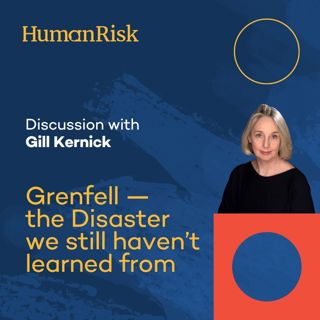
Gill Kernick on Grenfell -  the disaster we still haven't learned from

Gill Kernick on Grenfell - the disaster we still haven't learned from

When something goes badly wrong, we investigate it. Reports are written. Recommendations are made. Lessons are identified. But do we actually learn them?Episode SummaryReturning to the show, Gill Kern...

21 Jul 57min
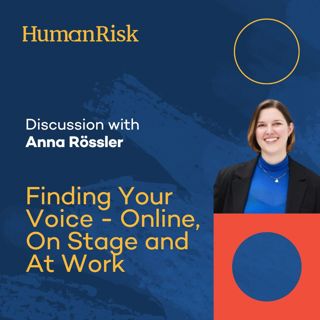
Anna Rössler on Finding Your Voice — Online, On Stage and At Work

Anna Rössler on Finding Your Voice — Online, On Stage and At Work

What does jazz singing have to do with LinkedIn? More than you might think. This week's guest, Anna Rössler, has built a career helping senior leaders find their voice online while simultaneously deve...

5 Jul 1h 1min
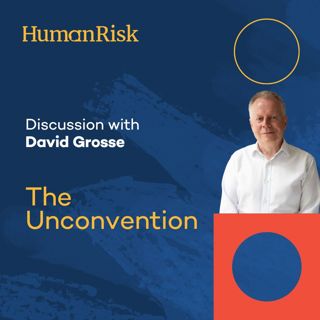
David Grosse on The Unconvention

David Grosse on The Unconvention

What happens when two people who spend their careers thinking about human behaviour meet in a London pub and start complaining about conferences? Apparently, they decide to organise one.Episode Summar...

25 Jun 48min

Freewheeling on Human Risk with Thomas Ableman

Freewheeling on Human Risk with Thomas Ableman

Why is it so hard to stop people playing vides, music or phone calls out loud on public transport — and what does that tell us about changing human behaviour? Show Summary This episode of The Human Ri...

11 Jun 45min

Jill Wick on The Human Side of Cybersecurity

Jill Wick on The Human Side of Cybersecurity

What if the best way to improve cybersecurity — or any other form of human risk — wasn't another policy, training course, or piece of technology, but a board game?  That's the kind of question my gues...

30 Mai 1h 3min

Populært innen Vitenskap

fastlegen
tingenes-tilstand
rss-nysgjerrige-norge
romkapsel
jss
liberal-halvtime
rekommandert
tomprat-med-gunnar-tjomlid
rss-paradigmepodden
villmarksliv
sinnsyn
dekodet-2
vett-og-vitenskap-med-gaute-einevoll
fjellsportpodden
smart-forklart
rss-rekommandert
abels-tarn
rss-overskuddsliv
diagnose
nordnorsk-historie