Deer Ticks and Lyme Disease: Why is Lyme disease more common in the north?

Deer Ticks and Lyme Disease: Why is Lyme disease more common in the north?

Lyme disease is our most common tick-borne disease and it is estimated that there are around 400,000 cases each year. Black-legged ticks or deer ticks (Ixodes scapularis) are the only species of tick that carries Lyme disease in the eastern U.S. Although deer ticks are found throughout the eastern U.S., Lyme disease is much more common in the northeast, than it is in the southeast.

In this episode of the Backyard Ecology Podcast, we talk with Dr. Howard Ginsberg. He is a Research Ecologist with the Eastern Ecological Science Center of the U.S. Geological Survey. Recently, he and a number of his colleagues published a journal article about their research into why Lyme disease is more common in the north.

Our conversation covers a number of different topics from basic tick biology to the research and their conclusions. One of the things that really stood out to me about their research was just how complicated the issue is. It isn't as simple as just looking at how common deer ticks are in your area. Instead, deer ticks in different parts of the country often choose different hosts, and not all of those hosts are equally likely to transfer the bacterium that causes Lyme disease. The immature ticks also have different behavioral patterns depending on where they are from. All of these factors help to contribute to our risk of catching Lyme disease in different regions of the country.

Ticks may not be our favorite organisms. I'll admit to having no great love for them. But, as people who enjoy nature and presumably spend quite a bit of time outside, I think it is important to understand our risks of catching different tick-borne diseases. The recent research by Dr. Ginsberg and his colleagues shines an important light on how complicated this topic is and how behavioral and ecological factors at a regional level can impact risks of contracting Lyme disease. This is one of those situations where the answers can be complicated, but at the same time fascinating and intriguing. It also shows just how much we still have to learn.

Links:

Episode image:

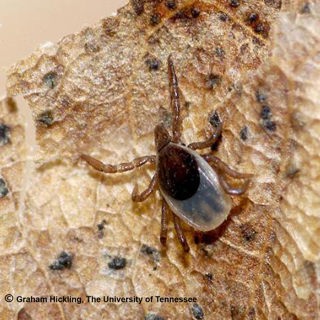
  • Deer tick nymph
  • Photo credit: Graham Hickling, University of Tennessee, public domain

Episoder(115)

9 Native Blueberries You Can Grow in the Home Landscape

9 Native Blueberries You Can Grow in the Home Landscape

Summary Our native Vacciniums, what we commonly call the blueberries, are keystone plants which support tons of pollinators and wildlife. They also produce yummy berries which we can eat. In this epis...

10 Jul 202514min
Choose the Best Native Milkweed for Your Eastern U.S. Garden

Choose the Best Native Milkweed for Your Eastern U.S. Garden

Summary Milkweeds are a common component of butterfly and pollinator gardens. Not only are they important for monarch caterpillars, but they are also used by a wide variety of pollinators. There are l...

26 Jun 202519min
Laurel Wilt: How Tiny Beetles Can Kill Huge Trees

Laurel Wilt: How Tiny Beetles Can Kill Huge Trees

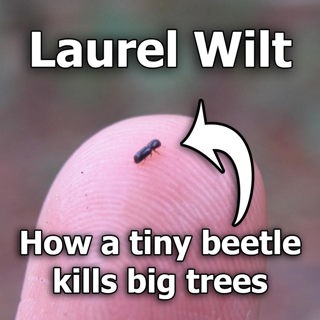
Summary In this episode, we dive deep into Laurel Wilt Disease which is a vascular wilt disease affecting trees in the Lauraceae family, such as sassafras, spicebush, and redbay. We discuss its histor...

12 Jun 20251h 17min
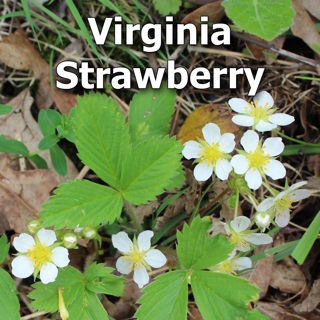
Virginia strawberry: A Beautiful, Tasty, and Underutilized Native Groundcover

Virginia strawberry: A Beautiful, Tasty, and Underutilized Native Groundcover

Summary The Virginia strawberry (Fragaria virginiana) is our most widespread native wild strawberry in the eastern U.S. It supports a wide range of pollinators and wildlife. It can also make an amazin...

29 Mai 20256min
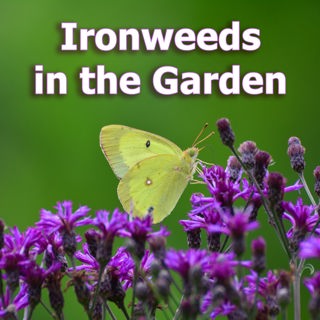
Ironweed's Beauty and Ecological Value in Your Garden: Mt. Cuba's Vernonia Trial

Ironweed's Beauty and Ecological Value in Your Garden: Mt. Cuba's Vernonia Trial

Summary Each fall, the beautiful, rich, purple blooms of ironweeds (Vernonia spp.) grace fields and open areas throughout much of the eastern U.S. They are an ecological powerhouse for pollinators and...

15 Mai 202557min
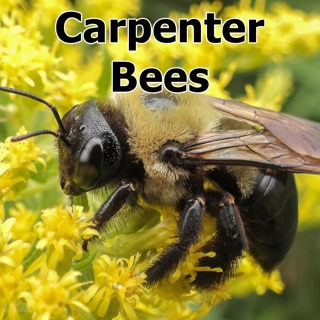
Eastern Carpenter Bees: How to Peacefully Co-exist and Why They Are Important

Eastern Carpenter Bees: How to Peacefully Co-exist and Why They Are Important

Summary While carpenter bees get a bad rap, they are also important pollinators and play a vital role in the ecosystem. Their bad reputation can also sometimes be overblown. So, let's talk a little bi...

1 Mai 202515min
Doug Tallamy's Habitat Restoration Story and How You Can Help Save Nature

Doug Tallamy's Habitat Restoration Story and How You Can Help Save Nature

Summary Dr. Doug Tallamy shares the story of how he and his wife transformed their newly built home located on a former hayfield into a thriving forest ecosystem. We talk about how they got started, t...

17 Apr 202549min
Darkness Matters: Light Pollution's Threats and Simple Ways to Help

Darkness Matters: Light Pollution's Threats and Simple Ways to Help

Summary Darkness is a vital, and often overlooked, component of our ecosystems. Unfortunately, we're losing it to light pollution. Decreasing the light pollution around your home will not only benefit...

3 Apr 202510min

Populært innen Vitenskap

fastlegen
rekommandert
jss
tingenes-tilstand
rss-rekommandert
liberal-halvtime
sinnsyn
forskningno
tomprat-med-gunnar-tjomlid
villmarksliv
rss-nysgjerrige-norge
fjellsportpodden
dekodet-2
kvinnehelsepodden
smart-forklart
rss-paradigmepodden
vett-og-vitenskap-med-gaute-einevoll
nevropodden
tidlose-historier
utenrikshospitalet