Wild Turkeys: A Conservation Success Story, Where We Are Now, and What We Can Do

Wild Turkeys: A Conservation Success Story, Where We Are Now, and What We Can Do

Wild turkeys are fascinating birds that are only found in North America. They are also a conservation success story – one which most people aren't aware of because the turn-around was so successful. In this episode of the Backyard Ecology podcast, we talk with Dr. Bret Collier. Bret is a Professor of Wildlife Ecology at Louisiana State University who specializes in studying wild turkeys.

If you ask a room of wildlife biologists to name our nation's greatest conservation success stories, you are most likely to hear wild turkeys, white-tailed deer, and wood ducks come up frequently. It's hard to believe now, but there was a time, not too long ago really, when wild turkeys, white-tailed deer, and wood ducks had been extirpated from many areas and were steadily declining in population numbers. Losing them would have been a distinct possibility. But massive conservation efforts turned those declines around. Now all three of those species are so common throughout much of their range that the conservation success stories they represent have been mostly forgotten.

Bret and I discuss the wild turkey's conservation success story because we both believe that it is a story worth telling and one that doesn't need to be forgotten. We also talk about current turkey populations, because in the southeast we are seeing a decrease in turkey populations. There are hints that this might be starting to occur in other parts of the country too.

As Bret said during our conversation, "Wild turkey conservation at a national level rests on the private landowners." This is because so much of our land is privately owned, especially in the eastern U.S. So, in addition to talking about wild turkey populations, Bret shares with us the types of habitat that turkeys need and helps us understand some of the things we can do to make our properties a little better for turkeys.

Links:

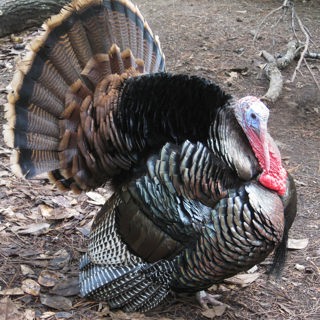
Episode image:

  • Male wild turkey
  • Photo credit: Alabama Extension, public domain

Denne episoden er hentet fra en åpen RSS-feed og er ikke publisert av Podme. Den kan derfor inneholde annonser.

Episoder(118)

Goldenrod Geek-out! What You Need to Know About This Ecological Powerhouse!

Goldenrod Geek-out! What You Need to Know About This Ecological Powerhouse!

Summary In this episode, Sam Hoadley and I talk about how goldenrods (Solidago sp.) are keystone species and all the ecological roles that they play. We also touch on some of the evolving discussions ...

23 Jul 58min
Simple Ways to Help Eastern Bluebirds

Simple Ways to Help Eastern Bluebirds

Summary In this episode, Ashley Kennedy and I discuss simple ways that anyone can help eastern bluebirds. Our discussion is based off her recently published research looking at the diets of nestling e...

3 Jun 36min
New Research Reveals Diet of Baby Eastern Bluebirds

New Research Reveals Diet of Baby Eastern Bluebirds

Summary In this episode, Ashley Kennedy and I discuss the results of her research on the diets of nestling eastern bluebirds. Ashley used GoPro cameras located on active bluebird nestboxes to take pic...

7 Mai 29min
More than just a forest: Our surprisingly diverse eastern ecosystems

More than just a forest: Our surprisingly diverse eastern ecosystems

Summary The general impression that many people have is that prior to European settlement the whole eastern U.S. was one giant old growth forest. But that wasn't the case. Using an interdisciplinary a...

18 Feb 21min
How to Be Successful with Your Habitat Goals

How to Be Successful with Your Habitat Goals

Summary When it comes to creating habitat, having a written set of goals can be extremely helpful in moving a task from the "I'll get to it someday" category to the "I'm actually going to get this don...

8 Jan 10min
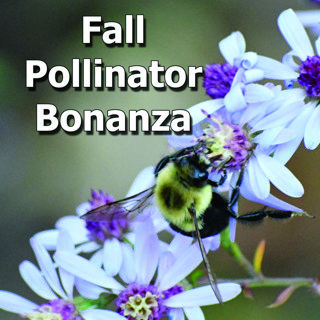
Short's aster: A beautiful late season extravaganza for pollinators

Short's aster: A beautiful late season extravaganza for pollinators

Summary Late blooming native plants are crucial sources of pollen and nectar for pollinators. One of my favorite species that blooms in October, and often into early November, is Short's aster (Symphy...

23 Okt 20257min
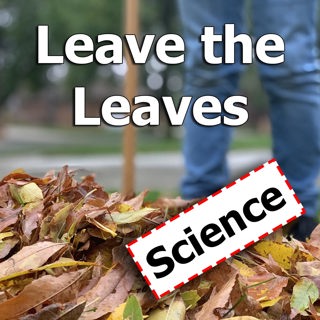
The Science Behind "Leave the Leaves"

The Science Behind "Leave the Leaves"

Summary "Leave the leaves" has become an increasingly common mantra each fall. However, until recently little to no scientific research had been done to quantify impacts of leaving your leaves in a ty...

9 Okt 202547min

Black-eyed Susan: A must-have for the pollinator garden

Black-eyed Susan: A must-have for the pollinator garden

Summary Black-eyed Susan (Rudbeckia hirta) is a beautiful native plant that can be found throughout most of the eastern U.S. and makes a great addition to pollinator and native plant gardens. It can g...

25 Sep 20259min

Populært innen Vitenskap

fastlegen
tingenes-tilstand
abels-tarn
liberal-halvtime
romkapsel
jss
rekommandert
vett-og-vitenskap-med-gaute-einevoll
sinnsyn
dekodet-2
villmarksliv
fjellsportpodden
rss-rekommandert
tomprat-med-gunnar-tjomlid
rss-inn-til-kjernen-med-sunniva-rose
rss-nysgjerrige-norge
rss-overskuddsliv
diagnose
abid-nadia-skyld-og-skam
forskningno