
Large Language Models and Emergence: A Complex Systems Perspective (Prof. David C. Krakauer)

Large Language Models and Emergence: A Complex Systems Perspective (Prof. David C. Krakauer)

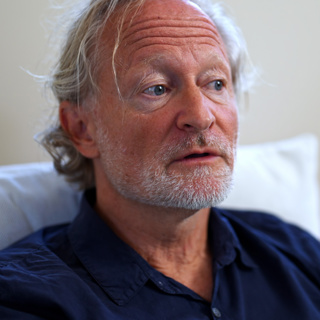
Prof. David Krakauer, President of the Santa Fe Institute argues that we are fundamentally confusing knowledge with intelligence, especially when it comes to AI.


He defines true intelligence as the ability to do more with less—to solve novel problems with limited information. This is contrasted with current AI models, which he describes as doing less with more; they require astounding amounts of data to perform tasks that don't necessarily demonstrate true understanding or adaptation. He humorously calls this "really shit programming".


David challenges the popular notion of "emergence" in Large Language Models (LLMs). He explains that the tech community's definition—seeing a sudden jump in a model's ability to perform a task like three-digit math—is superficial. True emergence, from a complex systems perspective, involves a fundamental change in the system's internal organization, allowing for a new, simpler, and more powerful level of description. He gives the example of moving from tracking individual water molecules to using the elegant laws of fluid dynamics. For LLMs to be truly emergent, we'd need to see them develop new, efficient internal representations, not just get better at memorizing patterns as they scale.


Drawing on his background in evolutionary theory, David explains that systems like brains, and later, culture, evolved to process information that changes too quickly for genetic evolution to keep up. He calls culture "evolution at light speed" because it allows us to store our accumulated knowledge externally (in books, tools, etc.) and build upon it without corrupting the original.


This leads to his concept of "exbodiment," where we outsource our cognitive load to the world through things like maps, abacuses, or even language itself.


We create these external tools, internalize the skills they teach us, improve them, and create a feedback loop that enhances our collective intelligence.


However, he ends with a warning. While technology has historically complemented our deficient abilities, modern AI presents a new danger. Because we have an evolutionary drive to conserve energy, we will inevitably outsource our thinking to AI if we can. He fears this is already leading to a "diminution and dilution" of human thought and creativity. Just as our muscles atrophy without use, he argues our brains will too, and we risk becoming mentally dependent on these systems.


TOC:

[00:00:00] Intelligence: Doing more with less

[00:02:10] Why brains evolved: The limits of evolution

[00:05:18] Culture as evolution at light speed

[00:08:11] True meaning of emergence: "More is Different"

[00:10:41] Why LLM capabilities are not true emergence

[00:15:10] What real emergence would look like in AI

[00:19:24] Symmetry breaking: Physics vs. Life

[00:23:30] Two types of emergence: Knowledge In vs. Out

[00:26:46] Causality, agency, and coarse-graining

[00:32:24] "Exbodiment": Outsourcing thought to objects

[00:35:05] Collective intelligence & the boundary of the mind

[00:39:45] Mortal vs. Immortal forms of computation

[00:42:13] The risk of AI: Atrophy of human thought


David Krakauer

President and William H. Miller Professor of Complex Systems

https://www.santafe.edu/people/profile/david-krakauer


REFS:

Large Language Models and Emergence: A Complex Systems Perspective

David C. Krakauer, John W. Krakauer, Melanie Mitchell

https://arxiv.org/abs/2506.11135


Filmed at the Diverse Intelligences Summer Institute:

https://disi.org/

Denne episoden er hentet fra en åpen RSS-feed og er ikke publisert av Podme. Den kan derfor inneholde annonser.

Episoder(252)

When AI Decides You're a Threat — Brad Carson

When AI Decides You're a Threat — Brad Carson

Brad Carson was the Army's General Counsel, served two terms in Congress and was Acting Under Secretary of Defense for Personnel and Readiness. He now heads Americans for Responsible Innovation, the A...

31 Mai 1h 20min

Intelligence is collective, not artificial — Prof. Michael I. Jordan (UC Berkeley / Inria)

Intelligence is collective, not artificial — Prof. Michael I. Jordan (UC Berkeley / Inria)

Michael I. Jordan, described by Science magazine as the most influential computer scientist alive, has never thought of himself as an AI researcher. In this conversation he explains why that distincti...

21 Mai 1h 17min

 The AI Models Smart Enough to Know They're Cheating — Beth Barnes & David Rein [METR]

The AI Models Smart Enough to Know They're Cheating — Beth Barnes & David Rein [METR]

Beth Barnes and David Rein on the one graph that ate the AI timelines discourse, and why the two people who built it are the most careful about how you read it.**SPONSOR**Prolific - Quality data. From...

4 Mai 1h 53min

When AI Discovers The Next Transformer - Robert Lange (Sakana)

When AI Discovers The Next Transformer - Robert Lange (Sakana)

Robert Lange, founding researcher at Sakana AI, joins Tim to discuss *Shinka Evolve* — a framework that combines LLMs with evolutionary algorithms to do open-ended program search. The core claim: syst...

13 Mar 1h 18min

"Vibe Coding is a Slot Machine" - Jeremy Howard

"Vibe Coding is a Slot Machine" - Jeremy Howard

Dive into the realities of AI-assisted coding, the origins of modern fine-tuning, and the cognitive science behind machine learning with fast.ai founder Jeremy Howard. In this episode, we unpack why A...

3 Mar 1h 26min

 Evolution "Doesn't Need" Mutation - Blaise Agüera y Arcas

Evolution "Doesn't Need" Mutation - Blaise Agüera y Arcas

What if life itself is just a really sophisticated computer program that wrote itself into existence?Blaise Agüera y Arcas presenting at ALife 2025 — the most technically detailed public walkthrough o...

16 Feb 55min

VAEs Are Energy-Based Models? [Dr. Jeff Beck]

VAEs Are Energy-Based Models? [Dr. Jeff Beck]

What makes something truly *intelligent?* Is a rock an agent? Could a perfect simulation of your brain actually *be* you? In this fascinating conversation, Dr. Jeff Beck takes us on a journey through ...

25 Jan 46min

Abstraction & Idealization: AI's Plato Problem [Mazviita Chirimuuta]

Abstraction & Idealization: AI's Plato Problem [Mazviita Chirimuuta]

Professor Mazviita Chirimuuta joins us for a fascinating deep dive into the philosophy of neuroscience and what it really means to understand the mind.*What can neuroscience actually tell us about how...

23 Jan 53min

Populært innen Teknologi

lydartikler-fra-aftenposten
romkapsel
teknisk-sett
energi-og-klima
tomprat-med-gunnar-tjomlid
nasjonal-sikkerhetsmyndighet-nsm
hans-petter-og-co
shifter
fornybaren
rss-snakk-om-sikkerhet
teknologi-og-mennesker
elektropodden
rss-ki-praten
i-loopen
rss-digitaliseringspadden
rss-plateprat
rss-alt-som-gar-pa-strom
rss-anleggspraten
smart-forklart
plattformpodden