917-Space Dust
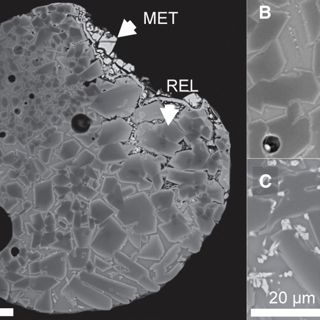
As the Earth orbits the Sun at 18.5 mi/s it sweeps up about 100 tons of micrometeorites and space dust every day of which some 14 tons eventually makes it to the ground. You can even find some of thes...
18 Sep 2min
406E-447-Nuking An Asteroid
Tonight, even though the chances are extremely slim, an asteroid hunter could find a sizable asteroid on a collision course with planet Earth. If we have decades warning, the potential impactor's arri...
15 Sep 2min
916-Past Glory
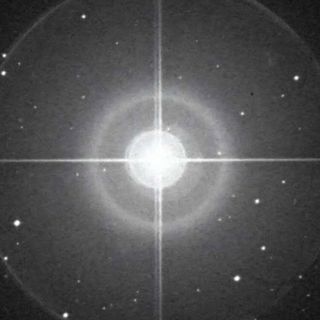
When accurately recorded historical observations do not agree with what we what we see today it is often very rewarding to find out why. In modern telescopes we see Theta Eridani to a be pair separate...
11 Sep 2min

405E-446-Asteroid Homestead
In the future one can envision a space mining family boarding a descendent of the SpaceX Falcon Heavy Launch Vehicle for a trip into low Earth orbit. A few hundred miles above the Earth's surface they...
8 Sep 2min
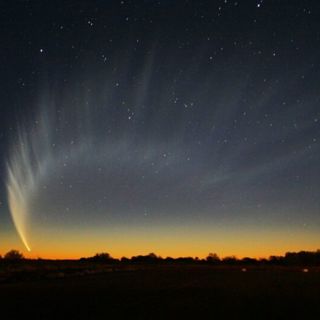
915-Raining Comets
The comets we observe generally start out as icy dirty snowballs of frozen gases like water and frozen carbon dioxide in the Oort cloud. If recent scientific analysis is correct, we are now witnessing...
4 Sep 2min
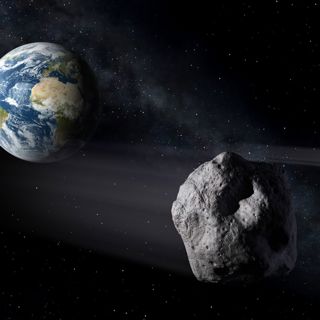
404E-445-Not So Secret
A partnership of humans and computers will help to minimize the damage when asteroid hunters find a space rock with our number on it.
1 Sep 2min
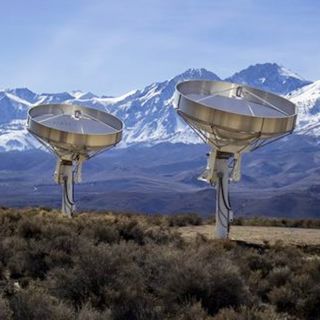
914-Deep Synoptic Array
Looking into the sky at night with radio eyes you would not see the points of starlight forming the constellations instead you would see a very bright, colorful and wildly changing scene. In a desert ...
28 Aug 2min
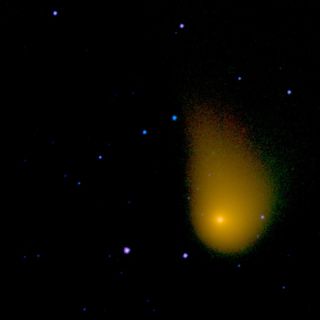
403E-444-Near Comets
Although no comet nucleus impact on the Earth has been conclusively identified, there is some evidence that suggests the 1908 Tunguska event in Russia, which knocked down trees over a 770 square mile ...
25 Aug 2min