247E-259-Trans-Neptunian

247E-259-Trans-Neptunian

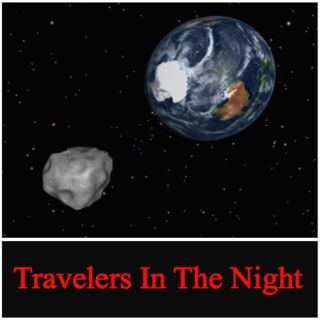
During the course of a single night our telescopes can find more than 10,000 moving objects. Fortunately our software geniuses are able to sort through this pile to allow us to focus on unknown objects which require additional observations. Most of the time asteroid hunters are able to decide if an unknown moving object is an Earth approaching asteroid by observing it for a few nights to determine it's path around the Sun. However, recently my Catalina Sky Survey teammates Alex Gibbs, Greg Leonard, Carson Fuls, and Richard Kowalski as well as observers in Hawaii, New Mexico, Australia, and Kitt Peak in Arizona had to follow an unknown object for nearly a month to determine its nature.
The new object they discovered is now called 2016 EJ203. It is about 3000 feet in diameter and takes 504 years to orbit the Sun on a path which goes from between Mars and Jupiter out to 3 times Pluto's distance from the Sun. In 2016 humans were able to spot 2016 EJ203 during the two weeks every 500 years that it is bright enough for us to detect. The Minor planet Center has classified 2016 EJ203 as a Trans-Neptunian object. Our catalog of these distant places now has several hundred entries ranging in size from Pluto and 4 other large dwarf planets to small objects like 2016 EJ203.
This object may be the nucleus of a burned out comet or a fragment left over from the formation of the solar system.

Denne episoden er hentet fra en åpen RSS-feed og er ikke publisert av Podme. Den kan derfor inneholde annonser.

Episoder(1000)

916-Past Glory

916-Past Glory

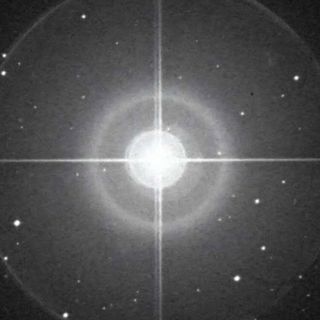
When accurately recorded historical observations do not agree with what we what we see today it is often very rewarding to find out why. In modern telescopes we see Theta Eridani to a be pair separate...

11 Sep 2min

405E-446-Asteroid Homestead

405E-446-Asteroid Homestead

In the future one can envision a space mining family boarding a descendent of the SpaceX Falcon Heavy Launch Vehicle for a trip into low Earth orbit. A few hundred miles above the Earth's surface they...

8 Sep 2min
915-Raining Comets

915-Raining Comets

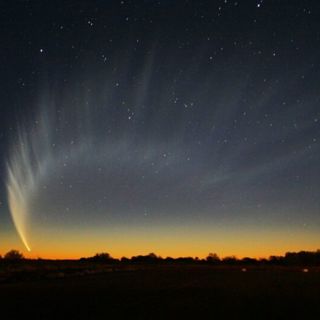
The comets we observe generally start out as icy dirty snowballs of frozen gases like water and frozen carbon dioxide in the Oort cloud. If recent scientific analysis is correct, we are now witnessing...

4 Sep 2min
404E-445-Not So Secret

404E-445-Not So Secret

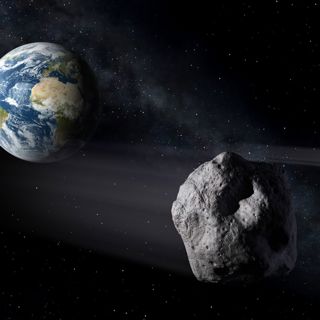
A partnership of humans and computers will help to minimize the damage when asteroid hunters find a space rock with our number on it.

1 Sep 2min
914-Deep Synoptic Array

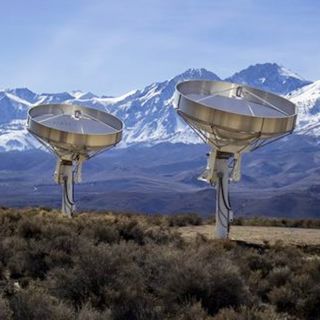
914-Deep Synoptic Array

Looking into the sky at night with radio eyes you would not see the points of starlight forming the constellations instead you would see a very bright, colorful and wildly changing scene. In a desert ...

28 Aug 2min
403E-444-Near Comets

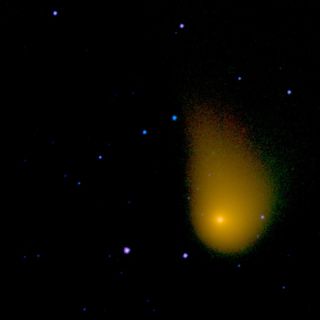
403E-444-Near Comets

Although no comet nucleus impact on the Earth has been conclusively identified, there is some evidence that suggests the 1908 Tunguska event in Russia, which knocked down trees over a 770 square mile ...

25 Aug 2min
913-Moon Impact

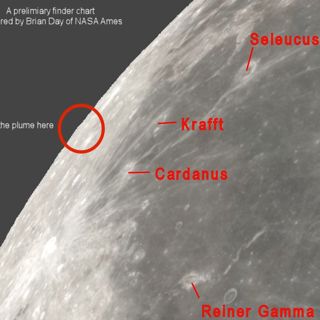
913-Moon Impact

Bill Gray is an astronomer who specializes in tracking objects in space which come near the Earth. In addition to natural objects like asteroids and comets Bill also tracks rocket boosters and space j...

21 Aug 2min
402E-443-Unsung Heroes

402E-443-Unsung Heroes

In 2017 observers in 50 countries at 440 different observatories made nearly 19 million observations of asteroids and comets which enable scientists to calculate where about 800,000 objects will be in...

18 Aug 2min

Populært innen Vitenskap

fastlegen
romkapsel
tingenes-tilstand
jss
rekommandert
liberal-halvtime
forskningno
villmarksliv
rss-paradigmepodden
sinnsyn
vett-og-vitenskap-med-gaute-einevoll
tomprat-med-gunnar-tjomlid
fjellsportpodden
tidlose-historier
rss-rekommandert
rss-overskuddsliv
nevropodden
dekodet-2
rss-inn-til-kjernen-med-sunniva-rose
aldring-og-helse-podden